
Sleep — The Cheapest Upgrade You're Not Using
Sleep — The Cheapest
Upgrade You're Not Using.
Every member who's serious about Muay Thai eventually optimizes something. Better gloves. More classes. Cleaner food. Supplements. Recovery gadgets.
Almost nobody optimizes sleep. And sleep is the one that's free, backed by the most evidence, and quietly determining whether the work you put in on the mats actually turns into skill.
Here's what the research says happens to a fighter's body and brain overnight — and what happens when you don't give it enough time to do the job.
Sleep isn't one thing. Your brain cycles through distinct stages roughly every 90 minutes, and each is doing a different job for a Muay Thai athlete.
You don't get better during training. You get better after it — while you're asleep. Training is just the request.
In 2011, Cheri Mah's team at Stanford ran a simple experiment on the men's varsity basketball team. Eleven athletes kept their normal sleep for a few weeks, then were asked to get a minimum of 10 hours in bed per night for the next five to seven. They didn't change training. They didn't change diet. They just slept more.
Put that in the ring. Slower reactions mean the kick you'd have checked, you don't. Degraded coordination means your landing mechanics get sloppy on a pivot. Reduced tissue tolerance means the shins that handled your training volume last month suddenly aren't.
A lot of what gets blamed on "bad luck" or "overtraining" is a sleep problem wearing a costume.
Every few months a member comes to us frustrated they've plateaued — technique feels stuck, they gas in round two, they keep tweaking something. We ask about volume. We ask about food. Then we ask how much they're sleeping — and it's five and a half hours on a good night. Fix that before you buy another supplement or add another class. It's free, and it's the biggest lever you've got.
None of this needs a $300 ring or a sleep coach. It needs treating the two hours before bed like part of your training — not the leftover time at the end of your day.
Nobody sleeps 8 hours every night. You have a job, maybe kids, maybe a 6am. The goal isn't perfection — it's raising your average. Going from a consistent 6 hours to a consistent 7.5 will do more for your Muay Thai than any supplement on the shelf. Aim for the trend, not a perfect record.
If you're doing the basics right — consistent schedule, dark cool room, caffeine controlled — and you're still exhausted, waking constantly, or in enough pain that you can't get comfortable, that's worth looking at properly. Persistent pain disrupts sleep, and disrupted sleep amplifies pain. It's a loop, and it doesn't break on its own.
That's one reason Root Physical Therapy is on-site — same building, same hallway. Our clinicians are Doctors of Physical Therapy (two coach Muay Thai here), and they treat sleep as a real recovery variable, not an afterthought. If pain is what's keeping you up, that's a thing they can actually fix. Washington is direct-access: no referral, most major insurance accepted. Just walk down the hall.
- Deep sleep rebuilds the body. Growth hormone, muscle repair, bone remodeling — front half of the night.
- REM files away your technique. Back half — the part you lose when you go to bed late.
- Under 8 hours = 1.7× the injury risk. In a contact sport, that's not a rounding error.
- Sleep more, react faster. Athletes who extended sleep got measurably quicker and more accurate.
- Cut caffeine by early afternoon — especially if you train at night.
- Alcohol destroys REM — the stage where your skill work actually sticks.
- Sauna after sparring helps you come down — and it's included with your membership.
Train hard.
Sleep harder.
New to Muók? Come try a free class — and see the training floor, the sauna, and the on-site PT clinic for yourself.
Book a Free Class →- Mah CD, Mah KE, Kezirian EJ, Dement WC. The effects of sleep extension on the athletic performance of collegiate basketball players. SLEEP. 2011;34(7):943–950.
- Milewski MD, et al. Chronic lack of sleep is associated with increased sports injuries in adolescent athletes. Journal of Pediatric Orthopaedics. 2014;34(2):129–133.
- Nedeltcheva AV, et al. Insufficient sleep undermines dietary efforts to reduce adiposity. Annals of Internal Medicine. 2010;153(7):435–441.
- Watson AM. Sleep and athletic performance. Current Sports Medicine Reports. 2017;16(6):413–418.
- Walker MP, Stickgold R. Sleep-dependent learning and memory consolidation. Neuron. 2004;44(1):121–133.
Traditional vs. Entertainment Muay Thai: Rules, Scoring, and What Actually Wins
The Two
Muay Thais.

Muay Thai is having its biggest global moment in history — and most of the world is meeting it through 4-ounce gloves, three-round wars, and knockout bonuses. It's electric. It's also not the version fought in Rajadamnern and Lumpinee for the past hundred years.
The two versions now run side by side, and they go by name: traditional (stadium) Muay Thai and entertainment (modern) Muay Thai. Same eight limbs. Different gloves, different formats — and, most importantly, different definitions of winning. Once you understand how each is scored, you understand why they produce such different fights.
Start with the physical differences, because everything else flows downstream from them.

Traditional scoring confuses newcomers because it doesn't count what most combat sports count. It's not volume. A fighter can land twice as many strikes and clearly lose the round. What judges watch for is effect — and a very Thai idea of dominance.
Volume is noise. Effect is signal.
Now flip everything. ONE Championship built its ruleset deliberately — as an answer to the fact that stadium scoring is genuinely hard for a new fan to read. Their system prioritizes what anyone can see: damage.
- Effect & off-balancing over volume
- Kicks & knees valued above punches
- Clinch control and sweeps
- Composure — looking like the winner
- The fight as a five-round story
- Knockdowns above all
- All strikes score equally — damage decides
- Aggression & forward pressure
- Volume of clean strikes after damage
- Every round its own fight — plus KO bonuses
Here's the wrinkle that makes this more than a clean two-way split: even Rajadamnern — the oldest stadium in the world — is modernizing. Its broadcast promotion, the Rajadamnern World Series (RWS), keeps the traditional hardware but reworks the format for a global audience.
You'll sometimes hear that sweeps have been "banned." Not quite. Certain sweep variants have always been fouls in Muay Thai — long before any modern promotion. Karate-style instep sweeps, hip throws, and judo-style trips where your leg stays planted as they fall: all illegal under traditional rules. What's legal — and what scores, RWS included — is kicking the supporting leg out with your shin or the top of the foot, or off-balancing from the clinch with proper technique. The line is precise, which is exactly why it has to be taught properly. When a sweep gets waved off in a fight, it usually crossed that long-standing line — the technique wasn't outlawed.
None of this is a "real vs fake" argument. The athletes competing under entertainment rules — Rodtang, Superlek, Tawanchai — are elite, stadium-forged fighters, and the format has brought Muay Thai a global audience the stadiums never reached. Thailand itself is split on the tradeoffs. Both versions are Muay Thai — optimized for different things: one for a century of martial depth, the other for the modern fight fan's screen.
So where does Muók land in all this? Simple: we're a traditional Muay Thai gym, and that's a deliberate choice.
The stadium art is the complete art. Train it and you inherit the entire system — the teep and the sweep, the clinch in all its depth, the balance and posture that scoring has demanded of fighters for a hundred years, the five-round patience, and the culture that holds it together. Train that, and you can adapt to any ruleset later. Train only for three-round damage, and you've skipped the foundation.
We teach the full weapon set — including the parts entertainment scoring devalues. The clinch isn't an afterthought at Muók; it's core curriculum. Sweeps, off-balancing, knee positioning — the skills that win stadium rounds are the same skills that make you genuinely hard to deal with anywhere. Same with the teep: in the stadium game it's a scoring statement and a range weapon, and we drill it that way.
We train balance and composure as skills, not accidents. Stadium scoring rewards the fighter who stays in posture while everything happens around them — and that's trainable, not a personality trait. It's why our technique work is obsessive about base, weight transfer, and returning to position. That same composure is what keeps hobbyists safe in sparring.
We keep the culture. The wai kru ram muay — the pre-fight ritual honoring your teachers and your gym — is compulsory in every stadium in Thailand, and it's part of what we pass on here. Muay Thai isn't a delivery system for knockouts; it's a martial tradition with a lineage. Respecting that lineage is part of training at Muók.
We build fighters who understand the story of a fight. Five-round thinking — reading an opponent, pacing, peaking at the right moment — teaches ring IQ that a three-round sprint never demands. Even if you never compete, training with that mindset makes you a smarter, calmer martial artist.
Love the ONE highlights — we do too. But understand what you're watching: a version of the sport tuned for the screen. On our mats, you're learning the version tuned for depth — where balance beats aggression, where a clean sweep says more than a wild exchange, and where the art is bigger than the highlight. Learn that first, and everything else is available to you.
- Traditional/stadium: 8–10 oz gloves, 5 rounds, effect-based scoring, weighted rounds.
- Entertainment/modern: 4 oz gloves, 3 rounds, damage-based scoring, every round equal.
- Stadium scoring rewards effect over volume — one clean body kick beats five light punches.
- Rounds 3–4 decide a stadium fight. It's a story, not three sprints.
- Small gloves change everything: punches equalize, defense tightens, finishes multiply.
- RWS is the middle path: 3 rounds, per-round winners, volume/accuracy/power scoring — full gloves and legal sweeps kept.
- Sweeps aren't banned — instep sweeps and hip throws were always fouls; kick-based sweeps still score everywhere.
- Muók trains the traditional art — the complete system, culture included. Foundation first; adapt later.
Train the Real Thing.
Traditional Muay Thai in Georgetown, Seattle — the full art, from your first teep to the clinch. Come try a free class and feel the difference.
Book a Free Class →- Evolve MMA. An Updated Guide to the Muay Thai Scoring Systems of Today. 2024.
- Muay Thailand. Muay Thai Rules — Traditional vs Modern Rulesets. 2025.
- Muay Ying. Muay Thai Scoring Explained: Traditional vs. Entertainment Standards. 2025.
- Harrison L. Interview, The City Life Project, via Sportskeeda — on fighting under traditional vs 4-oz rulesets.
- Superbon. Interview, South China Morning Post, via Sportskeeda — on small-glove defense.
- Gym Bangarang (Kru Tommy, stadium judge). Muay Thai Rules and Scoring: A Fighter's Guide. 2025.
- Rajadamnern Stadium (official). A Beginner's Guide to the Muay Thai Point Scoring System — RWS judging criteria. 2026.
- Bangtao Muay Thai. Muay Thai 2.0: How Rajadamnern's New Promotion Is Changing the Game. 2025.
- Muay Thai Purist. Tournament Rules — legal vs illegal sweeps, trips, and throws.
Ice or Heat? What Muay Thai Athletes Get Wrong

Ask ten people at the gym whether to ice a bruised shin or heat a stiff hip, and you'll get ten confident answers. Most of them are wrong — not because people are careless, but because the advice everyone grew up with has been quietly overturned.
The old rule was RICE: Rest, Ice, Compression, Elevation. It came from a 1978 book and became gospel in every locker room in the world. Then in 2015, the doctor who invented it publicly walked it back. The evidence had moved on, and he said so.
Here's what the current research actually says about ice and heat — and how to apply it to the specific things that get beat up in Muay Thai.
-
01Why the ice rule got reversedInflammation isn't your enemy. It's the repair crew showing up — and icing it into submission may slow the healing you're chasing.
-
02What ice is actually good forIt still has a job. Just a narrower one than you think — and a time limit.
-
03PEACE & LOVE — what replaced RICEThe framework that took its place. Built around movement, not sitting still with a bag of frozen peas.
-
04When heat is the right callStiff hips before kicking, chronic shoulder ache, the sauna next door. Heat has a real role — and one rule you can't break.
-
05The Muay Thai cheat sheetChecked shins, rolled ankles, clinch-sore shoulders, post-sparring soreness. What to reach for, case by case.
- Fresh injury, first 24–48 hours
- You need short-term pain relief
- Something just got acutely swollen
- Chronic stiffness or tightness
- Muscle aches with no swelling
- Warming up before you train
Why the Ice Rule Got Reversed
When you ice something, blood vessels constrict. Swelling slows. Pain goes numb. It feels like you're doing something productive — and in terms of comfort, you are.
But here's what you're also doing: shutting down the inflammatory response. And that response isn't a malfunction. It's your body sending in the repair crew. Inflammation delivers the white blood cells, growth factors, and satellite cells that actually rebuild damaged tissue. Suppress it aggressively, for too long, and you may be slowing the exact healing you're trying to speed up.
A 2024 critical review in the British Journal of Sports Medicine found no human evidence that icing improves tissue regeneration — and animal research suggests prolonged icing can delay muscle healing outright.
Ice is a pain tool, not a healing tool. That's the whole shift in one sentence.
So Do You Ice At All?
Yes — but with a clear purpose and a shorter leash than you're used to. Ice is genuinely useful for short-term pain relief in the first day or two after an acute injury. You rolled your ankle in clinch. You caught a shin square on an elbow. It hurts, and you want it to hurt less. Ice does that.
What it doesn't do is make the tissue heal faster. So use it for what it's good at, then move on.
10–20 minutes at a time, wrapped in a towel, first 24–48 hours. Never straight on the skin. Use it to take the edge off the pain, then transition to gentle movement. Most people should be moving from ice into active recovery within two to three days — not still icing on day six.
What Replaced RICE — PEACE & LOVE
The protocol that took over (published in the BJSM in 2019) is called PEACE & LOVE. The shift is simple: protect it early, then load it and move it. Movement drives recovery. Sitting still with an ice pack does not.
PEACE — the first few days
-
PProtectBack off the stuff that sharply spikes pain. Not total rest — just don't aggravate it.
-
EElevateRaise the limb above the heart to help drain swelling.
-
AAvoid anti-inflammatoriesRoutine NSAIDs may blunt the natural healing response. Same logic as the ice.
-
CCompressA wrap or sleeve to manage swelling mechanically.
-
EEducateUnderstand that your body heals on its own. Passive treatments are support, not the main event.
LOVE — the days after
-
LLoadGradually return to activity. Loading the tissue is what tells it to rebuild.
-
OOptimismNot fluff. Confidence and expectation measurably affect recovery outcomes.
-
VVascularizationPain-free cardio drives blood flow to healing tissue. Skipping rope, cycling, walking.
-
EExerciseRebuild strength, mobility, and control. This is the part that actually fixes it.
When Heat Is the Right Call
Heat does the opposite of ice: it opens blood vessels, increases circulation, relaxes muscle, and improves tissue elasticity. That makes it the wrong tool for a fresh, swollen injury — and the right tool for stiffness and chronic ache.
Never put heat on a fresh injury that's actively swelling. Heat increases blood flow, which makes swelling worse in the acute phase. Wait until the initial swelling has settled — usually after about 72 hours.
Where heat earns its keep for Muay Thai athletes: stiff hips before a kicking session, chronic shoulder ache from years of pads, general tightness at the end of a long training week. Applying heat before you train — when stiffness is the thing limiting you — lowers pain sensitivity and reduces guarding so you can move properly through the work that actually helps.
Warm, not hot. 15–20 minutes. Moist heat penetrates deeper than dry.
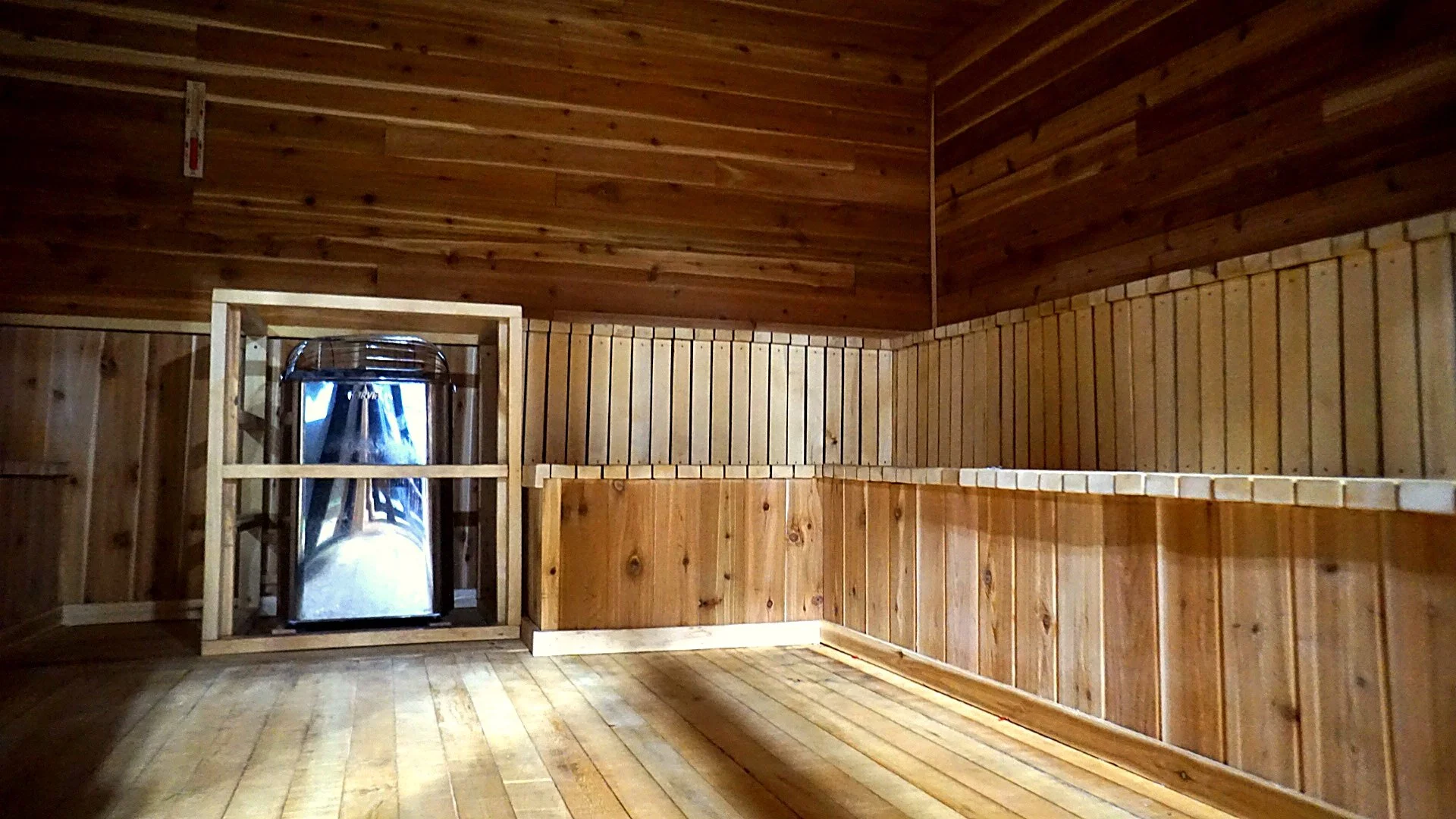
You've also got the biggest heat tool available sitting right next door. The 12-person cedar sauna at Root Strength is included with your Muók membership, and post-training heat exposure has real evidence behind it for recovery. Sore, stiff, and beat up from the week? That's the move. Just don't sit in it with a fresh, swollen ankle.
The Muay Thai Cheat Sheet
Here's the case-by-case version for the things that actually get beat up in this sport.
Ice for pain in the first day or two if it's genuinely sore. But this is impact stress that accumulates — if it keeps happening, that's a training load conversation, not an ice conversation.
Acute and swelling — ice for pain, elevate, compress. Then start gentle, pain-free movement early. Don't park it for two weeks. If you can't bear weight, get it looked at.
Classic heat case. Warm the tissue up before mobility work and you'll get more range with less guarding. Ice here would be actively counterproductive.
Chronic, no swelling — heat helps you move. But a shoulder that keeps nagging needs strength work, not a heating pad on repeat.
General muscle soreness the next day isn't an injury. Heat, sauna, light movement, food, sleep. Icing your whole body to blunt soreness may work against the adaptation you just trained for.
If it swelled up fast, hurts sharply, or changed how you move — ice for comfort and get eyes on it. That's exactly what Root PT on-site is there for.
The 10-Second Call
The Bottom Line
Neither one is a healing shortcut. Both are tools for managing symptoms so you can do the thing that genuinely drives recovery: move. Ice buys you pain relief early. Heat loosens you up so you can work. But the real medicine is loading the tissue, restoring movement, and rebuilding strength.
- Ice: fresh injury, first 48 hrs, 10–20 min, pain relief only.
- Heat: chronic stiffness, aches, pre-training warm-up — never on fresh swelling.
- Inflammation isn't the enemy. It's how you heal.
- Movement is the real medicine. PEACE & LOVE, not RICE.
- The sauna next door is your best heat tool — included with membership.
- Not improving in a few days? Stop guessing. Walk down the hall to Root PT.
Stop Guessing — We Have a PT Clinic On-Site
Ice and heat are fine for the everyday stuff — the bruises, the tightness, the ordinary soreness that comes with training Muay Thai. But if pain is significant, isn't improving after a few days, changes how you move, or keeps coming back — that's the tissue telling you it needs more than a heating pad. Training through it is how a two-week problem becomes a three-month one.
That's the whole reason Root Physical Therapy is on-site. Same building, same hallway, steps from the training floor. Our clinicians are Doctors of Physical Therapy — and two of them coach Muay Thai here, so you're not explaining what a checked kick is to someone who's never thrown one. They can assess what's actually going on, get you loading again safely, and build the plan that gets you back on the mats.
Washington is a direct-access state, which means you don't need a doctor's referral to be seen. Most major insurance accepted. Just walk down the hall — or book an assessment.
Train Hard. Recover Right.
New to Muók? Come try a free class — and see the training floor, the sauna, and the on-site PT clinic for yourself.
Book a Free Class →- Dubois B, Esculier JF. Soft-tissue injuries simply need PEACE and LOVE. British Journal of Sports Medicine. 2020;54(2):72–73.
- Critical review of cryotherapy and tissue regeneration. British Journal of Sports Medicine. 2024.
- Mirkin G. Why Ice Delays Recovery. Author's revised position statement, 2015.
- Wang ZR, Ni GX. Is it time to put traditional cold therapy in rehabilitation of soft-tissue injuries out to pasture? World Journal of Clinical Cases. 2021;9(17):4116–4122.
- Malanga GA, Yan N, Stark J. Mechanisms and efficacy of heat and cold therapies for musculoskeletal injury. Postgraduate Medicine. 2015;127(1):57–65.
The Sauna Next Door — How It Fits Into Your Muay Thai Training
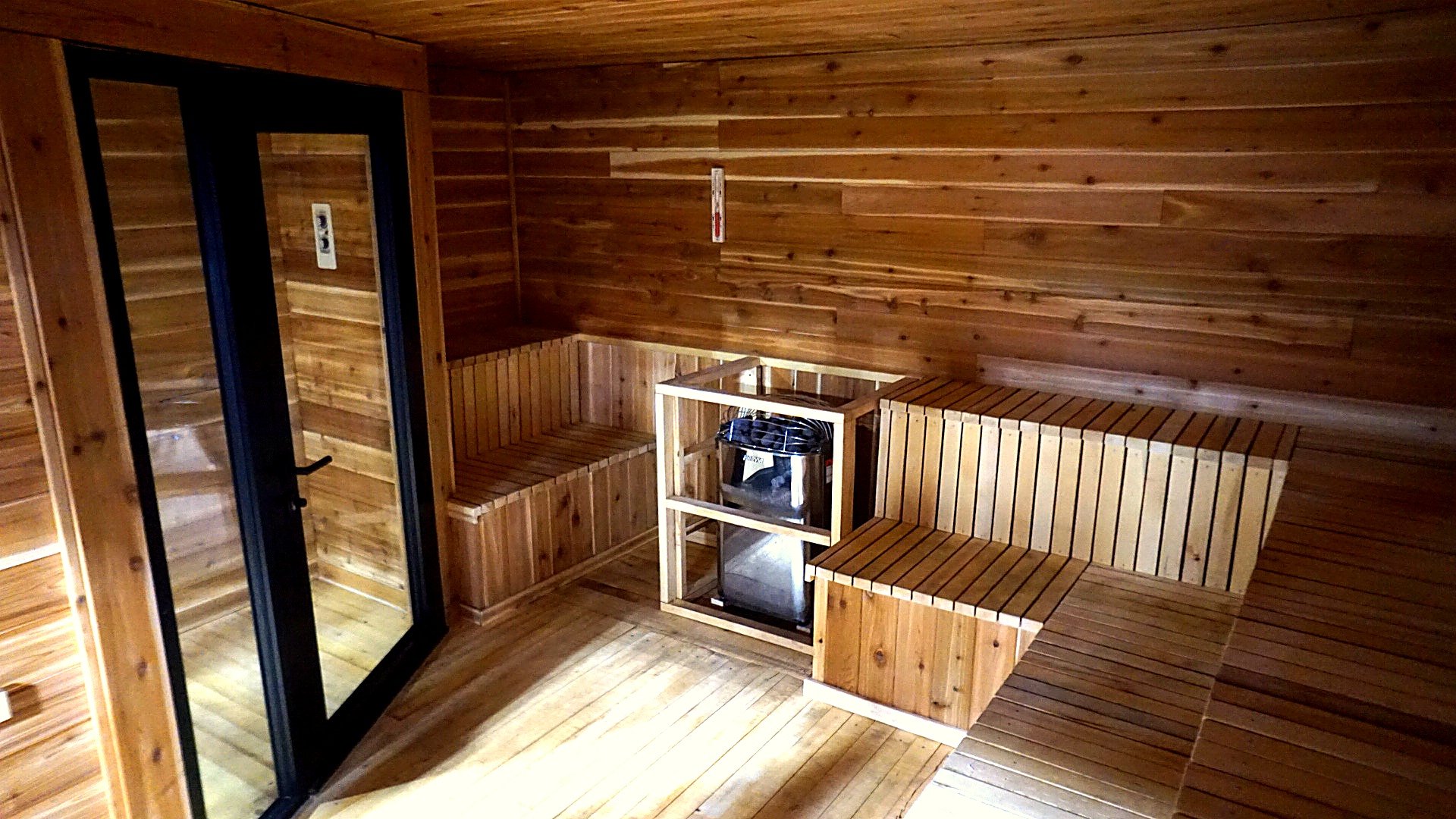
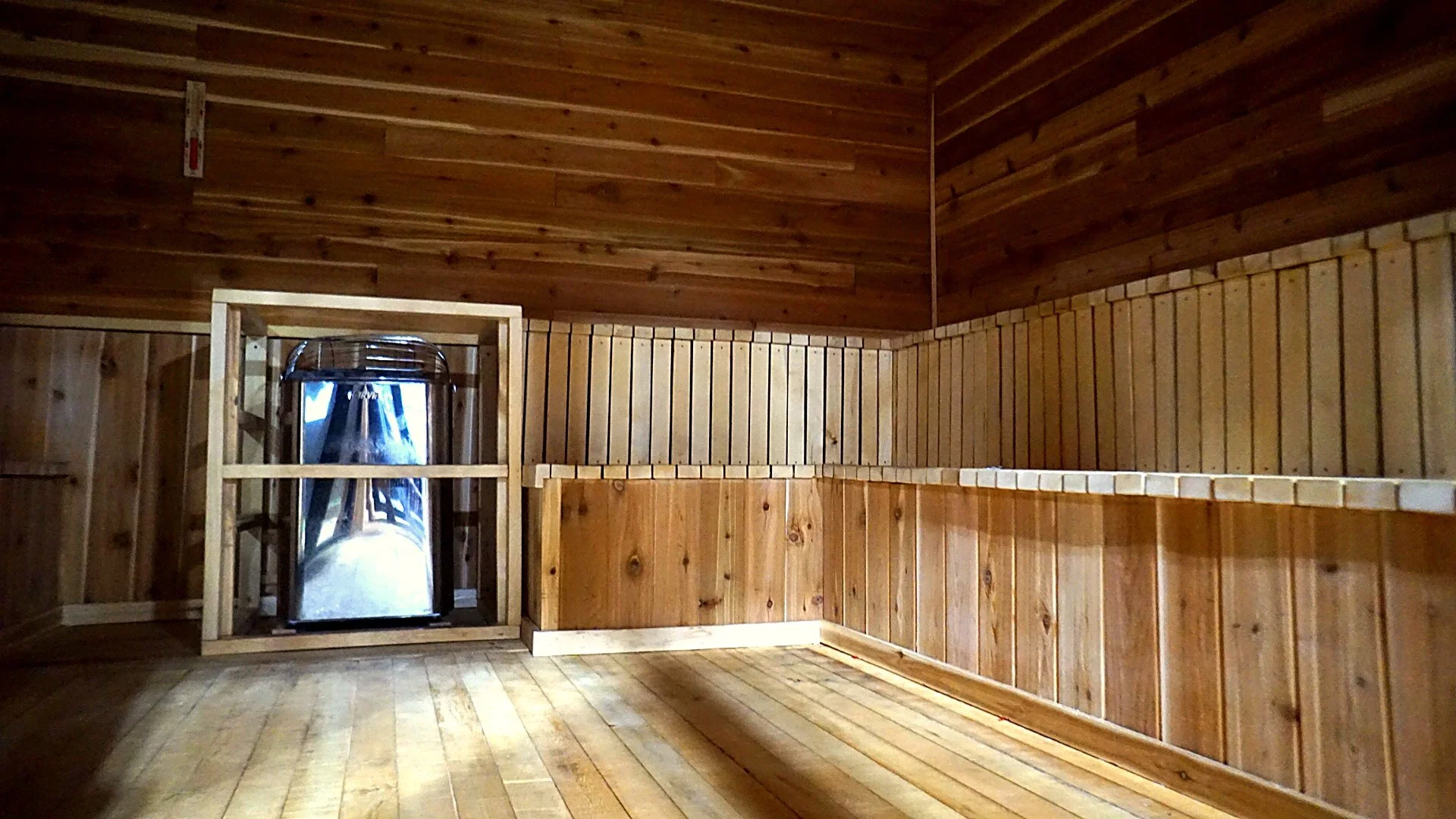
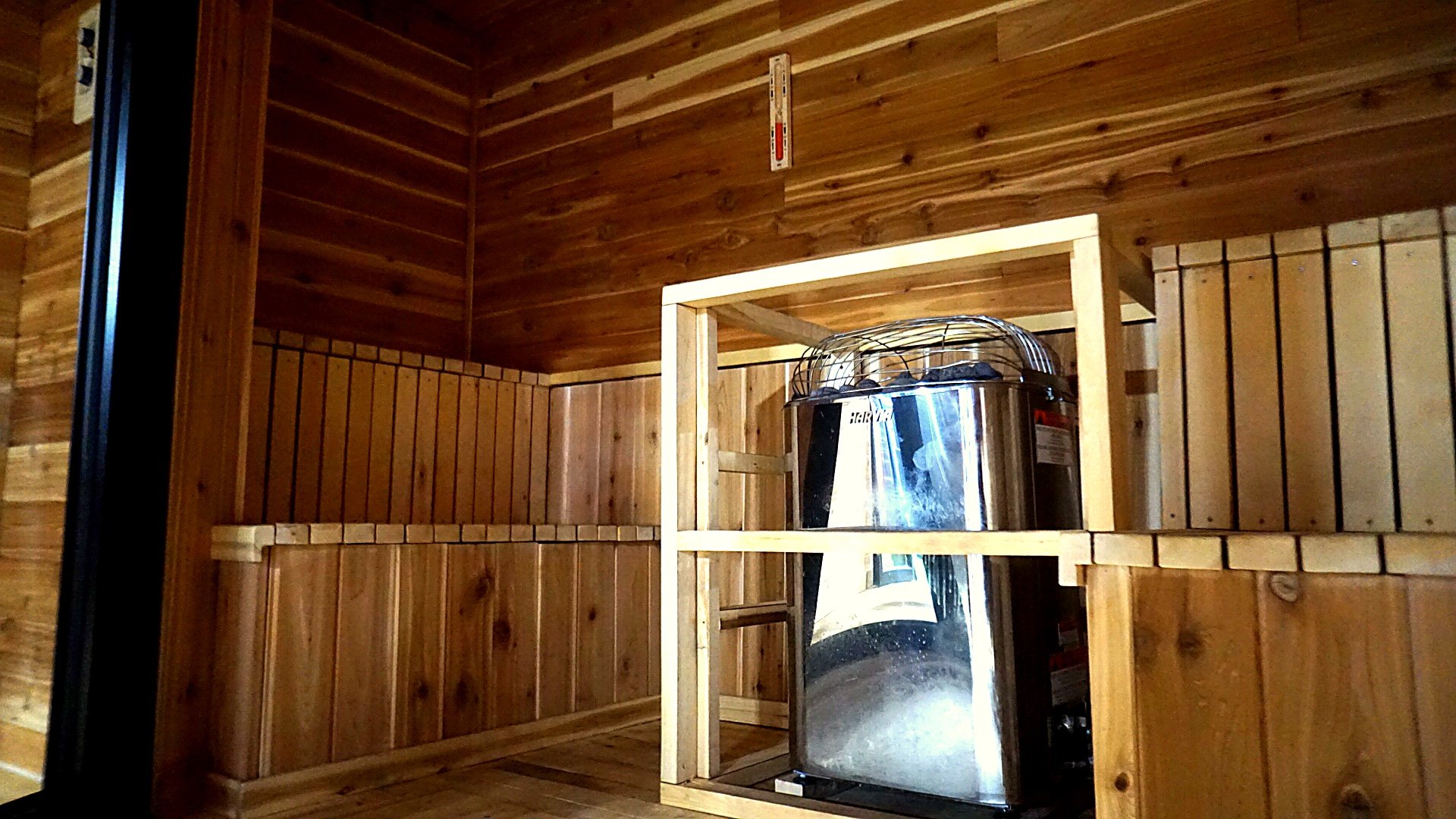
If you've been training at Muók and haven't used the sauna yet, you're leaving recovery on the table. There's a 12-person custom cedar sauna built into Root Strength — literally next door, same building, same hallway. And if you're a Muók member, you have access. It's not a gimmick. The research on post-exercise sauna use for recovery has gotten strong enough that we consider it a legitimate part of the training process, not an optional add-on.
Here's what it does, why it matters specifically for Muay Thai, and how to use it around your training.
Why Sauna Makes Sense for Muay Thai Specifically
Muay Thai creates a specific kind of fatigue that most other sports don't. You're absorbing impact — checked kicks, body shots, clinch work — on top of the metabolic demands of sustained high-intensity output. Your muscles are sore from the work and from the contact. Your nervous system is taxed from sparring intensity and reaction demands. Your shins are accumulating impact stress. And all of this has to recover before your next session.
The sauna addresses several of these recovery channels simultaneously:
Muscle soreness and tissue recovery
A 2025 systematic review in Sports Medicine — Open confirmed that post-exercise heat exposure — sauna and hot water immersion — improves both subjective recovery (how sore you feel) and objective performance markers (how well you actually perform in your next session). The mechanism: increased blood flow to recovering tissue, enhanced clearance of metabolic byproducts, and stimulation of heat shock proteins that play a role in cellular repair.
In practical terms: 15–20 minutes in the sauna after bag rounds, pad work, or sparring means you show up to your next session less sore and more ready to train. The members who use the sauna consistently after class notice the difference within the first week.
The nervous system reset
Sparring and hard pad rounds put your sympathetic nervous system — your fight-or-flight system — into a heightened state. That's useful during training. It's less useful for the rest of the day. Sauna bathing triggers a parasympathetic response: your heart rate comes down gradually, your body shifts into recovery mode, and the endorphin release produces a calm that's qualitatively different from just sitting down after class.
Members who use the sauna after sparring sessions specifically report sleeping better that night. Sleep is when the actual recovery happens — anything that improves sleep quality after hard training is worth doing.
Cardiovascular conditioning that compounds with your training
This is the part most people don't know about. Sauna bathing produces cardiovascular responses similar to moderate-intensity exercise — heart rate goes to 100–150 bpm, cardiac output increases, blood vessels dilate. Do this regularly (4+ times per week) and you get measurable cardiovascular adaptations: better blood vessel function, lower resting blood pressure, improved cardiac efficiency.
The landmark Finnish research — published in JAMA Internal Medicine, following over 2,300 adults for 20+ years — found that people who used the sauna 4–7 times per week had a 63% lower risk of sudden cardiac death, a 50% lower risk of fatal cardiovascular disease, and a 40% lower risk of death from any cause, compared to those who used it once per week. People who combined high fitness with frequent sauna use saw a 69% lower risk of sudden cardiac death. The sauna isn't just recovering you from today's session — it's building the cardiovascular base that supports everything you do at Muók.
The weight cut consideration
We need to address this directly because it's part of the combat sports landscape. Some fighters use saunas for weight cutting — dehydrating before weigh-ins to make weight class. We don't endorse this practice for our members, and the evidence is clear that severe dehydration impairs performance, increases injury risk, and — in extreme cases — is dangerous. The sauna at Root Strength is a recovery tool, not a weight-cutting tool. If you're competing and managing weight, talk to a professional about doing it safely rather than relying on dehydration.
The members who recover best between sessions aren't the ones with the most supplements or the fanciest recovery gadgets. They're the ones who sleep well, eat enough, and — increasingly — use the sauna consistently after training. The evidence on this has gotten hard to ignore.
How to Use the Sauna Around Your Muay Thai Training
15–20 minutes in the sauna within 30 minutes of finishing class. Hydrate before you go in (16–24 oz of water minimum) and again after you come out. This is the protocol with the strongest recovery evidence. Do it after every session if you can — the benefits are dose-dependent, meaning more frequent use produces better results.
Sparring takes more out of you than bag work or pads — both physically and neurologically. On sparring days, 20 minutes in the sauna is particularly valuable for the nervous system reset. Let your heart rate come down naturally in the sauna rather than just sitting in your car. The endorphin response after a hard sparring session combined with sauna is noticeably different from skipping it. If you've taken any significant head contact, see our concussion guide first — recovery priorities are different after a significant hit.
You don't have to pair every sauna session with training. The cardiovascular and longevity benefits from the Finnish research were associated with 4–7 sessions per week — including non-training days. A 15–20 minute sauna session on a rest day is an easy, low-effort way to extend those benefits without adding training stress. As a Muók member, you have access whenever Root Strength is open — just walk next door.
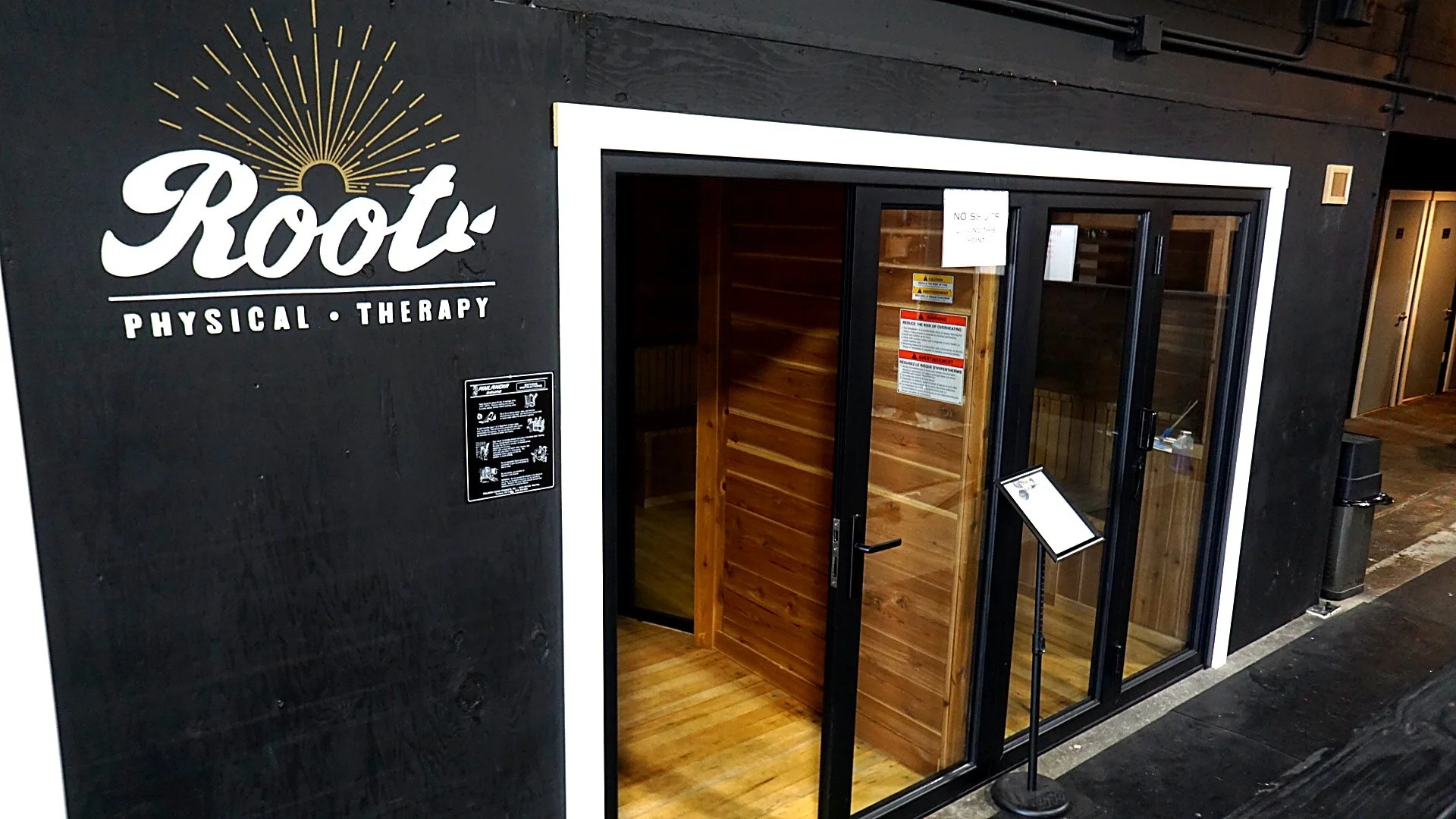
The Community Angle
This might be the most underrated part. The sauna at Root Strength holds 12 people. That's not a single-user pod you sit in alone with headphones on. It's a space where you decompress with training partners after a hard session — the same people you just spent an hour drilling with. The conversations that happen in the sauna after class are part of the culture at Muók and Root Strength. The recovery is physical, but the community component matters too.
If you're training at Muók 3+ times per week and not using the sauna, you're missing one of the easiest recovery wins available to you. It's in the same building. It takes 15–20 minutes. The evidence is strong. And your training partners are probably already in there. You have access as a Muók member — just walk next door after class.
Who Should Be Cautious
Uncontrolled blood pressure, recent heart problems, pregnancy, active fever or infection, or recent alcohol consumption (do not sauna after drinking — this is a documented risk). If you're unsure, our PT team at Root Physical Therapy — same building — can assess whether sauna is appropriate for you. For the full clinical breakdown of sauna safety and specific protocols, see the clinical guide from Root Physical Therapy.
The Bigger Picture — Recovery Is Part of Training
The members who train at Muók for years without burnout or chronic injury are the ones who take recovery seriously. Not in an obsessive, overthinking-it way — in a practical, consistent way. They sleep enough. They eat enough. They address pain early instead of pushing through it. They manage their shoulders, their shins, their hip mobility. And increasingly, they use the sauna after class.
The sauna is not a magic recovery bullet. It's a tool — one with a stronger evidence base than most supplements or gadgets — that fits naturally into the post-training window you already have. Class ends, you walk next door, you sit in the sauna for 15 minutes, you hydrate, you go home. That's it. The simplicity is the point.
For the full breakdown of the evidence — including the specific physiological mechanisms, the long-term cardiovascular data, and the clinical perspective on who should and shouldn't use the sauna — see the companion posts from our partners in the same building:
The Sauna at Root Strength — What It Actually Does for Your Training →
Sauna and Recovery — A Clinical Guide from Root Physical Therapy →
Train Hard. Recover Smarter.
Every Muók Boxing membership includes sauna access — 12-person custom cedar sauna, same building, steps from the training floor. Come try a free class and see the full facility for yourself.
Book a Free Class →How Long Does It Take to Get Good at Muay Thai?
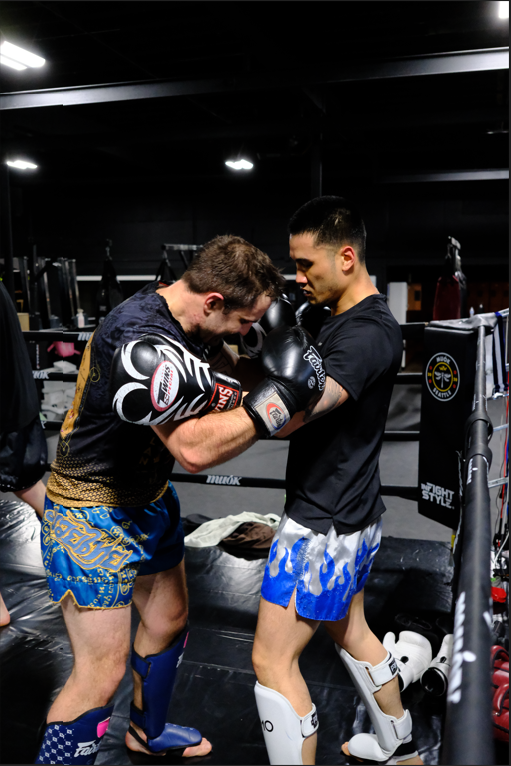
This is one of the questions we get asked most often. Sometimes by people who haven't started yet and are wondering whether it's worth committing to. Sometimes by members three months in who are frustrated that they don't feel "good" yet. Sometimes by people six months deep who suddenly notice they've improved and want to know what comes next.
The honest answer requires defining what "good" means — because the timeline depends entirely on that. "Good enough to enjoy training" is a very different milestone from "good enough to spar an experienced training partner" which is very different from "good enough to compete." Each one has its own timeline, and the gap between them is usually bigger than people expect.
Here's the version we tell people who actually want a real answer.
-
01What "good" actually means — and why it mattersThe single biggest reason people get the timeline wrong is they don't define what they're aiming for.
-
02The realistic timeline by milestoneClass 1 to "I feel competent" to "experienced practitioner" — what each one actually takes.
-
03What changes the timeline (and what doesn't)Athletic background, prior martial arts experience, age, and what they actually mean for your progress.
-
04The plateau every member hits — and what to do about itAround the 6-month mark, most people stall. Here's why, and how the people who break through it actually do.
-
05The thing nobody tells you about getting goodWhy the people who actually get good aren't the ones with the most talent.
First — Define What You Mean by "Good"
"Good at Muay Thai" can mean five completely different things, and the timeline depends on which one you're after. Here's what most beginners actually mean when they ask the question, ranked roughly in difficulty:
You know the basic techniques, you can follow along, you don't feel lost. You enjoy training. This is what most people actually want when they ask the question.
Your jab, cross, kick, and teep have real power and reasonable form. You can hold pads. You can do most drills cleanly. People at the gym recognize you've put in time.
You can spar a similarly-experienced partner without falling apart. You can throw what you want, defend what you see coming, and stay composed under pressure.
You can train with anyone in the gym, including more advanced members, and hold your own. You're starting to develop your own style. New members come to you with questions.
You can fight an amateur match safely and competitively. This is a different commitment level entirely — most members never aim for this, and that's fine.
Even fighters with 100+ professional fights still have things they're working on. Mastery in Muay Thai is a moving target — and that's part of why people stay.
The Realistic Timeline by Stage
This is what we actually observe at Muók for someone who trains consistently — meaning 2 to 3 classes per week, with reasonable focus during class. Less than that and the timeline stretches considerably. More than that — 4+ classes per week — and the timeline compresses, but only up to a point. Recovery and skill consolidation also take time, and they don't happen any faster just because you train more.
Within your first month, you'll start to feel like you belong. You'll know the basic stance, the jab-cross combination, the front kick (teep), and the roundhouse. You won't feel proficient yet — but you won't feel completely lost either. The discomfort of week 1 fades fast. By week 6 to 8, most members tell us they look forward to class instead of dreading the unfamiliarity.
Six months to a year of consistent training is what it takes for the basic techniques — jab, cross, hook, lead and rear roundhouse, teep, knees, basic clinch — to feel like yours rather than something you're consciously remembering. You'll be able to hold pads for a partner reasonably well. You'll throw combinations without thinking through each strike individually. This is the stage where most people start to genuinely feel like they're "doing Muay Thai" rather than just learning it.
Sparring well is its own skill, separate from technique. It requires reading your partner, managing distance, controlling your own composure, and applying technique under pressure — none of which can be learned through bag work. Most members who come to spar productively need 12 to 24 months of consistent training and gradually accumulated sparring rounds. Note that sparring is always optional at Muók — many members train long-term and never spar, and that's a completely valid path.
Three to five years of consistent training is what it takes to be the kind of training partner that makes everyone in the gym better. You'll have a developed personal style, you'll be able to coach newer members through problems they're working on, and you'll have built durability — your body adapted to the demands of the sport rather than fighting them. This is also where Muay Thai stops feeling like something you're learning and starts feeling like something you do.
Amateur competition readiness depends heavily on athletic background. Someone from a wrestling or boxing background can be ready for an amateur fight in 1–2 years. Someone starting from no athletic base typically needs 3–4 years. Either way, this stage requires a different commitment level — most members aren't aiming for this, and that's perfectly fine. Muay Thai is far more often a long-term practice than a competitive pursuit.
Most people overestimate what they can do in 3 months and dramatically underestimate what they can do in 3 years. Muay Thai is one of the clearest examples of this we see.
What Changes the Timeline (And What Doesn't)
People often ask whether their athletic background, age, or previous experience will speed things up or slow them down. The honest answer is — some things matter a lot, and some things matter much less than people think.
What actually speeds things up
Frequency, more than intensity. Three 90-minute sessions per week beats two hard 2-hour sessions. Your nervous system needs reps, not just hours, to internalize technique. The members who progress fastest at Muók are not the hardest trainers — they're the most consistent ones.
Coaching attention and pad work. One round of focused pad work with a coach who's correcting you in real time is worth several rounds on the bag. Choose gyms where you actually get coaching, not just classes you attend.
Drilling outside class. Members who shadow box at home for 5 minutes a day, who think about footwork while walking around, who watch fights with intention — they progress measurably faster. Skill is built between classes as much as in them.
Prior martial arts or combat sports experience. Boxing experience helps the most (your hands are already built). Other striking arts (TKD, karate) help with kicking but sometimes require unlearning bad habits. Wrestling or BJJ experience gives you body awareness and doesn't conflict with anything in Muay Thai.
What matters less than you think
Athletic baseline. Being in shape helps, but Muay Thai will get you in shape if you're not. Members who started genuinely out of shape and stayed consistent for 6 months end up at a comparable skill level to athletic newcomers. The fitness comes from the training itself.
Age. We have members in their 50s and 60s who are technically excellent. Age affects what you can do at the highest competitive levels, and recovery becomes more important to manage. But for the goal most people actually have — being good enough to enjoy training and develop real skill — age is much less of a barrier than people assume.
Body type. Muay Thai is built around leverage and technique, not strength or size. Smaller, less athletic members can develop into excellent practitioners. Larger members do too. The myth that you need a specific body type is part of what keeps people from starting.
What slows things down
Inconsistency. The biggest single factor by far. Three months of training twice a week beats six months of training once a week. Skill accumulates only when sessions are close enough together that you don't reset every time you walk in.
Training only on the bag. Solo bag work has value, but it's not enough. The skills that actually matter — distance management, timing, reading partners, pressure response — only develop with another human being involved.
Untreated injury. Members who train through shoulder problems, shin splints, or other accumulating injuries lose far more time than members who address things early. The PT team at Root Strength next door is a meaningful part of why our members stay healthy and continue progressing.
The 6-Month Plateau — And How to Break Through It
This one happens to almost everyone, and most beginner content doesn't talk about it. Around 4 to 6 months in, most members hit a stretch where progress stalls. The first few months had visible week-over-week improvement. Then suddenly nothing seems to be getting better. Some members drop out here. Most don't, but they get frustrated.
Here's what's actually happening: the early phase of any skill is steep gains because everything is new. Once you've covered the fundamentals, progress moves from "learning new techniques" to "refining the techniques you already know" — which is much harder to see week-over-week, but is where real skill gets built. The plateau is real, but it's not actually a plateau in growth. It's a plateau in visible growth.
If you're 4–6 months in and feel like you've stopped progressing, here's what we tell members who come to us with that exact frustration: ask a coach to film you doing a combination you knew at week 4, and compare it to now. The difference is almost always significant — your stance is more stable, your weight transfer is cleaner, your timing is better. You stopped seeing the gains because you've internalized them.
What to do during the plateau
The members who break through this stretch and end up with real skill long-term tend to do a few specific things:
They add a small amount of variety — a private session, a focused drill series, a different class time with different partners. Variety reawakens the nervous system to specific corrections.
They focus on weak techniques deliberately instead of just throwing the ones they like. The hook you avoid is usually the technique that, when developed, unlocks the rest of your boxing.
They start watching fights with intention — not just for entertainment but to study how technique applies under pressure. This is one of the highest-leverage things you can do for skill development outside of training itself.
They accept the plateau and keep showing up. Not glamorous, but it's the difference between members who eventually become genuinely skilled and members who quit at this exact stage.
The Thing Nobody Tells You About Getting Good
The members who actually get good at Muay Thai — the ones we look at five years in and recognize as developed practitioners — are not the most athletic ones, not the strongest ones, and usually not the ones who came in with the most natural coordination.
They're the ones who showed up consistently for years, paid attention during class, took feedback well, addressed injuries early, and kept training when it stopped being novel. That's it. Talent matters less than people think. Consistency matters more than people want to believe.
This is good news for anyone wondering whether they have "what it takes" before signing up. You don't need a particular athletic background, body type, or natural ability. You need a willingness to show up regularly for an extended period of time. Everything else gets built along the way.
So — Is It Worth Starting If It's Going to Take That Long?
That's the real question hiding underneath the timeline question. And the answer is yes — but not for the reason most beginner guides give you.
It's not because the destination is worth the wait. The actual reason is that the experience of training is good throughout. Class is enjoyable from week 2 onward. The community is genuine. The fitness improvements are real and noticeable. The mental clarity that comes with consistent training is something most members talk about more than the technical progress. You're not waiting until year 3 to enjoy this. You're enjoying it the whole time.
The skill is the side effect of showing up to something you actually enjoy. That's what makes this sustainable, and it's why members who train at Muók for five years describe it as one of the best decisions they've made — not because they became fighters, but because they found a practice they kept coming back to.
Start Where You Are
You don't need to commit to a 5-year journey. You need to commit to your first class. Come try a free trial at Muók — bring workout clothes and a water bottle, and we'll handle the rest. The timeline starts when you walk in the door.
Book a Free Class →