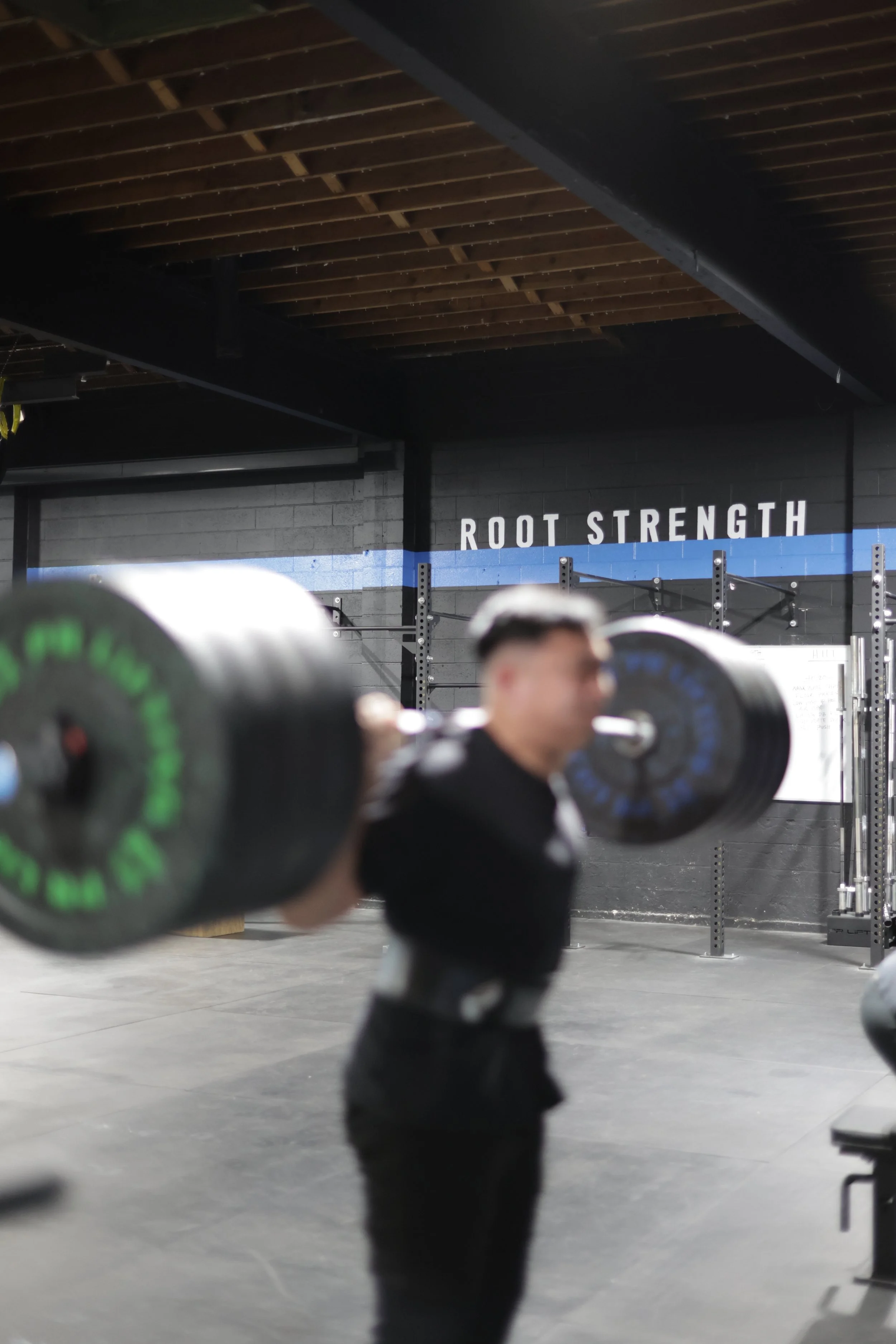
The debate about whether Muay Thai athletes should lift weights has been going on for decades. Traditional Thai training camps built conditioning around running, shadow boxing, pad work, and sparring. The weight room was avoided — partly out of tradition, partly out of fear that lifting would add unwanted mass or slow athletes down.
That debate now has a clear answer from peer-reviewed research. A study published in the European Journal of Sport and Exercise Science measured the kick power of Muay Thai fighters before and after an 8-week Olympic weightlifting program — and the results were not subtle.
What the Study Found
Researchers at the University of East London divided Muay Thai fighters into two groups. One group continued their standard Muay Thai training. The other followed an 8-week Olympic weightlifting program using derivatives — movements like the hang clean, power clean, and jump shrug — in addition to their regular training.
Kick power was measured at the start and end of the study using the PowerKube, a device that quantifies the force output of strikes. The weightlifting group improved their roundhouse kick power by 7.41%. The countermovement jump — a direct measure of lower body explosive power — improved by 7.54%. The traditional training group improved kick power by just 1.54% and jump height by 0.33% over the same period.
Critically, the weightlifting group achieved these improvements without any meaningful change in body weight — directly addressing the weight class concern that has historically kept fighters out of the gym.
Elite boxers generate punching force primarily from the legs, not the arms. Lower-ranked fighters rely more on trunk and arm force. The weight room closes that gap.
Why Olympic Lifting Transfers to Muay Thai
The connection between Olympic lifting and Muay Thai performance isn't coincidental. It comes down to biomechanics — specifically how force is generated in a Muay Thai kick.
A Muay Thai roundhouse kick is a full-body explosive movement. Power originates from the ground — through the planted foot, up through the ankle, knee, and hip, rotating through the core, and releasing through the shin. This chain of force production is identical to what happens in the receiving phase of a hang clean or power clean: triple extension of the ankle, knee, and hip in one explosive coordinated movement.
Olympic lifting derivatives train exactly this pattern — at high velocity, under load, with a coordination demand that bodybuilder exercises or simple barbell squats don't replicate. The nervous system learns to recruit maximum motor units and fire them in the right sequence. That neurological adaptation transfers directly to the mechanics of a kick.
The Best Olympic Lifting Movements for Muay Thai
Hang clean
Trains explosive hip extension from a standing position — the same hip drive that generates roundhouse kick power. Lower technical barrier than the full clean from the floor.
Power clean
Full ground-to-rack explosive movement. Develops complete kinetic chain coordination from the floor up. Most directly mirrors the force generation of a high kick.
Jump shrug
A partial Olympic derivative focused on the pull phase. Lower skill demand, high power output. Good entry point for fighters new to weightlifting movements.
Hang high pull
Develops the transition from lower body drive to upper body pull — relevant for the full-body coordination of Muay Thai clinch work and knee strikes.
The Post-Activation Potentiation Effect
A related study published in the Journal of Strength and Conditioning Research in 2023 took this a step further — finding that performing heavy squats immediately before kicking can boost kick power in the short term through a phenomenon called Post-Activation Potentiation (PAP).
The study tested 17 experienced Muay Thai fighters performing 4 heavy squats followed by kicking tests at rest intervals of 2, 5, and 8 minutes. The 5-minute rest interval produced the best results — measurably stronger roundhouse and teep kicks compared to baseline. The mechanism is the same: heavy compound loading temporarily elevates the nervous system's motor unit recruitment capacity, and the kicks that follow benefit from that priming effect.
The practical application is direct. Performing a few heavy squat sets followed by a 5-minute rest before your kicking rounds is a scientifically validated warm-up protocol that can measurably improve performance within a single session.
How to Integrate This Into Your Training
Start with 2 sessions per week
The research supports a 2:1 ratio — two Muay Thai skill sessions for every one strength session. Adding Olympic lifting on days between your technical sessions minimizes fatigue interference while allowing enough frequency for neurological adaptation.
Prioritize movement quality over load
Olympic lifting movements require technical precision. Poor mechanics under load will reinforce bad motor patterns — the opposite of what you want. Start lighter, learn the movement pattern correctly, then progressively load. The performance gains come from quality repetitions, not maximum weight.
Keep sessions short and explosive
Research supports low repetition ranges (3–5 reps per set) at 70–85% of max effort for power development. Long, high-volume sessions will accumulate fatigue that bleeds into your technical training. Keep strength work to 45–60 minutes maximum.
Work with coaches who understand both systems
The biggest risk of adding Olympic lifting to a Muay Thai training schedule is poor load management — too much volume, too close to technical sessions, without proper periodization. This is exactly where having Doctors of Physical Therapy involved in programming makes a practical difference.