
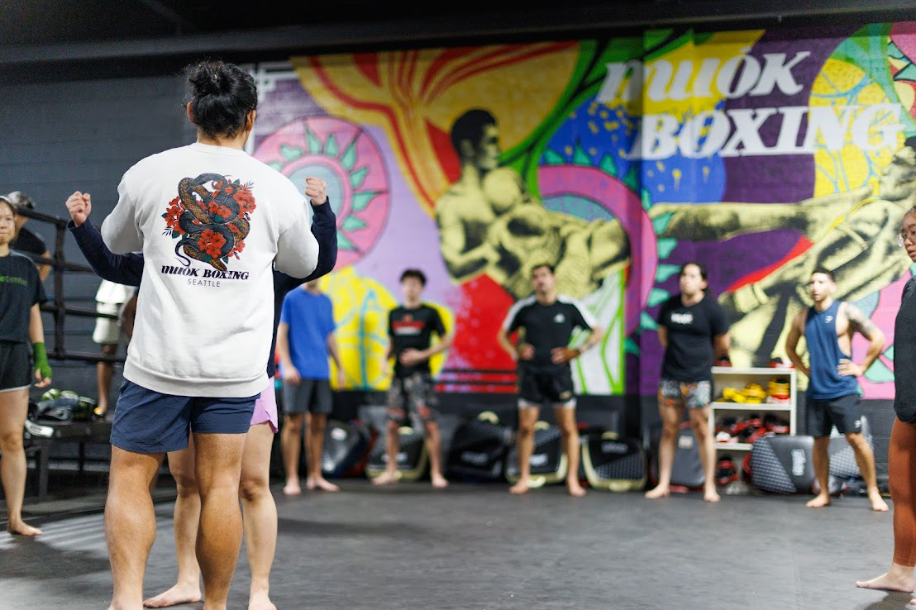
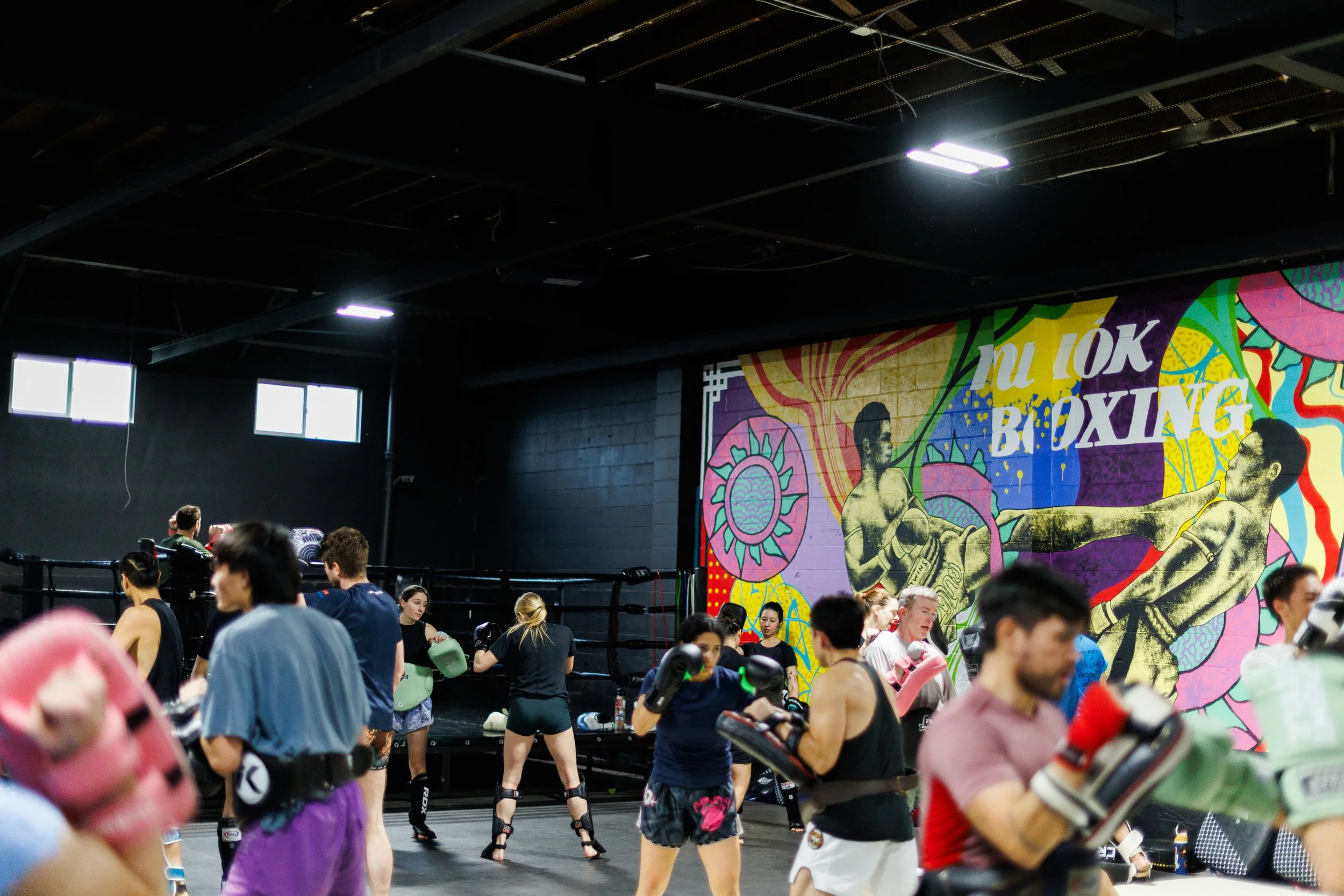
Muay Thai Classes Near You in Seattle — What to Look for Before You Sign Up

If you're searching for Muay Thai classes near you in Seattle, you're probably close to making a decision — you've done some research, you've shortlisted a few gyms, and now you want to know what to actually look for before you commit. This guide gives you a practical framework for evaluating what you find.
Not all Muay Thai classes are equal. The difference between a good gym and an average one isn't always obvious from a website — but it becomes very clear the moment you walk in. Here's what to pay attention to.
What to Look for in a Muay Thai Class Schedule
The schedule is the first filter. A gym that only offers three or four classes per week gives you almost no flexibility — miss one and you've lost a third of your training for the week. Look for a gym that runs enough classes across enough time slots to fit your actual life.
Morning, midday, and evening options
Your work schedule will change. Your energy levels will vary. A gym that only offers evening classes leaves you with no options when life doesn't cooperate. Morning and midday classes — even one or two — make a meaningful difference in how consistently you can show up.
Weekend classes
Saturday morning classes are one of the most popular time slots for working adults. If a gym doesn't run weekend classes, a significant portion of your potential training time is just unavailable.
Enough classes to train three times per week
Three sessions per week is the baseline for real progress. Make sure the schedule you're looking at actually makes that possible given your availability — not just theoretically, but realistically on the days you can train.
How to Evaluate Coaching Quality When You Visit
The trial class is your best evaluation tool. Here's what to pay attention to while you're there:
- Does the coach explain why, not just what? A good coach tells you the mechanics behind a technique — why the hip rotates before the shoulder, why the guard position is where it is. If a coach only demonstrates without explaining, you're getting imitation rather than understanding.
- Do they give individual corrections? Watch whether the coach circulates and gives personalized feedback, or whether they just call out combinations from the front of the room. Individual attention is what actually improves technique.
- Do they control the pace for beginners? A well-structured beginner class builds complexity gradually. If you're thrown into advanced combinations on your first day with no foundation, that's a flag about how the gym manages progression.
- Do experienced members help newer ones? The culture of a gym shows up in how senior members treat beginners. A gym that values its community will have experienced practitioners who look out for newer members — not ones who ignore or intimidate them.
- Is the sparring culture controlled? If you get to see sparring during your visit, watch whether it's technical and controlled or aggressive and ego-driven. This tells you more about a gym's culture than any marketing can.
Red Flags to Watch For
- Long-term contracts with large enrollment fees. A gym that believes in what it offers doesn't need to lock you in financially. Month-to-month with no enrollment fee is the structure of a gym that earns your continued membership.
- No free trial. Any reputable gym offers a free trial class. If a gym asks you to pay before you've ever trained there, that tells you something about how much they trust their own product.
- Everyone in the same class regardless of level. Beginners and experienced practitioners training together without any level separation is a flag. Beginners get overwhelmed; experienced members don't get challenged appropriately. Look for gyms with dedicated beginner programming.
- Coaches who can't explain what they're teaching. If you ask why a technique works a certain way and the answer is "that's just how it's done" — the coaching depth isn't there. Understanding why things work is what separates authentic martial arts coaching from fitness instruction using martial arts movements.
- Aggressive or unwelcoming culture. You'll know it when you feel it. If the environment feels intimidating rather than challenging, ego-driven rather than community-oriented — trust that instinct. The best gyms are genuinely welcoming without being soft.
"The right gym is the one where you feel challenged and welcomed at the same time. Both of those things are possible — and both of them should be present from your very first class."
What Your First Class Should Feel Like
Your first Muay Thai class should be challenging — your coordination won't be there yet, the movements will feel unfamiliar, and your cardio will be tested. All of that is normal and temporary.
What it should also feel like: welcomed. A coach who takes time to introduce the basics before the class starts. Experienced members who are patient with a new face. An environment where being a beginner is treated as the starting point of something, not a deficiency.
If you leave your first class feeling physically challenged but genuinely welcome — you've found the right gym. If you leave feeling overwhelmed, ignored, or uncomfortable — keep looking. The art is worth finding the right place to learn it.
Muay Thai Classes at Muók Boxing — Georgetown, Seattle
We run 17 Muay Thai classes per week across morning, midday, and evening time slots — specifically because we know your schedule doesn't always cooperate. Every class is split into beginner and experienced groups with dedicated coaching at each level, so you're always training at the right pace with the right instruction.
Georgetown, Seattle WA 98108
Free parking in lower and upper lots
What Makes Muók Different
Authentic Muay Thai technique — coaches trained at renowned Thai camps including PK Saenchai, Manasak, and Sitjaopho. Coaching staff including multiple Doctors of Physical Therapy. A community consistently described as one of the most welcoming in Seattle. 200+ five-star Google reviews. Month-to-month membership with no enrollment fees and no contracts.
The best way to know if it's right for you is to come in. Your first class is free — no commitment, no pressure, just come train.
- Free trial class — no commitment, no pressure
- Beginner and experienced levels — dedicated coaching at each
- Morning, midday, and evening time slots — 17 classes per week
- Month-to-month membership — no enrollment fees, no contracts
- 200+ five-star Google reviews — Seattle's most reviewed Muay Thai gym
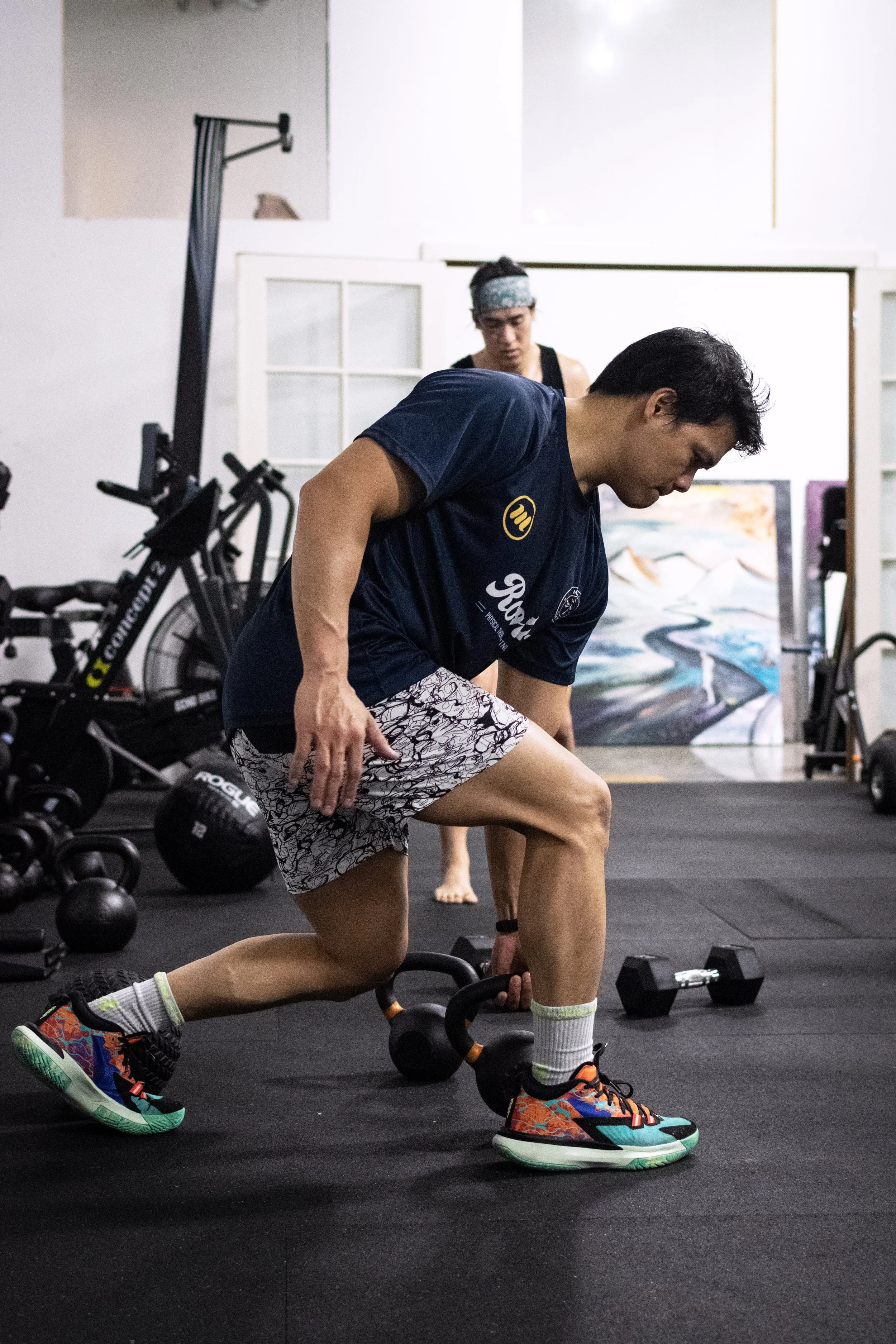
Physical Therapy Gym in Seattle — Train Hard, Recover Smart at Muók Boxing
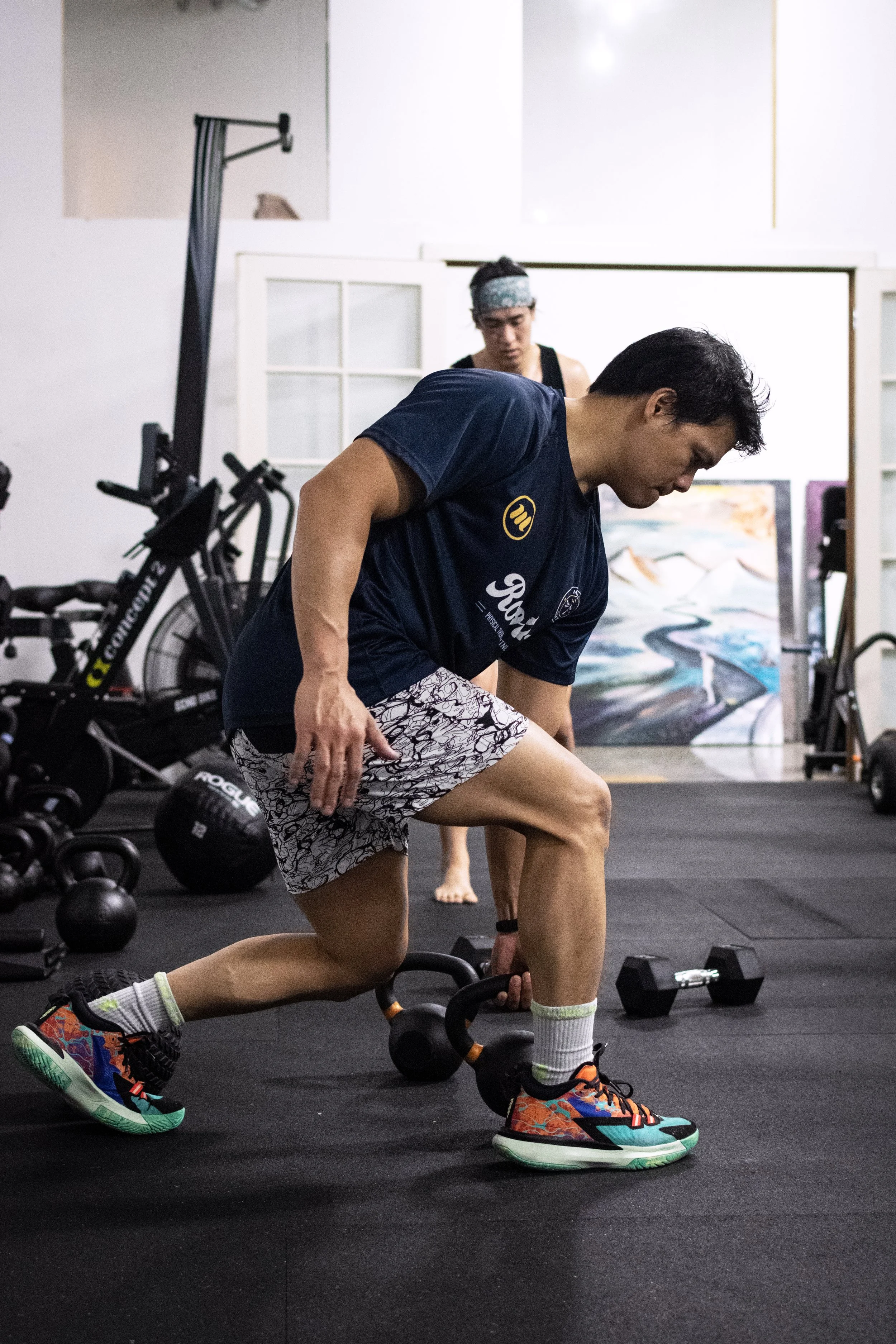
Most people think of physical therapy as something you do after you get hurt. You train, something breaks down, you stop training, you go to PT, you recover, you start again — usually making the same mistakes that caused the injury in the first place.
Muók Boxing is built around a different model. Our coaching staff includes multiple licensed Doctors of Physical Therapy — and their expertise isn't reserved for when something goes wrong. It's built into how we coach every class, every technique, every progression from day one. The person teaching your roundhouse kick understands the biomechanics of your hip well enough to treat it if something went wrong. That's not a small thing.
What a Physical Therapy Gym Actually Means
The term gets used loosely — some gyms partner with a PT clinic down the street. Some have a staff member with a PT background who doesn't actively apply it to coaching. What we mean at Muók Boxing is more specific: our head coach Andy Le and Root Strength coach Joe Rellora are both licensed Doctors of Physical Therapy who apply that training to every aspect of how they coach — technique instruction, load progression, movement assessment, and injury prevention.
"The best injury is the one that never happens. Physical therapy expertise in a coaching context means understanding what causes injuries — and building training around preventing them from the start."
How DPT Expertise Changes the Way You're Coached
-
01Technique taught with biomechanical precisionA coach with a DPT background doesn't just show you how a technique looks — they understand what's happening at every joint, why the hip has to rotate before the shoulder, why the guard position protects the rotator cuff, why proper knee tracking in a squat matters for long-term joint health. That depth of understanding changes how corrections are delivered and how quickly members improve without developing compensatory movement patterns that cause problems later.
-
02Movement assessment from day oneExperienced coaches with DPT training notice movement deficits that standard coaches miss — a hip that lacks external rotation, a shoulder that compensates for limited thoracic mobility, a landing pattern that puts excessive load on the knee. These patterns don't always cause pain immediately. They cause pain six months later, after thousands of repetitions have loaded a compromised position. Identifying and addressing them early is the difference between training continuously and training around injuries.
-
03Load progression designed for your bodyGeneric programming applies the same load progression to everyone. DPT-informed programming accounts for individual capacity, recovery rate, and existing limitations. For members returning from injury, managing chronic pain, or simply older athletes whose bodies recover differently — this individualization is the difference between sustainable progress and repeated setbacks.
-
04The gap between training and rehab disappearsAt most gyms, when something hurts, you leave — referred to a separate PT clinic where the therapist has no visibility into your training environment, and your coach has no visibility into your rehabilitation. At Muók Boxing, the expertise exists in one place. When a member has a shoulder issue, the coach who knows their training history and the DPT expertise that can address the problem are the same person. That continuity produces faster, more complete recovery.
-
05Long-term sustainability over short-term performanceThe goal of training isn't to be fit for six months — it's to be active and capable for decades. DPT-led coaching prioritizes training decisions that build toward longevity: adequate recovery, movement quality over load, addressing chronic issues before they compound. Members who train at Muók Boxing tend to stay training — because the approach keeps them healthy enough to keep showing up.
Who Benefits Most From This Approach
Meet the Coaching Staff
The Programs
Muay Thai — technique coached with DPT precision
17 classes per week across beginner and experienced levels. Every technique taught with an understanding of what's happening biomechanically — not just what looks correct, but why it's correct and how to execute it without creating injury risk over thousands of repetitions.
Root Strength — strength and conditioning led by DPTs
Dedicated strength and conditioning program built around compound lifts, explosiveness, stability, and longevity. Available standalone or combined with Muay Thai membership. The two programs are designed to complement each other — stronger practitioners move better, and better movers get stronger more safely.
Open gym — 7am to 8pm daily
Full facility access for additional training between classes. One of the longest open gym windows in Seattle — designed for athletes who want to train on their own schedule without being limited to class times.
- Muay Thai and Root Strength coached by licensed DPTs
- Injury prevention built in from day one — not addressed after the fact
- 9,000+ sq ft Georgetown facility with open gym 7am–8pm
- Month-to-month membership — no contracts, no enrollment fees
- Free trial class — experience the difference before committing
Strength Training Gym in Seattle — Why Root Strength at Muók Boxing Is Different
If you're looking for a strength training gym in Seattle, the options are plentiful — big box gyms, boutique strength studios, CrossFit affiliates, and independent lifting facilities. Most of them offer the same thing: equipment, programming, and coaching of varying quality. What most of them don't offer is what Root Strength at Muók Boxing brings to every session: strength and conditioning programming led by licensed Doctors of Physical Therapy.
That distinction changes everything about how the program is built, how it's coached, and how long members are able to train without the injuries that derail progress at most gyms.
The Problem With Most Strength Programs
Most people who strength train consistently will tell you the same story: they made great progress for a year or two, then something got hurt — a shoulder, a knee, a lower back — and suddenly weeks or months of training were lost to recovery. The injury wasn't bad luck. It was the predictable outcome of programming that didn't account for movement quality, individual biomechanics, or sustainable load progression.
"Getting strong is the goal. Staying strong for years is the achievement. The difference between the two is understanding how to train without accumulating damage."
What Root Strength Is
Root Strength is the dedicated strength and conditioning program at Muók Boxing, led by Joe Rellora — a Doctor of Physical Therapy specializing in athletic wellness — alongside Andy Le, also a Doctor of Physical Therapy and head coach of Muók Boxing. Together they've built a program that combines the outcomes of elite strength training with the injury prevention philosophy of physical therapy.
The program is available as a standalone membership or combined with Muay Thai — and for members who do both, the two programs are designed to complement each other. Strength training makes you a more powerful and resilient Muay Thai practitioner. Muay Thai training develops the coordination and athleticism that makes your strength training more transferable to real movement.
The Four Pillars of Root Strength Programming
-
01Compound lifts — the foundation of everythingSquat, hinge, push, pull, carry. The fundamental movement patterns that build strength across the whole body rather than isolating individual muscles. Root Strength programming is built around these patterns because they produce the most transferable strength — the kind that shows up in sport, in life, and in every other physical activity you pursue.
-
02Explosiveness — power that translatesStrength without power has limits. Root Strength develops explosive capacity — the ability to express strength quickly — through plyometric work, Olympic lift variations, and power-focused programming. For Muay Thai practitioners specifically, explosive hip and leg power translates directly into more effective kicks, knees, and clinch entries.
-
03Stability — the platform for everything elsePower without stability is dangerous. Root Strength gives equal attention to single-leg stability, shoulder stability, core anti-rotation, and hip control — the less glamorous work that prevents the injuries that derail long-term progress. This is where the DPT background is most valuable: understanding which stability deficits create injury risk, and programming to address them before they become problems.
-
04Longevity — training for years, not monthsThe ultimate measure of a strength program is not how fast it builds strength — it's how long you can sustain training without accumulating injuries that force you to stop. Root Strength programming accounts for recovery, load management, and individual biomechanics in ways that most commercial strength programs don't. The goal is a body that gets stronger every year — not one that burns bright for six months and then breaks down.
The Coaching Team
Why Root Strength and Muay Thai Work Together
- Stronger legs from Root Strength = more powerful kicks and clinch entries in Muay Thai
- Shoulder and hip stability from Root Strength = better guard position and reduced injury risk in Muay Thai
- Explosive power development carries directly into striking speed and power
- Muay Thai coordination improves the athleticism you bring to strength training
- Both programs designed by the same DPT-led team — programming that accounts for the demands of both
- Combined membership available at a discounted rate — two complete programs, one gym
Who Root Strength Is For
People returning to training after injury or a long break
The DPT-led coaching is invaluable for people coming back to training after an injury or a significant gap. Movement assessment from day one means programming that accounts for where you actually are — not where a generic program assumes you should be.
Athletes who want to train smarter, not just harder
If you've been training for years and hitting the same injuries on repeat, Root Strength's approach to movement quality and load management will change how you train. Strong isn't just a number on a bar — it's the ability to keep loading that bar for years.
Muay Thai practitioners who want to be more powerful
The most complete martial artists are also strong athletes. Root Strength is designed with the demands of Muay Thai training in mind — building the specific strength qualities that make practitioners more powerful, more durable, and more capable on the mat.
Anyone who wants more from their training than equipment access
If you're paying for a gym membership and largely training on your own without meaningful coaching, Root Strength offers something fundamentally different — structured programming, expert coaching, and the kind of individual attention that actually moves the needle.
- Strength programming led by licensed Doctors of Physical Therapy
- Available standalone or combined with Muay Thai membership
- 9,000+ sq ft Georgetown facility — dedicated strength zone
- Month-to-month membership — no contracts, no enrollment fees
- Free trial — come in and experience the difference
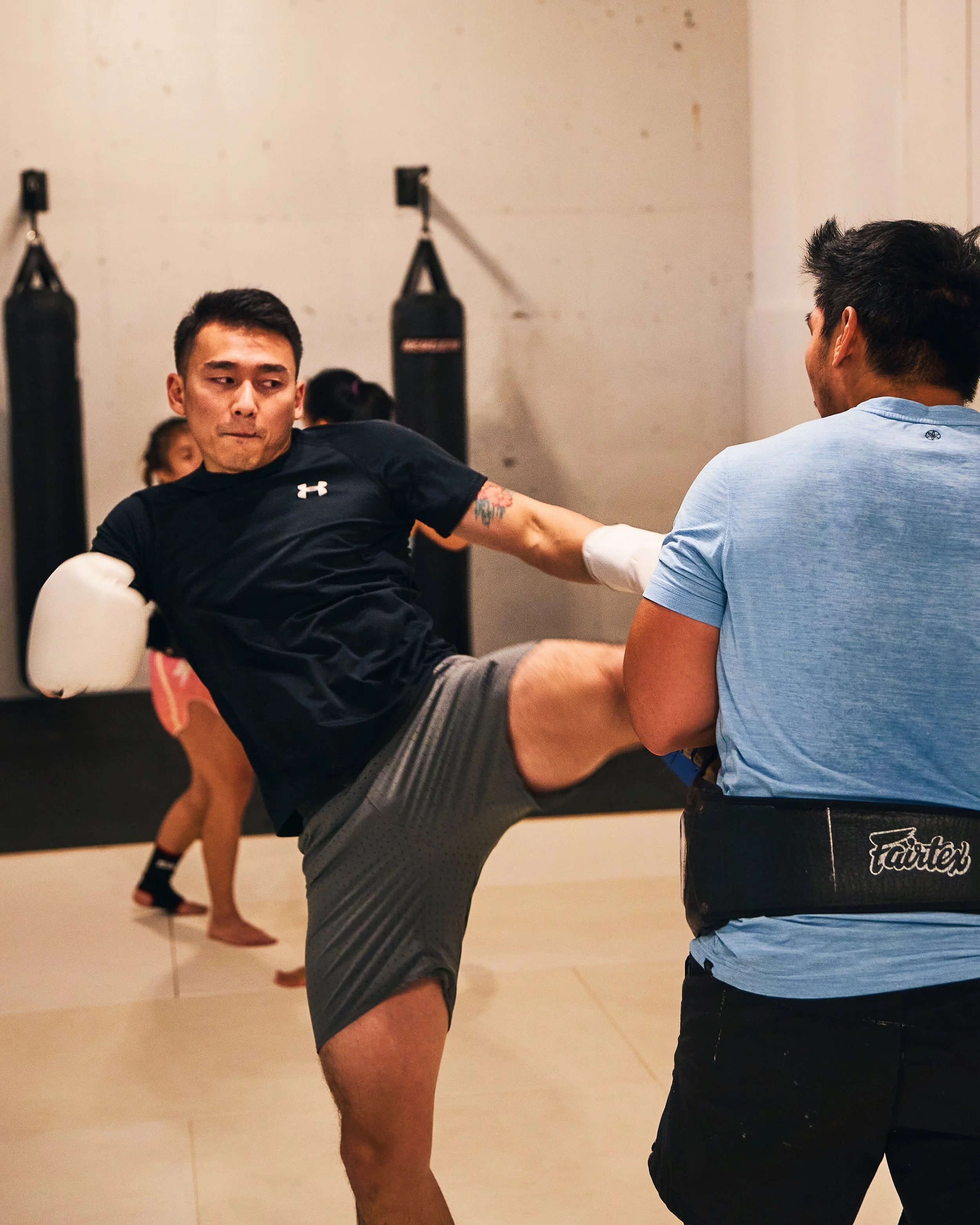
Self Defense Classes in Seattle — Why Muay Thai Is the Most Practical Choice
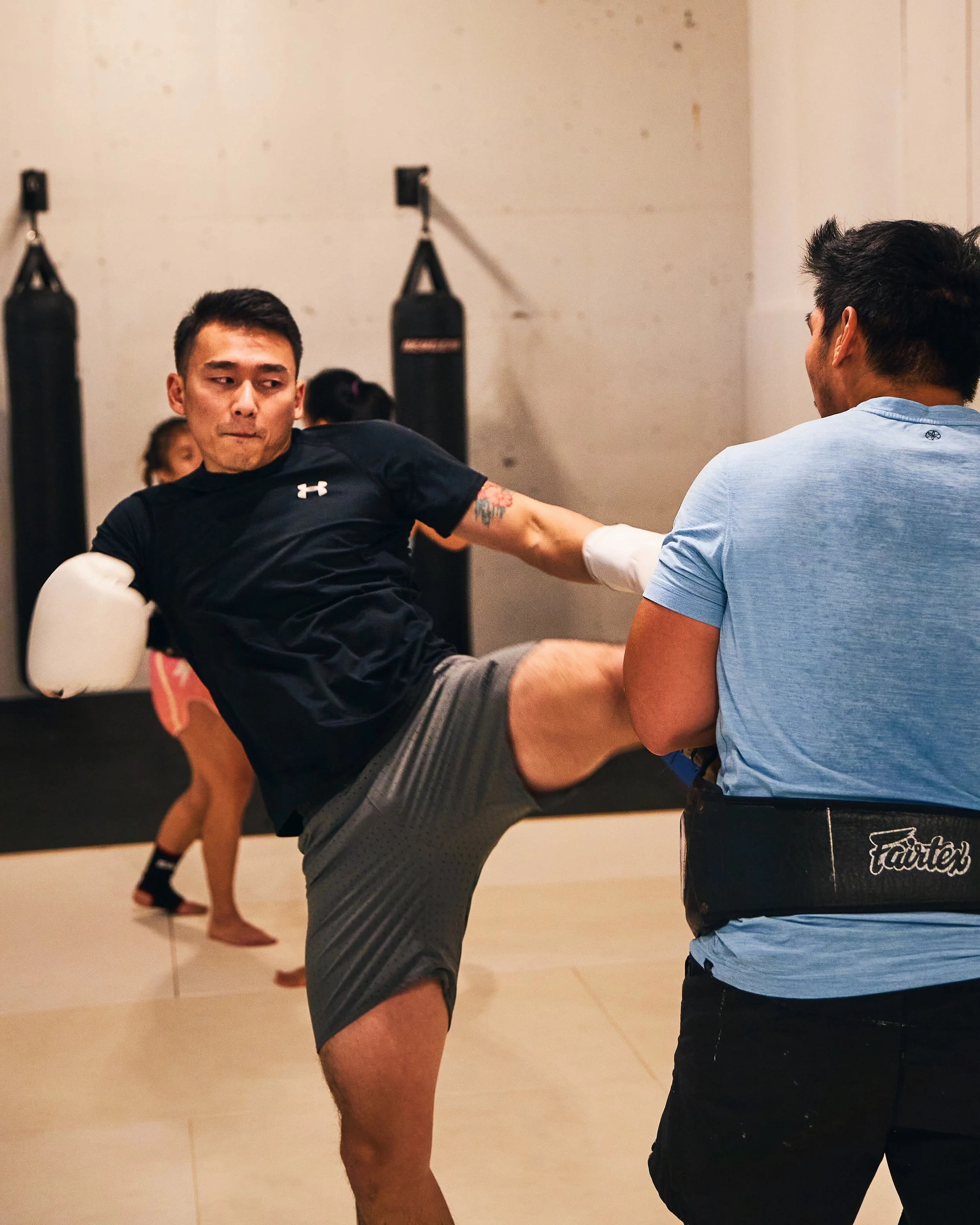
If you're looking for self-defense classes in Seattle, you'll find a wide range of options — weekend seminars, women's self-defense workshops, Krav Maga programs, traditional martial arts schools, and striking gyms. They all promise the same outcome. They don't all deliver it the same way.
This guide is going to give you an honest framework for evaluating self-defense training — what actually works, why consistent martial arts training produces better self-defense capability than isolated technique classes, and why Muay Thai specifically is one of the most practical choices available.
The Problem With Most Self-Defense Classes
Traditional self-defense classes — the one-day seminar, the six-week workshop, the "women's self-defense" course — teach techniques in a controlled, low-pressure environment against a cooperative partner. The techniques themselves are often reasonable. The problem is the training method.
Real self-defense ability is not a collection of memorized techniques. It's the product of thousands of repetitions performed under gradually increasing pressure until the right response becomes instinctive. A wrist escape practiced five times against a cooperative partner in a seminar setting is not a skill — it's a memory. Under real stress, memories don't fire reliably. Instincts do.
"Self-defense isn't a technique you learn — it's a capability you develop. And capability only comes from consistent training under pressure."
This is why martial artists who train regularly are genuinely more capable in self-defense situations than people who have attended self-defense seminars — even if the seminar covered more "self-defense specific" content. The training method is what builds the capability, not the label on the class.
Why Muay Thai Works for Self-Defense
Muay Thai is widely considered one of the most practical stand-up striking arts for real-world self-defense — not because it was designed for the street, but because of the specific tools it develops and the ranges it covers.
-
01It covers every striking rangeMost real confrontations don't stay at a single distance. They start at distance, collapse into mid-range, and often end up in close range or a clinch. Muay Thai develops tools at every stage — the teep to manage long range, punches and kicks at mid range, elbows and knees at close range, and clinch control when someone grabs you. No other stand-up striking art covers all of these ranges.
-
02The elbows and knees are exceptionally practicalElbows and knees work at close range — the range where most real confrontations end up. They require very little space to land, they don't need momentum or a long wind-up, and they're extremely effective. A practitioner who has drilled elbows and knees thousands of times has tools that work in the situations where punches and kicks often don't.
-
03The clinch is a complete systemWhen someone grabs you — which happens constantly in real confrontations — most strikers have no answer. Muay Thai practitioners have an entire game in the clinch: posture control, knee strikes, sweeps, and the ability to disengage or stay dominant at will. This clinch capability is one of Muay Thai's most practically significant advantages over pure boxing or kickboxing.
-
04You develop instinct, not just techniqueBecause Muay Thai training is consistent and progressive — classes multiple times per week, partner drilling, controlled sparring — the techniques become instinctive over time. You don't have to think about what to do. Your body has done it thousands of times. That's the difference between a skill and a memory.
-
05The fitness benefits matter for self-defensePhysical conditioning is a genuine component of self-defense capability. The cardiovascular fitness, coordination, and functional strength developed through regular Muay Thai training make practitioners more capable under physical stress — which is exactly what a real self-defense situation involves.
The Four Ranges — And Why All of Them Matter
What to Look for in Self-Defense Training in Seattle
Consistent training over time
The most important factor in developing real self-defense capability is consistency. A practitioner who trains Muay Thai three times per week for six months has developed genuine instinctive responses. Someone who attended a weekend seminar has not — regardless of what was taught. Look for a training environment you can commit to long-term, not a one-time course.
Graduated pressure and partner work
Self-defense capability is built by gradually increasing the pressure in training — controlled partner drills, technical sparring, situations that require you to apply technique against a non-cooperative partner. Training that only involves solo bag work or cooperative technique drills has a ceiling. Look for a gym with structured partner work at appropriate levels of intensity.
Qualified, experienced coaching
The quality of the coaching is everything. Look for coaches with genuine competitive or high-level training backgrounds — people who have had their techniques tested under pressure and understand what works and what doesn't. Coaching credentials matter more in self-defense training than in almost any other context.
Frequently Asked Questions
-
Is Muay Thai good for self-defense if I've never trained before?Yes — beginners build genuine self-defense capability from day one. You don't need prior experience. The key is consistency: regular training over months is what builds the instinctive responses that work under real pressure. Show up, train consistently, and the capability develops naturally.
-
Is Muay Thai or BJJ better for self-defense?Both are excellent — they address different ranges. Muay Thai covers stand-up striking at every range. BJJ covers ground control and submissions. The most capable self-defense practitioners have tools in both. If you can only choose one, Muay Thai gives you more options before a confrontation goes to the ground — which is where most self-defense situations are best resolved.
-
Is Muay Thai safe for beginners?At a well-run gym, absolutely. Beginner classes build skills safely through controlled drilling and partner work — not full-contact sparring. You control the pace of your progression entirely. Sparring is always optional and only introduced when both you and your coaches feel you're ready.
-
How long does it take to develop real self-defense ability?Meaningful capability develops within a few months of consistent training — three sessions per week. Within six months you have instinctive responses at multiple ranges. Within a year you have a complete striking game. Self-defense ability is not a destination — it grows continuously with your training.
-
Is Muay Thai good for women's self-defense?Exceptionally so. Muay Thai develops tools that work regardless of size difference — the teep to manage distance, the elbow at close range, the knee in the clinch. These weapons are effective precisely because they don't require the practitioner to be physically stronger than their opponent. Many of our most committed and capable members are women.
- Free trial class — experience the training before committing to anything
- Beginner-structured classes — no experience required
- Complete striking system — punches, kicks, elbows, knees, clinch
- Coaching staff including Doctors of Physical Therapy
- Month-to-month membership — no contracts, no enrollment fees
Boxing vs Muay Thai in Seattle — Which Should You Train?
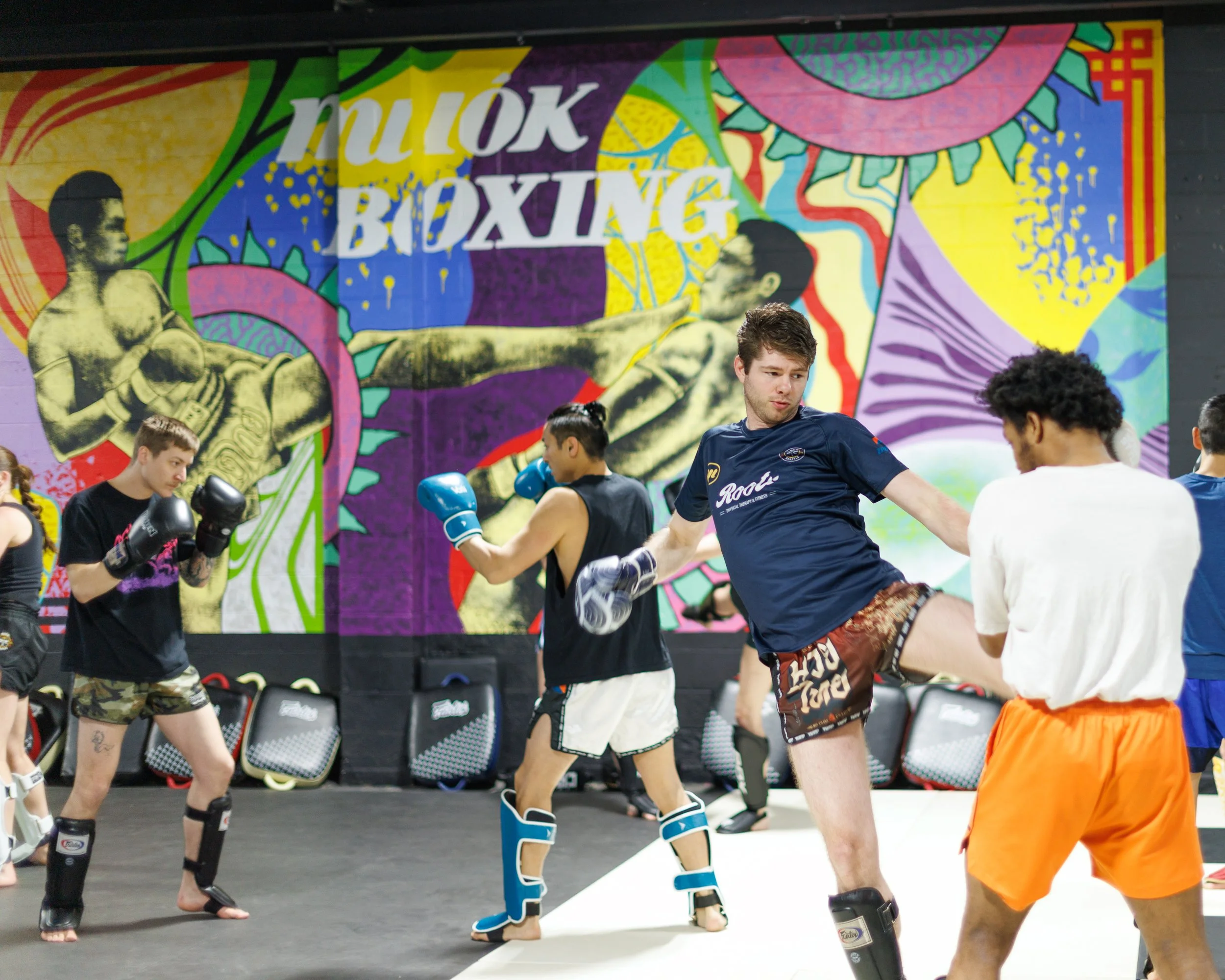
If you're searching for a boxing gym in Seattle, there's a good chance you're actually asking a slightly different question: what's the best striking art for me? Boxing is an obvious answer — it's familiar, it's respected, and it has a rich tradition going back over a century. But it's worth understanding what boxing gives you and what it doesn't before you commit to it as your primary martial art.
This isn't a post that dismisses boxing. Boxing is genuinely excellent — technically sophisticated, brutally effective within its range, and one of the best fitness disciplines available. But for people who want self-defense capability, a complete striking system, or the deepest return on their training time — Muay Thai deserves a serious look.
What Makes Boxing Great
Let's be clear about this first: boxing is a serious martial art with serious credentials. The hand skills developed through proper boxing training are among the most refined in combat sports. Here's what boxing does exceptionally well:
Footwork and movement
Boxing footwork is some of the most sophisticated in any striking art. The angles, the pivots, the lateral movement — all of it is designed to control distance and create openings while avoiding damage. Practitioners who develop real boxing footwork move with a fluidity that carries over to every other striking discipline.
Head movement and defense
The slips, rolls, and ducks of boxing are among the most efficient defensive movements in martial arts. A well-trained boxer is extremely difficult to hit cleanly — the head is rarely where the opponent expects it to be. This defensive sophistication takes years to develop and is genuinely impressive at a high level.
Hand speed and combination work
Dedicated boxing training produces hand speed and combination fluency that few other arts match. The jab-cross-hook-uppercut vocabulary, the level changes, the setup punches — all of it develops through deliberate, focused repetition that boxing gyms are uniquely built around.
"Boxing is one of the world's great martial arts. The question isn't whether boxing is good — it's whether boxing alone gives you everything you're looking for."
Where Boxing Has Limits
Despite its excellence within its own range, boxing by design leaves significant gaps in your striking game — gaps that matter the moment you step outside a boxing context.
No answer for kicks
A boxer's guard and footwork are optimized for punching range. The stance, the weight distribution, the hand positioning — all of it assumes an opponent who punches. Against a competent kicker, a boxer's legs are exposed. A well-thrown body kick or low kick to the lead leg presents a problem that boxing training simply doesn't address.
No close-range weapons
When boxing exchanges collapse into close range — which they frequently do in real confrontations — boxing has limited tools. The clinch in boxing is mostly a stalling tactic, broken up by the referee. In reality, close range is where knees and elbows become available. A boxer in the clinch against a Muay Thai practitioner is in a fundamentally disadvantaged position.
No clinch game
The clinch — the grappling range of Muay Thai — is one of the most decisive aspects of real striking exchanges. Controlling posture, delivering knees, executing sweeps and dumps — none of this is developed in boxing. For self-defense specifically, this is a significant gap, since most altercations end up in close range quickly.
How Muay Thai Compares
| Category | Boxing | Muay Thai |
|---|---|---|
| Hand skills | Excellent — the most refined hand training available | Very good — punching is one of eight weapons |
| Kicking | None | Full kicking game — roundhouse, teep, high kick, switch kick |
| Elbows | None | Seven elbow strikes — the most dangerous close-range weapon |
| Knees | None | Full knee game — straight, diagonal, curved, flying |
| Clinch | Minimal — clinch is broken in boxing | Complete — clinch is a primary fighting range |
| Self-defense | Good at punching range only | Excellent across all ranges |
| Fitness outcomes | Excellent | Excellent — full body, multiple ranges |
| Depth of art | Deep — decades of development possible | Very deep — five fighting styles, lifelong pursuit |
Which Should You Choose?
- The most refined hand skills possible
- Pure boxing competition
- A focused, single-discipline striking art
- Elite footwork and head movement as the primary focus
- A complete striking system across all ranges
- Real self-defense capability
- Kicks, elbows, knees, and clinch alongside punching
- The best striking foundation for MMA
- Depth that sustains a lifelong practice
Boxing and Muay Thai at Muók Boxing — Georgetown, Seattle
At Muók Boxing we teach authentic Muay Thai — which includes dedicated boxing work as part of a complete striking curriculum. Our all-levels boxing class develops the hand skills, footwork, and combination fluency that boxing training is known for. Our Muay Thai classes integrate those hand skills into a broader striking system that covers every range.
For members who want to be excellent punchers — and also have answers when the fight moves to kicks, knees, elbows, and the clinch — training Muay Thai at Muók is the most complete path available in Seattle.
- Free trial class — no commitment, no pressure
- Boxing and Muay Thai — 17 classes per week, all levels
- Coaching staff with competition experience and DPT backgrounds
- 9,000+ sq ft Georgetown facility with open gym 7am–8pm
- Month-to-month membership — no enrollment fees, no contracts