
Muay Thai for Women in Seattle — What to Expect and Why It Works
If you've been thinking about trying Muay Thai in Seattle but assumed it wasn't really for you — too aggressive, too intimidating, built for people who already know how to fight — this post is worth reading before you decide.
The assumption is wrong. And the people who are most surprised by that, once they actually walk in, are usually women who spent months convinced it wasn't going to be their thing.
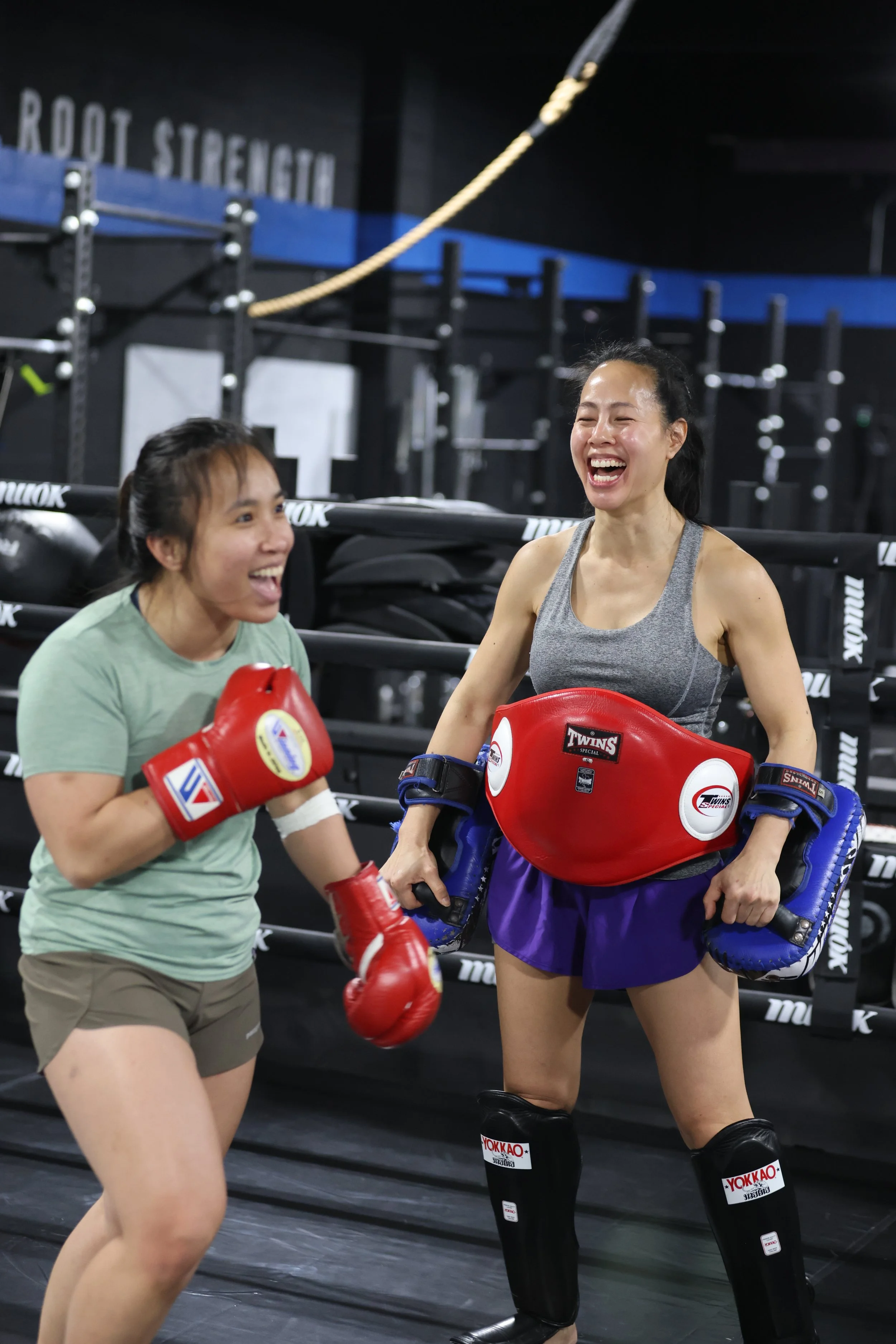
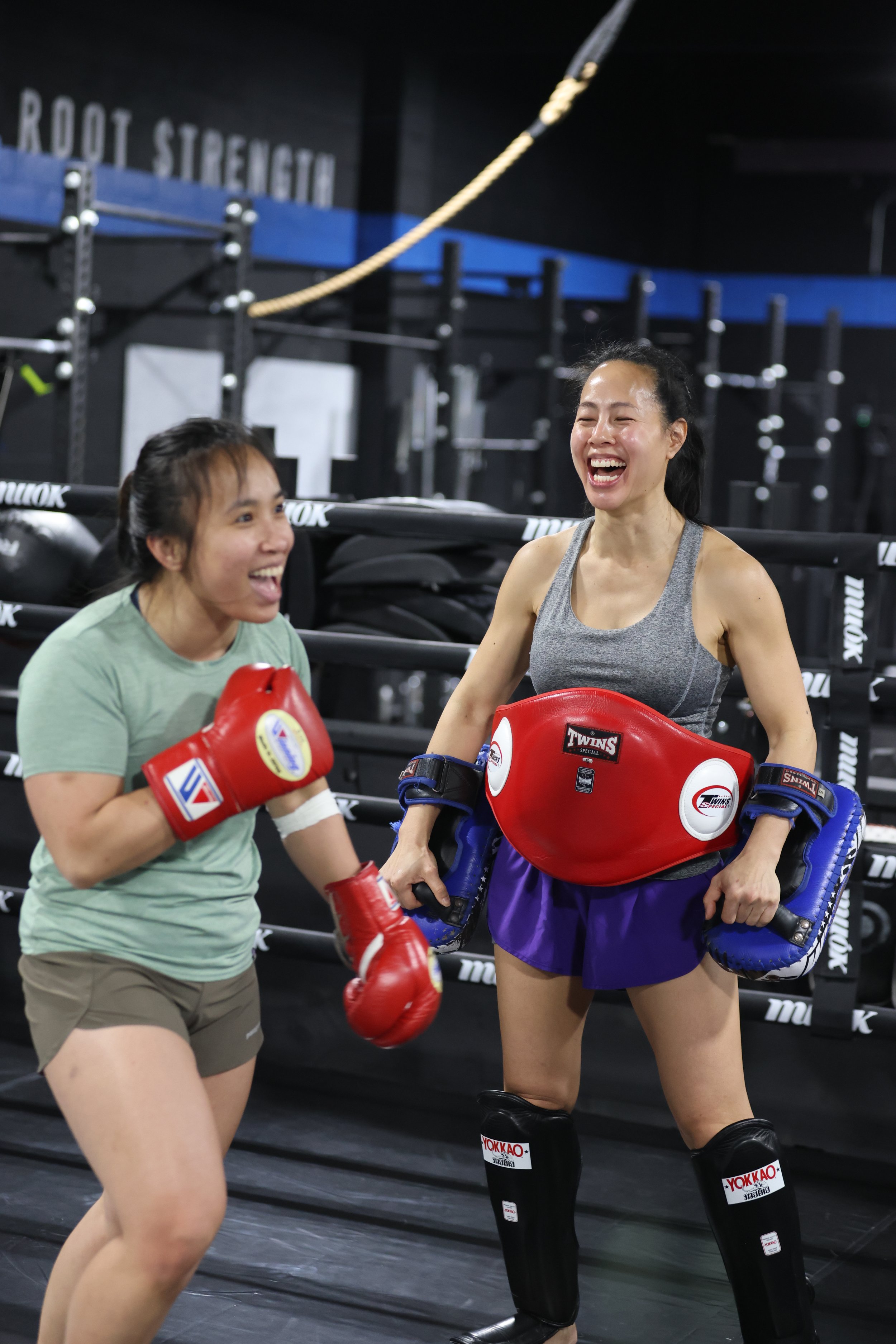
At Muók Boxing, women make up a significant portion of our membership at every level — beginners, intermediate practitioners, and people who've been training for years. That's not accidental. It reflects something real about what Muay Thai actually offers, and how we run our program.
Why Muay Thai Works Especially Well for Women
Most fitness programs ask you to work harder. Muay Thai asks you to work smarter. The techniques are built around leverage, timing, and technique — not brute strength. A well-executed teep doesn't require you to be strong. A well-timed elbow doesn't require you to be bigger than your opponent. This is a martial art designed to work for a smaller practitioner against a larger one — which is exactly why it's one of the most practical self-defense systems available regardless of size or strength.
-
01The fitness outcomes are exceptionalResearch published in Frontiers in Psychology in 2025 found that a 6-week Muay Thai program produced a 13% improvement in physical quality of life and a 22% improvement in mental quality of life. A separate study showed Muay Thai burns around 532 calories per session on average — more than most cardio formats — while building functional strength, coordination, and cardiovascular capacity simultaneously. It's one of the most complete fitness disciplines available. Read more in our post on Muay Thai for fitness in Seattle.
-
02It builds confidence that carries outside the gymLearning to hit with real technique — to throw a roundhouse that actually connects properly, to feel your teep stop someone's forward movement, to work through a sparring round without freezing — builds a kind of confidence that fitness classes don't produce. It's specific and earned. Members consistently describe it as one of the most meaningful things they've developed through training, not just the most physically demanding.
-
03The self-defense capability is real and practicalMuay Thai develops striking tools that work at every range — the teep to manage distance, punches and body kicks at mid range, elbows and knees in close range, and clinch control when someone grabs you. These aren't memorized techniques practiced against a cooperative partner. They're instinctive responses built through thousands of repetitions under gradually increasing pressure. That's the difference between a skill and a memory. For a full breakdown, see our guide to self defense classes in Seattle.
-
04Size and strength are not prerequisitesThis bears repeating because it's the assumption that keeps most women from trying: you don't need to be strong, fast, or athletic to start. You need to show up. Muay Thai technique is built on leverage and timing — qualities that develop through repetition, not natural physical gifts. Many of our most technically sharp members are women who started with zero athletic background and built their skills from scratch over months of consistent training.
-
05The community at most good Muay Thai gyms is genuinely welcomingThe culture of a gym matters as much as the quality of coaching. At Muók, the environment is intentionally ego-free — experienced members remember what it felt like to be a beginner and act accordingly. Women who train here consistently describe the community as one of the reasons they kept coming back after their first class. The technical challenge keeps you engaged; the community makes it a practice you build your week around.
The women who train at Muók aren't the exception to the rule — they are the rule. Muay Thai rewards technique, timing, and intelligence. Those qualities have nothing to do with gender.
What Your First Class Actually Looks Like
This is where the anxiety lives for most people — the not knowing. So here's exactly what happens when you come in for a free trial at Muók.
Before class
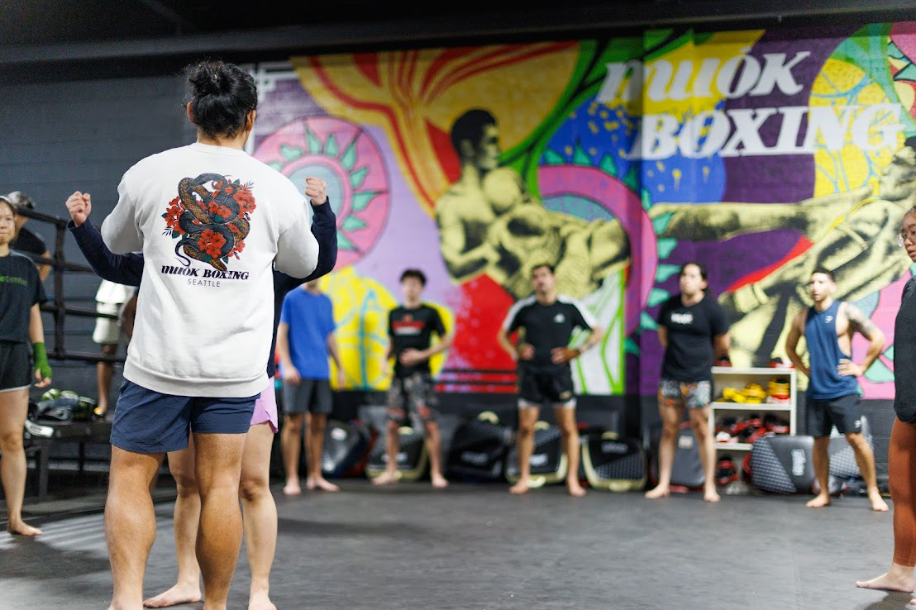
You'll be greeted when you walk in and introduced to a coach before the session starts. There's no expectation that you know anything — beginner orientation is built into how we run classes. You'll be placed in the beginner group, which trains alongside but separately from the experienced group, with its own dedicated coaching.
The warm-up
Every class starts with a shared warm-up — both groups together. This is where you start to feel the pace and get a sense of who's in the room. The warm-up is active and athletic but manageable at any fitness level.
Technique work
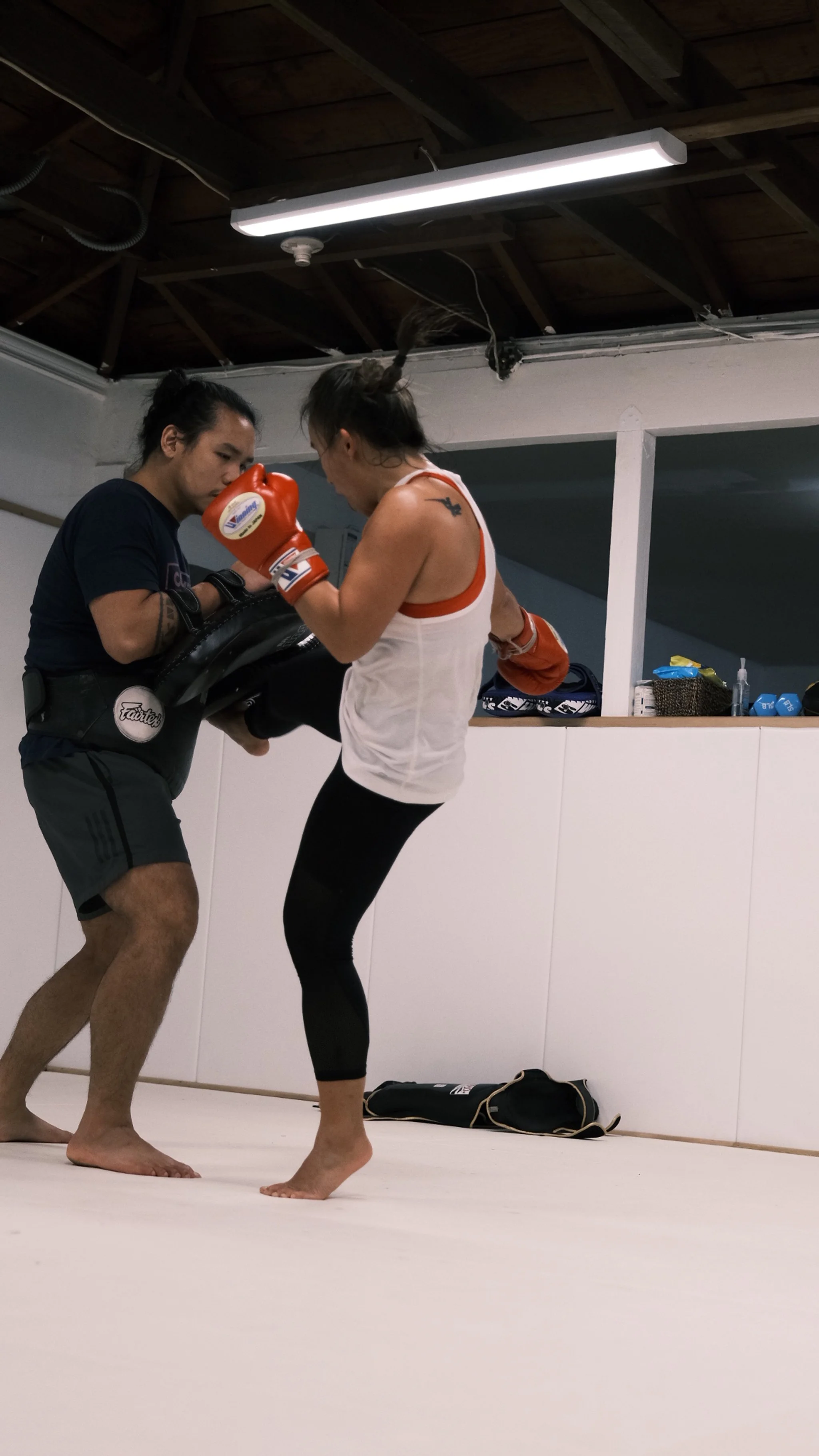
The beginner group moves into technique work — typically a combination of strikes broken down step by step by a coach. You'll drill it solo, then on pads with a partner. The focus is mechanics: stance, hip rotation, guard position. Nobody expects you to be smooth on day one. Coaches give individual corrections throughout.
Bag and pad rounds
You'll finish with bag work or partner pad rounds — putting the technique into practice at your own pace. This is usually where people realize they've been working harder than they noticed, because the focus on technique keeps the mind occupied.
After class
You'll be exhausted, probably more than you expected, and you'll want to come back. That's the standard first-class experience at a well-run Muay Thai gym.
What to Look for in a Muay Thai Gym as a Woman
Watch how the coaches interact with beginners
If you're evaluating gyms, our guide to Muay Thai classes near me in Seattle covers exactly what to look for. The quality of a gym's culture is visible in the first five minutes. Coaches who take time to explain why a technique works — not just how to do it — are the ones who build genuine capability. Coaches who ignore beginners or rush through corrections are building a gym that works for experienced practitioners and nobody else.
Check the gender breakdown of the membership
A gym where women make up a meaningful portion of the membership has already done something right culturally. If you walk in and every member is male, that tells you something about the environment regardless of what the website says.
Ask about sparring expectations
Sparring is an important part of Muay Thai development — but it should always be optional for beginners and introduced gradually at a pace that's appropriate for you. A gym that pressures new members into sparring before they're ready, or that runs sparring without proper supervision, is not the right environment for someone building their foundation.
Look for DPT credentials in the coaching staff
This is rare in Seattle gyms and genuinely matters — especially for women who may be coming to Muay Thai from a history of injury or physical therapy, or who want to train hard without accumulated damage. Coaches with Doctor of Physical Therapy backgrounds understand load management, injury prevention, and how to build long-term athletic sustainability into a training program.
Common Questions Women Ask Before Starting
-
Do I need to be fit before I start?No. Muay Thai will get you fit — it's not a prerequisite. Every class is scalable. Coaches adjust intensity and volume to where you are on day one, not where they wish you were. The fitness comes from the training itself, not from arriving already in shape.
-
Is sparring required?Never. Sparring is always optional at Muók and is only introduced when both you and your coach feel you're ready. Most members train for months before their first sparring session. Many train long-term and spar occasionally or not at all. Both approaches are completely valid.
-
Will I be the only woman in class?Unlikely. Women train across all class times at Muók. Evening classes in particular tend to have strong female attendance. But the honest answer is: even if you are the only woman in a given session, the environment is welcoming. Nobody is looking at you that way.
-
What do I wear?Athletic shorts or leggings and a fitted athletic top. Muay Thai is barefoot, so no shoes needed on the mat. Gloves and wraps are available to borrow for your first class — you don't need to buy anything before you try it.
-
I've never thrown a punch. Is that okay?That's the ideal starting point. You don't have habits to unlearn. Beginners with no prior experience often progress faster than people with backgrounds in other martial arts because they come in genuinely open to learning. Starting from zero is not a disadvantage here.
-
Is Muay Thai good for weight loss?It's one of the most effective formats available. A single session burns around 532 calories on average — more than most cardio classes — while building lean muscle and improving coordination simultaneously. Members who train 3x per week consistently describe significant body composition changes within the first 2–3 months alongside fitness improvements that go well beyond what the scale shows.
Muay Thai for Women at Muók Boxing — Georgetown, Seattle
Our coaching staff includes multiple Doctors of Physical Therapy — a combination that's genuinely rare in Seattle. It means you're learning technique from coaches who understand movement mechanics, injury prevention, and how to build a training practice that's sustainable for years rather than months.
We run 17 classes per week across morning, midday, and evening slots — specifically because we know your schedule doesn't always cooperate. Every class splits into beginner and experienced groups with dedicated coaching at each level, so your first class isn't you trying to keep up with people who've been training for three years.
The first class is free. No commitment, no pressure — just come in and see if it's the right fit. Most people who try it once find out within the first hour that the assumptions that kept them away were wrong.
Muay Thai for Women in Seattle
If you've been curious about Muay Thai but haven't taken the step yet, you're not alone. A lot of women we talk to are drawn to it — the fitness, the skill, the confidence — but aren't sure what to expect when they actually walk through the door.
This post is for you. We're going to answer the questions we actually hear from women who are thinking about starting, and give you an honest picture of what training at Muók Boxing looks like.
Why Women Train Muay Thai
The reasons are different for everyone, but a few themes come up consistently.
The Questions We Hear Most Often
Meet Coach Van
One of the things that makes Muók Boxing different is that our coaching staff includes Van Nguyen — one of our head coaches and one of the most technically accomplished Muay Thai practitioners in Seattle.
What Your First Few Weeks Will Look Like
We want to set realistic expectations — because we think that's more useful than hype.
Week 1: Everything feels new. Your brain is processing a lot — stance, guard, how to throw combinations. It will feel awkward. That's completely normal and expected. Focus on showing up, not on being good.
Weeks 2–3: Things start to click. Movements that felt foreign become more automatic. You'll notice your cardio being tested in ways you didn't expect — Muay Thai uses muscle groups differently than running or lifting. Your body is adapting fast.
Week 4+: You're starting to feel the rhythm of training. You recognize other members, you're getting feedback from coaches, you have things to work on between classes. This is where it starts to feel like a practice rather than a workout.
"The women who train here are some of the most dedicated members we have. There's nothing soft about the training — and there's nothing unwelcoming about the gym."
Ready to Try It?
We offer a free trial class with no commitment and no pressure. Show up 15 minutes early so we have time to walk you through what to expect, introduce you to a coach, and get you set up before class starts.
You don't need to be fit. You don't need experience. You just need to show up.
From the Garage to Here: A Walk Down Memory Lane
From the Garage to What We’ve Built Today
As we step into the new year, let’s take a walk down memory lane together and look back at how Muok Boxing grew from humble beginnings into the community it is today.
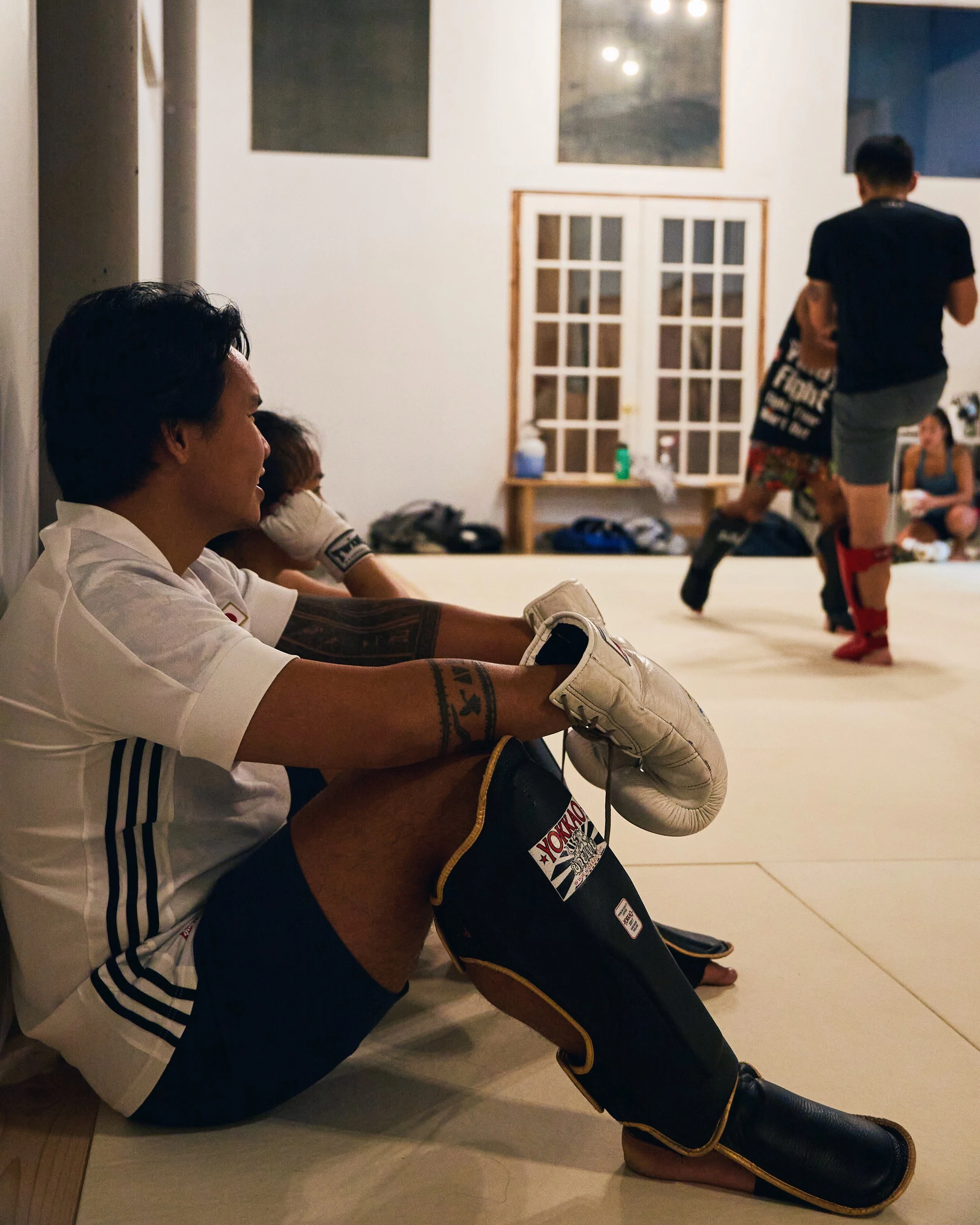
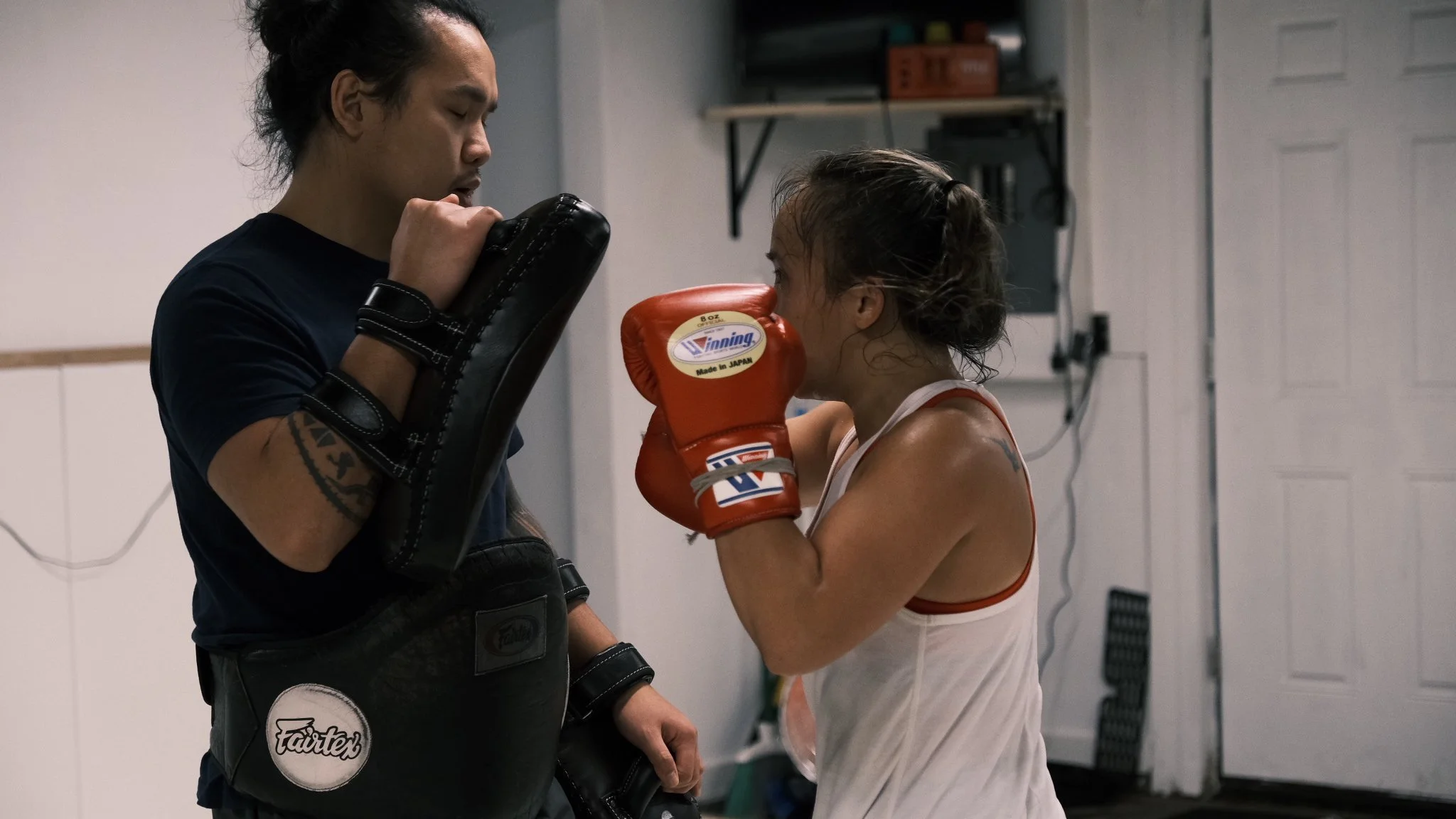
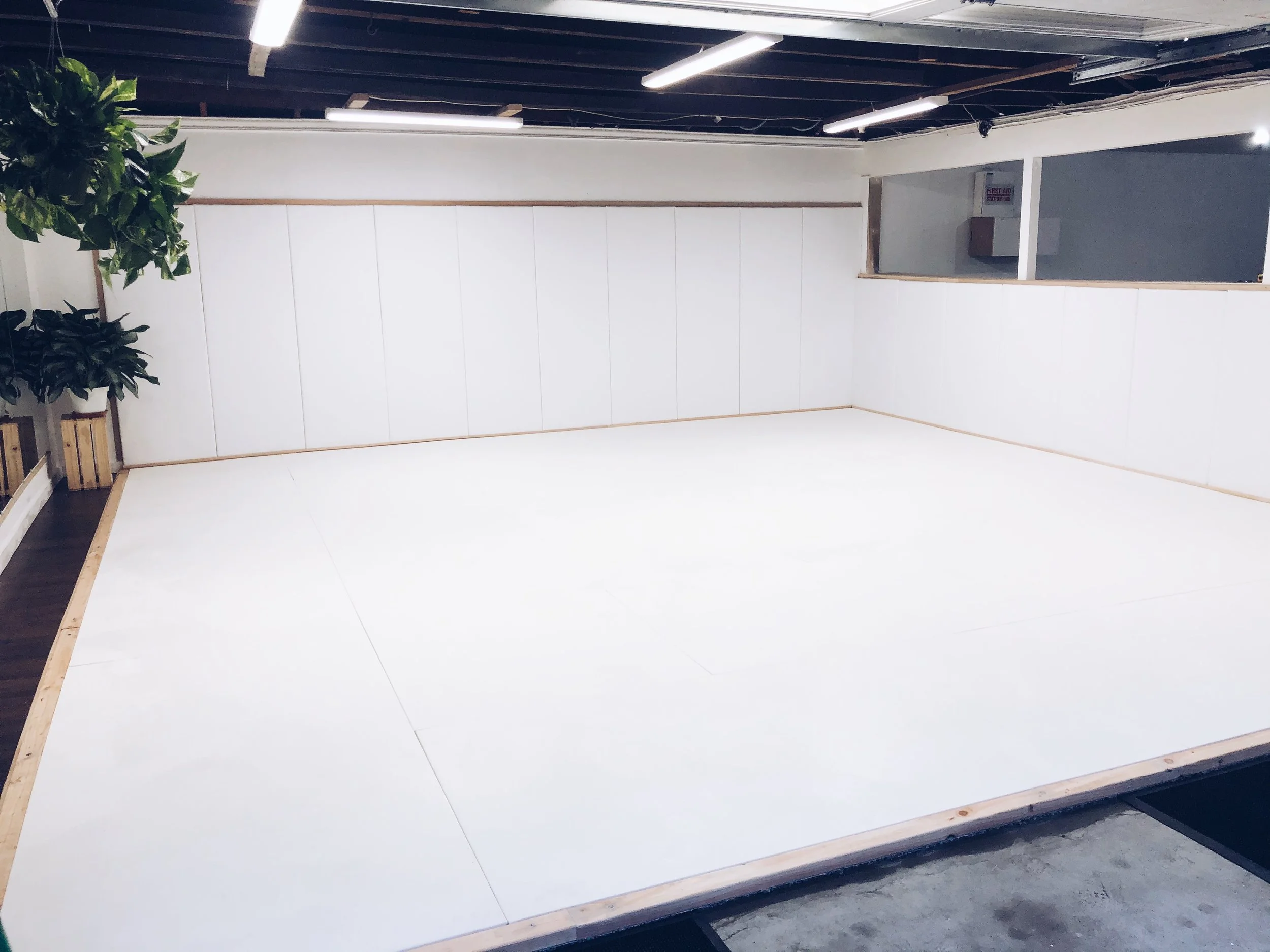

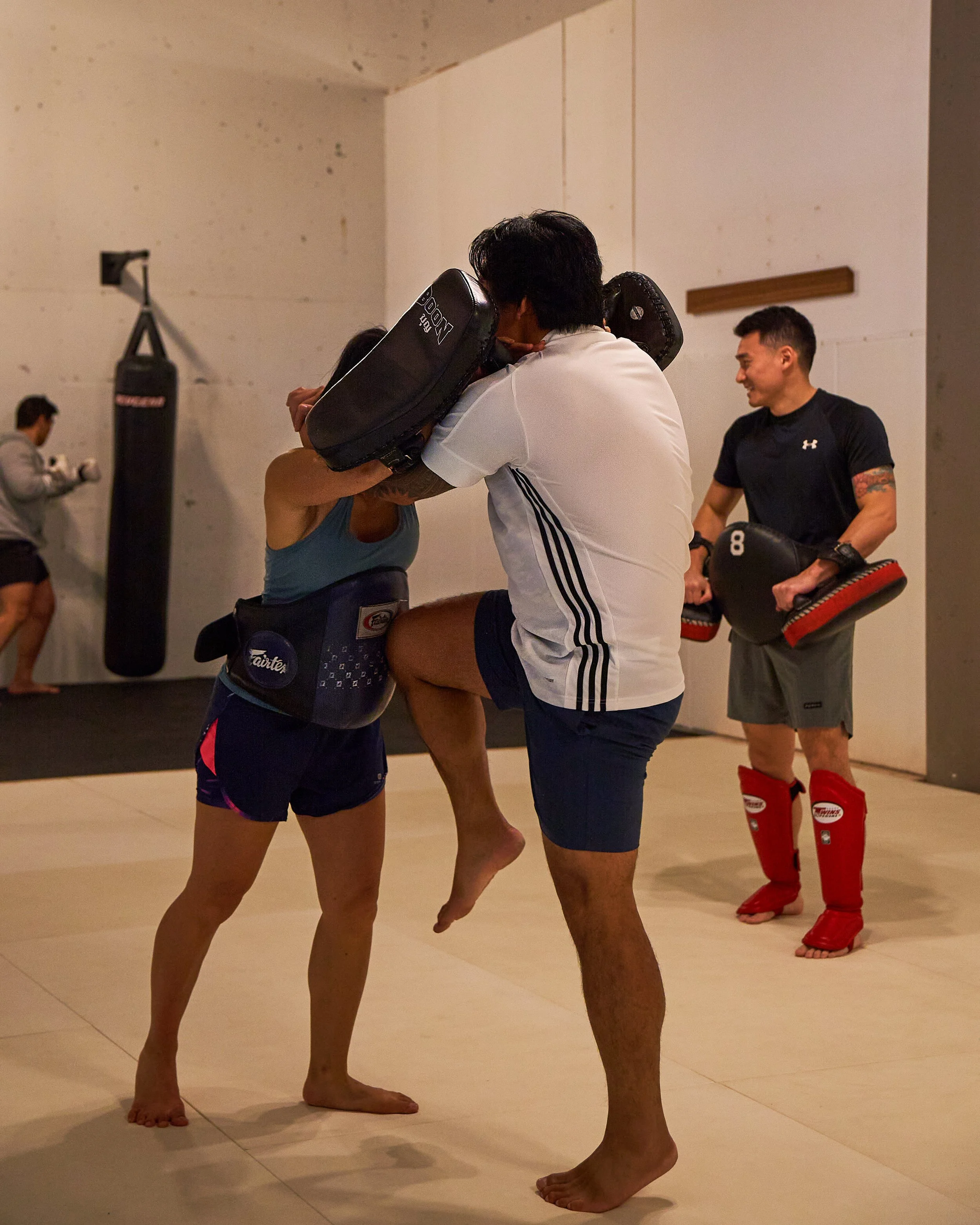

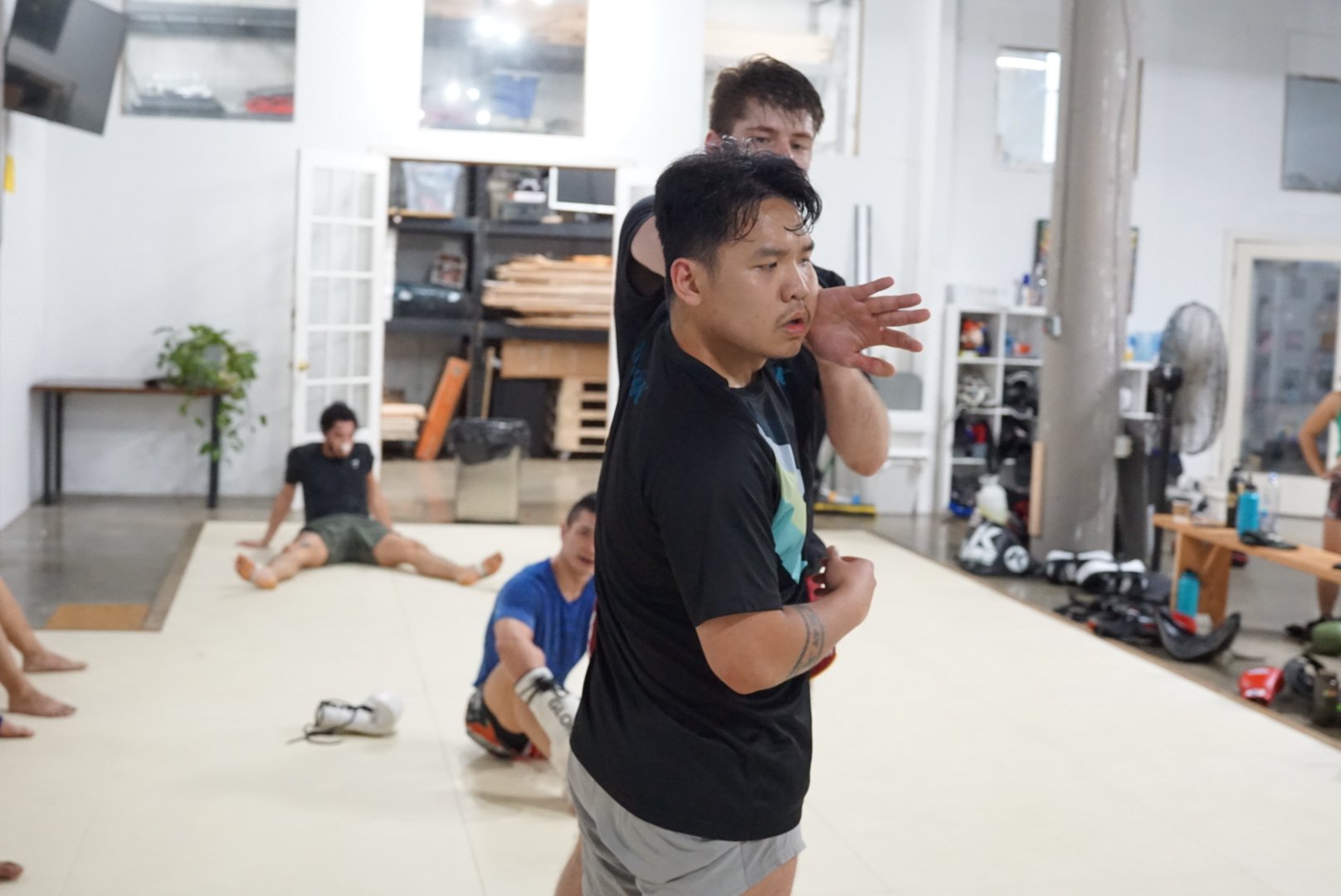

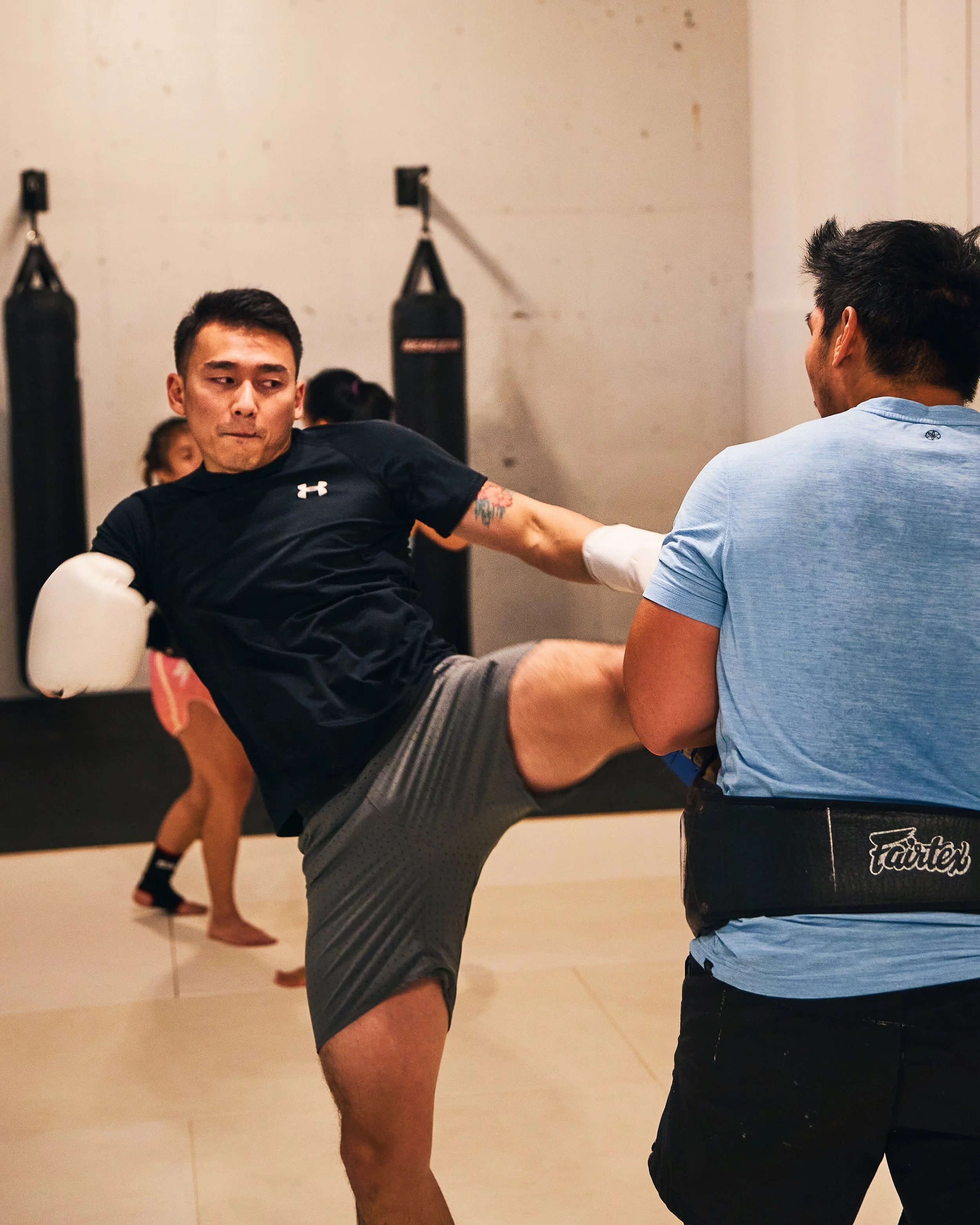
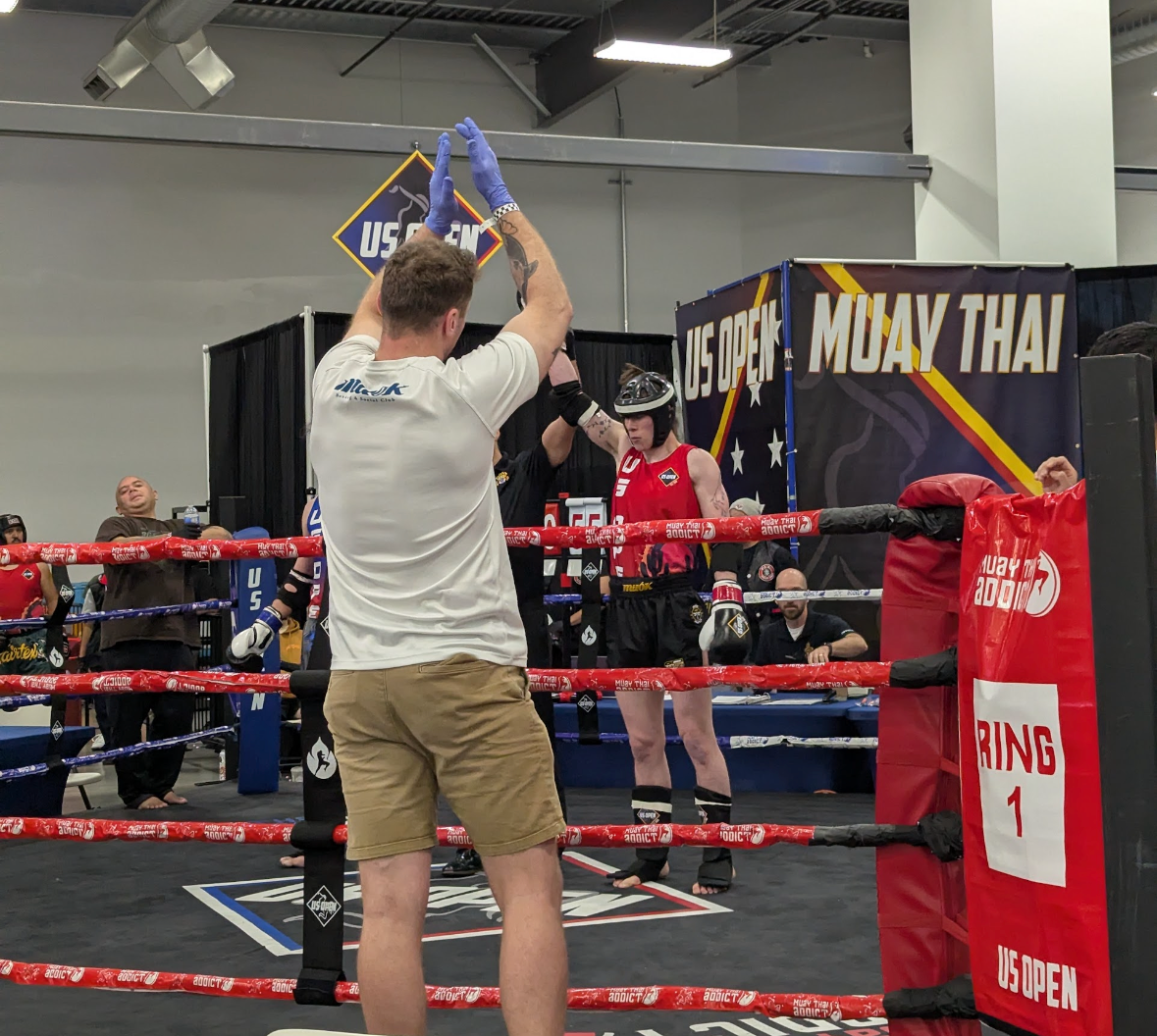
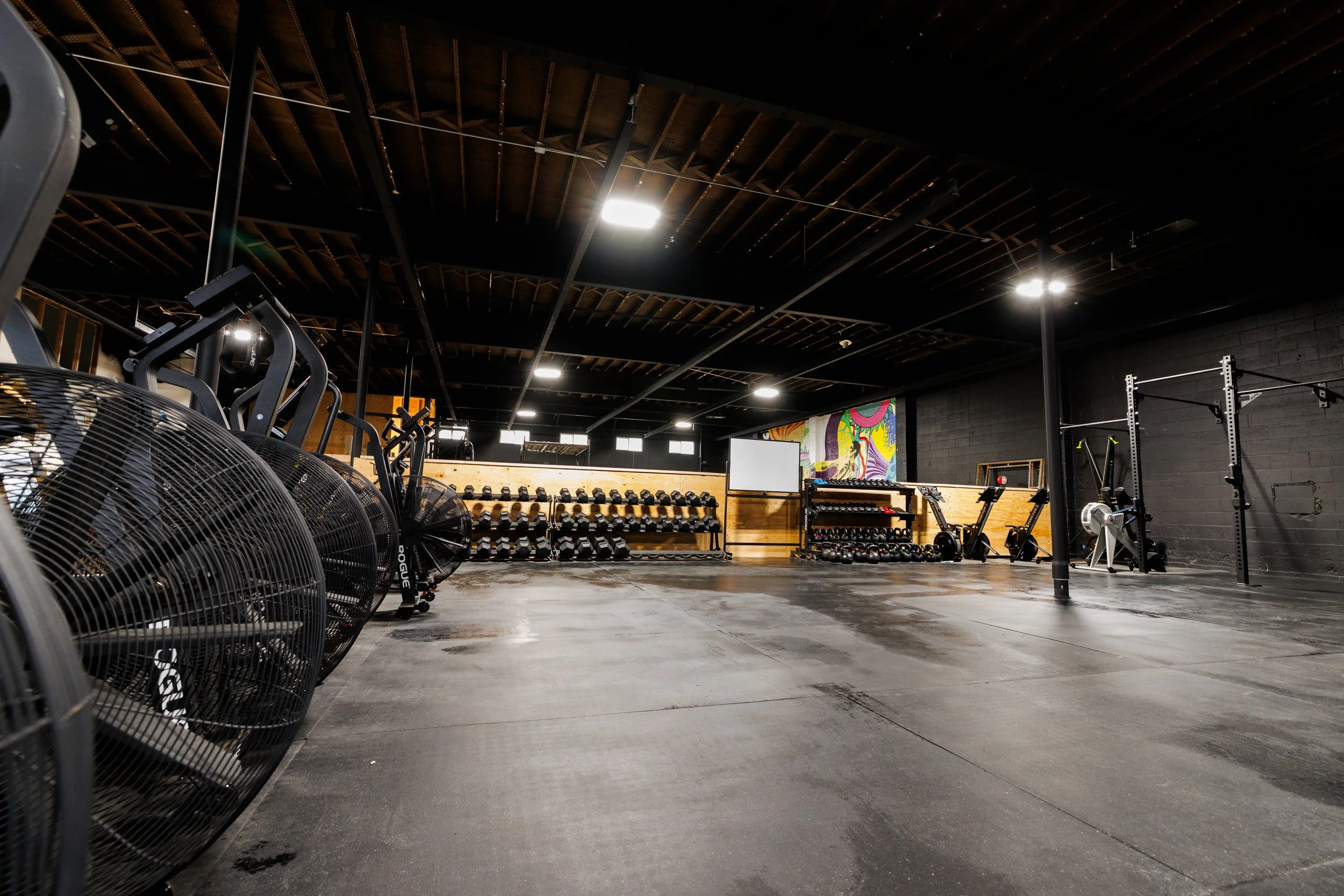
Muok Boxing didn’t start with a big facility, shiny equipment, or a long-term plan. It started during a time of uncertainty—when gyms were closed, routines were disrupted, and community felt more important than ever.
In April 2020, when training spaces shut down, we adapted the only way we could. We built a 168-square-foot garage gym—small, simple, and functional—so a close-knit group could continue training safely. There were no mirrors, no luxuries, just commitment and consistency. That garage became the foundation of Muok Boxing.
Outgrowing the Garage
It didn’t take long to realize the garage wasn’t enough. By September 2020, we converted an unused workshop in Andy’s backyard into a training space.
At 450 square feet, it wasn’t huge—but it felt like progress. The space came with real challenges: no heating, no cooling, and COVID restrictions meant training with masks on and the garage door wide open year-round. Winters were cold—fuzzy socks, beanies, and layers became standard. Summers were hot, humid, and relentless.
Still, people showed up. That workshop wasn’t just a place to train; it’s where Muok Boxing truly became a community.
Finding a Home at The Castle
By November 2022, we stepped into a space that felt bigger than just square footage: The Castle.
With its soaring ceilings and raw, industrial character, the building carries deep roots in Seattle’s underground culture. Long before it housed heavy bags and training rounds, The Castle was a hub for the city’s early underground rave scene—a place where creativity, music, and community collided.
Legends of the past still echo here. Soundgarden once performed on the rooftop, and there are photos of Kurt Cobain sitting in the street-level parking lot—moments frozen in time that helped shape Seattle’s cultural identity.
Training here reminds us that community-driven culture doesn’t come from polish or perfection. It comes from people showing up, pushing boundaries, and creating something real together.
What We’re Most Proud Of
We’re proud of how far Muok Boxing has come. From a tiny garage to bigger spaces, from bare essentials to thoughtful amenities—it’s been an amazing journey.
But what we’re most proud of isn’t the size of the gym or the amenities.
What matters most is how many people are still here with us from the very beginning. The folks who trained in the garage are still showing up. Still putting in the work. Still helping set the tone for what Muok Boxing feels like. They are the ember that started this fire.
And the cool part is that ember hasn’t faded. It’s grown. New members came in, learned the culture, and eventually became the next generation of senior members themselves. The values didn’t change—they got passed along, strengthened, and carried forward.
That’s how this community keeps moving forward. Not by outgrowing its roots—but by staying connected to them.
Looking Ahead: Our Next Chapter
Now, we’re preparing for our next chapter: a move to a larger, purpose-built facility in Georgetown. This new space reflects everything we’ve learned since the garage days—more room to train, recover, build strength, and continue creating a gym centered on long-term health, performance, and community.
The garage may be behind us, but its spirit remains at the core of Muok Boxing: resilient, resourceful, and people-first.
Before we turn the page, we want to say thank you.
Thank you to everyone who was there from the very beginning—when space was tight, conditions weren’t ideal, and nothing was guaranteed. And an extra thank you to those who are still here, still showing up, still carrying the heart of this place forward. You are the reason Muok Boxing feels the way it does.
At the end of the day, beneath all the training, the structure, and the progress, we’re still just a bunch of kids who love to move, to play, and to have fun together. That joy—that sense of showing up because you want to be here—is what started this whole thing and what keeps it going.
As we head into the new year and into our next chapter, we’re carrying that same spirit with us. Same heart. Same fire. Just a little more room to play.
Thank you for being part of the journey.