
HOW TO IMPROVE YOUR CLINCH GAME
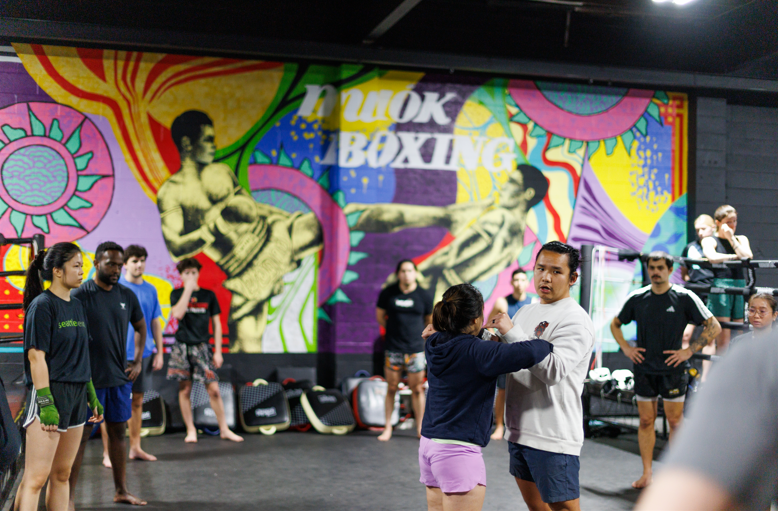
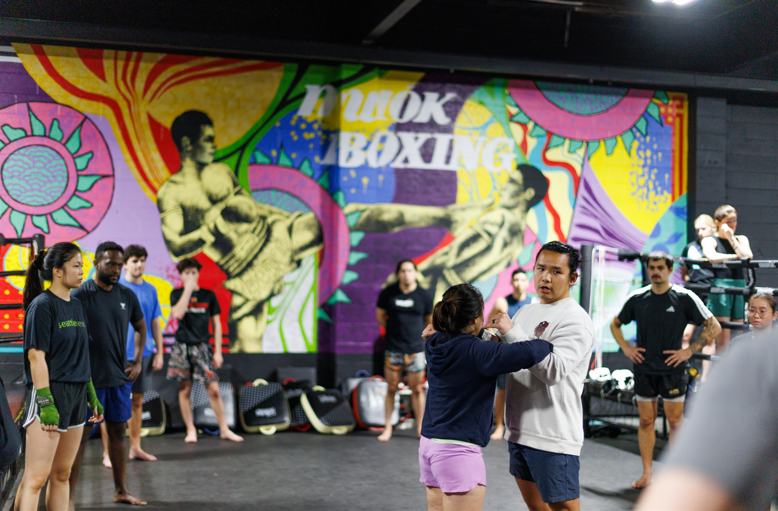
If you've been training Muay Thai for any amount of time, you've probably noticed something: the clinch separates people who've trained the art seriously from those who haven't.
A kickboxer can look sharp on the outside — good combinations, decent footwork, solid defense. But the moment the fight moves into close range, everything changes. If you haven't trained the clinch, you're suddenly lost. Arms tangled, hips weak, no idea where your knees should be going.
The clinch is where Muay Thai diverges completely from every other striking art. It's also where some of the most technical, beautiful, and effective work in the entire sport happens. And for most practitioners outside of Thailand, it's the most underdeveloped part of their game.
Why Most Practitioners Neglect the Clinch
In most Western gyms, clinch work gets maybe five to ten minutes at the end of class — if it gets trained at all. Pad work, bag work, and sparring tend to dominate. The clinch is treated as something to survive, not something to develop.
This is backwards.
"In Thailand, fighters spend enormous amounts of time in the clinch. Lumpinee bouts regularly feature extended clinch exchanges lasting thirty seconds or more. Judges score it. Coaches teach it in detail. It's considered a core technical domain — not an inconvenience."
The result is that Thai fighters are almost universally superior in the clinch to their Western counterparts — not because of physical gifts, but because of deliberate, repeated practice over years. If you want to be technically complete in Muay Thai, the clinch has to be part of your regular training diet.
The Foundation: Posture and Head Position
Everything in the clinch starts with posture. Before you think about grips, sweeps, or knees, you need to understand what a strong clinch position feels like.
Your hips are your engine
In the clinch, power comes from the hips — not the arms. Fighters who try to muscle through clinch exchanges using upper body strength exhaust quickly and are easy to off-balance. Fighters who stay hip-connected to their opponent, maintain a low center of gravity, and use hip rotation to generate movement and power are the ones who control exchanges.
Your head position determines your control
Where your head goes, your body follows — and so does your opponent's. In the clinch, your head should be slightly forward and low, making contact with your opponent's shoulder or upper chest. This position controls the range, makes it harder for your opponent to create space for elbows, and allows you to feel their weight shifts in real time.
Knees bent, weight forward
A stiff, upright posture in the clinch is easy to manipulate. Bent knees lower your center of gravity, make you harder to sweep, and allow you to react dynamically to whatever your opponent is doing.
Understanding the Grips
The clinch isn't one position — it's a constantly shifting exchange of grips, each with different offensive and defensive implications.
Double collar tie (the neck lock)
Both hands grip the back of the opponent's neck, elbows in tight, forehead to shoulder. From here, you control the direction of their head, which controls their entire body. To make it effective, your elbows need to be pressing together — not flaring out. Flared elbows create space and allow your opponent to push out. Tight elbows create a frame that compresses the opponent's head and sets up knee strikes.
The single collar tie
One hand on the neck, one hand free. This is a transitional position — less controlling than the double, but more dynamic. The free hand can post on the hip, throw a short elbow, or reach for a sweep. Learning to fight for the double — and to deny it to your opponent — from the single is an essential skill.
The crossface
One forearm across your opponent's face, the other arm working their neck or shoulder. The crossface creates leverage to turn your opponent's head, which disrupts their posture and creates openings. It's particularly useful when your opponent has a strong base and you can't off-balance them directly.
The Knee Game: More Than Straight Knees
Most beginners think of clinch knees as straight strikes coming up the middle. That's one tool, but a limited one.
Straight knee to the body
The most fundamental clinch strike. Pull your opponent's head down while driving your knee into their midsection. The pull and the strike happen simultaneously — the opponent's movement into your knee magnifies the impact. Common mistake: letting go of the neck as you throw. Keep the grip tight through the strike to maintain control.
Diagonal knee
Instead of coming straight up the center, the diagonal knee travels at an angle — targeting the floating ribs, hip, or outer thigh. This is harder to check and harder to anticipate than the straight knee. The diagonal requires good hip rotation to generate power. Practice it slowly before adding speed.
Knee feints
The feint is one of the most underused tools in the clinch. By initiating the hip and pulling motion of a knee without following through, you create a reaction in your opponent. That reaction is information you can use — and it sets up the real knee to land clean.
"The best clinch fighters aren't the ones who feel comfortable because nothing is happening. They're the ones who've been in every uncomfortable situation enough times that none of it surprises them anymore."
Off-Balancing: Taking the Base
Push-pull combinations
The most basic off-balancing tool. Push your opponent away, then immediately pull them back as they resist. The moment they push back is when they're most vulnerable. The timing has to happen at the peak of their resistance — the pull has to become instinctive through drilling.
Rotating the opponent
Using your collar tie to rotate your opponent's head creates angles. When you rotate someone ninety degrees, their hips are no longer square to you, their guard is disrupted, and a well-timed knee can land on an unguarded target. Practice rotating in both directions — most people have a dominant side.
How to Actually Drill It
Isolated grip fighting
Start from neutral and simply compete for grips — no knees, no sweeps. Just the hand fighting. This builds sensitivity, timing, and the habit of constantly working for position. Five minutes of focused grip fighting reveals exactly where your clinch game is weakest.
Slow clinch sparring
The clinch slows down when you go slow, which means you can feel things you'd miss at full speed. Emphasize posture, head position, hip connection, and the mechanics of off-balancing. Slow clinch sparring is where concepts become embodied understanding.
Knee counting drills
Practice throwing a set number of knees — say, three — while staying in the clinch without resetting. This forces you to maintain your grip and position through multiple strikes. Most beginners reset after one knee; elite clinch fighters throw in long, controlled sequences.
The Mental Game
The clinch is uncomfortable. It's physically close, it's tiring, and when you're in there with someone stronger or more experienced, it can feel suffocating. A lot of practitioners — consciously or not — avoid the clinch because of this discomfort.
The problem is that avoidance reinforces the discomfort. Every time you disengage instead of working through it, you're training your nervous system to associate the clinch with danger and escape rather than opportunity.
The solution is deliberate exposure. Spend more time in the clinch than feels comfortable. Let yourself be in bad positions and work out of them. Over time, the discomfort fades — and what's left is clarity.
- 17 classes per week including dedicated clinch sessions
- Coaches with Thailand training and competition experience
- 9,000+ sq ft facility in Georgetown, open gym 7am–8pm
- Month-to-month memberships — no contracts, no enrollment fees
How to Get Started with Muay Thai in Seattle
So you've decided you want to try Muay Thai. Maybe you've been curious for a while, maybe a friend recommended it, or maybe you're just tired of the same gym routine and want something that actually challenges you. Whatever brought you here — welcome.
Getting started with Muay Thai in Seattle is easier than most people think. But like any martial art, the early decisions you make — which gym you choose, how you approach your first few months, what you prioritize — will significantly shape your experience. This guide walks you through all of it.
Find the Right Gym
This is the most important decision you'll make. The gym determines everything: the quality of your technique, the culture you train in, the friends you make, and how long you stick with it. Not all Muay Thai gyms are created equal, and in a city like Seattle, you have options.
Know What to Expect in Your First Month
The first month of Muay Thai training is a humbling and exciting experience. Your body isn't used to the movements yet — and that's completely normal. What matters is how you approach it.
Get the Right Gear (But Not Too Much Too Soon)
One of the most common beginner mistakes is buying a lot of gear before ever attending a class. Start minimal and build as you go.
Set Realistic Expectations for Progress
Muay Thai is a deep martial art. Understanding the timeline helps you stay patient and consistent through the phases that matter most.
Show Up Consistently
More than any gear purchase, any training tip, or any technique shortcut — consistency is what separates people who progress from those who plateau or quit.
Step 1 — Finding the Right Gym
Structured beginner classes
A good gym doesn't just throw beginners into open mat sessions and hope for the best. Look for dedicated beginner programming — classes specifically designed to build fundamentals in a logical sequence. If a gym can't tell you exactly how they teach beginners, that's a red flag.
Technically focused coaching
There's a big difference between a gym that teaches you to hit hard and one that teaches you to move correctly. The latter will serve you far longer. Look for coaches who can explain the mechanics behind each technique — why your hip rotation matters, how your guard position affects your balance, what makes a teep effective.
An ego-free culture
Muay Thai gyms vary enormously in culture. Some are aggressive, pressure-heavy environments where beginners feel unwelcome. Others prioritize controlled sparring, mutual respect, and supporting members at every level. Visit before you commit. Pay attention to how experienced members treat beginners.
"A gym confident in what it offers won't need to lock you in. Month-to-month memberships with no cancellation fees are the standard at quality gyms."
A free trial class
Any reputable gym will offer a free trial class. If they don't, that tells you something. A trial lets you experience the coaching, the culture, and the facility before spending a dollar. Always take the trial before committing.
Step 2 — Your First Month
Week 1–2: Everything feels unfamiliar
Your body isn't used to the movements yet. Throwing a proper roundhouse kick requires hip flexibility, balance, and timing that take time to develop. Your guard will drop. Your stance will be off. You'll feel uncoordinated. This is completely normal and exactly where everyone starts.
Focus on showing up, listening carefully, and moving slowly and deliberately. Accuracy before speed. Speed before power. That sequence is the foundation of good Muay Thai development.
Week 3–4: Patterns start to click
By week three, the basic stance, guard, and fundamental strikes begin to feel more natural. Pad work starts to feel like actual training rather than survival. This is when most beginners start to genuinely enjoy themselves.
"Most people who quit Muay Thai do so in the first two weeks — before it starts to click. If you can push through the initial discomfort, the sport opens up quickly."
Step 3 — Gear Guide
- Athletic clothing
- Water bottle
- Can-do attitude
- 180" hand wraps
- 16oz boxing gloves
- Mouthguard
- Shin guards
- Muay Thai shorts
- Skipping rope
Step 4 — Progress Timeline
Building the foundation. Stance, guard, footwork, and the five fundamental strikes — jab, cross, lead kick, rear kick, and teep. Everything slow and deliberate. This phase is about correct movement patterns before adding speed or power.
Combinations and timing. Techniques start linking together. You develop a sense of rhythm in pad work. Light technical sparring may begin, depending on your gym and your readiness.
Refinement and personal style. Fundamentals are solid enough that you start developing preferences. Your fitness has adapted significantly. You're contributing to the gym culture, not just absorbing it.
This is where it gets genuinely interesting. The technical depth means there's always something new to refine. Many practitioners train for decades and still find room to grow.
Step 5 — Show Up Consistently
Three sessions per week is a solid baseline for a beginner. It gives your body enough stimulus to adapt and improve, while allowing recovery between sessions. More is fine once your body has adjusted — but three consistent sessions beats five inconsistent ones every time.
The members who progress fastest at Muók Boxing aren't always the most athletic. They're the ones who show up regularly, pay attention, and approach every class as a chance to improve something specific.
- Coaches with over a decade of Muay Thai experience, including Doctors of Physical Therapy
- 17 structured classes per week across beginner and experienced levels
- 9,000+ sq ft facility with open gym from 7am–8pm
- Ego-free culture that prioritizes technique, safety, and long-term development
- Month-to-month memberships — no enrollment fees, no cancellation fees, no contracts
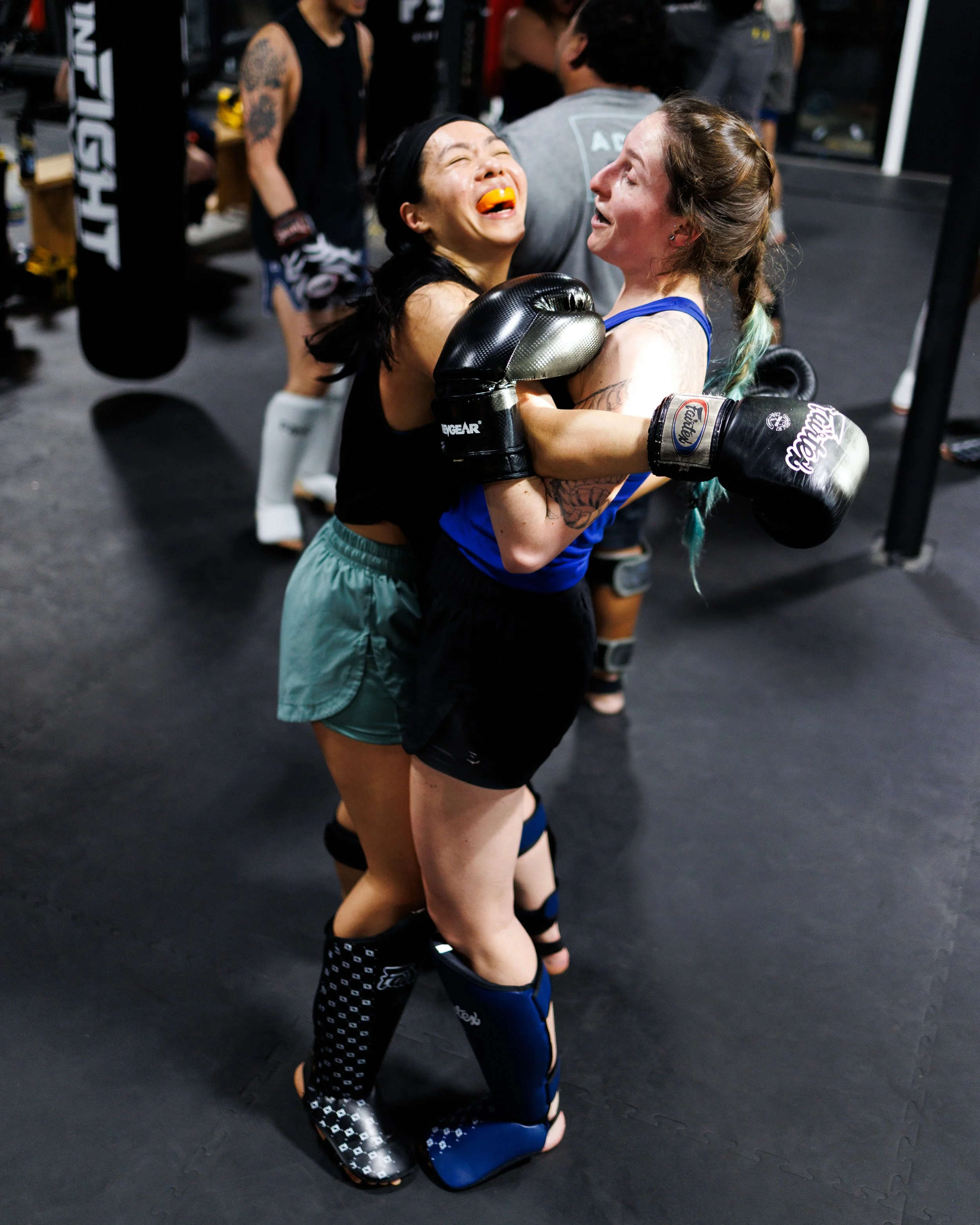
Muay Thai for Fitness: What Happens to Your Body After 3 Months of Training
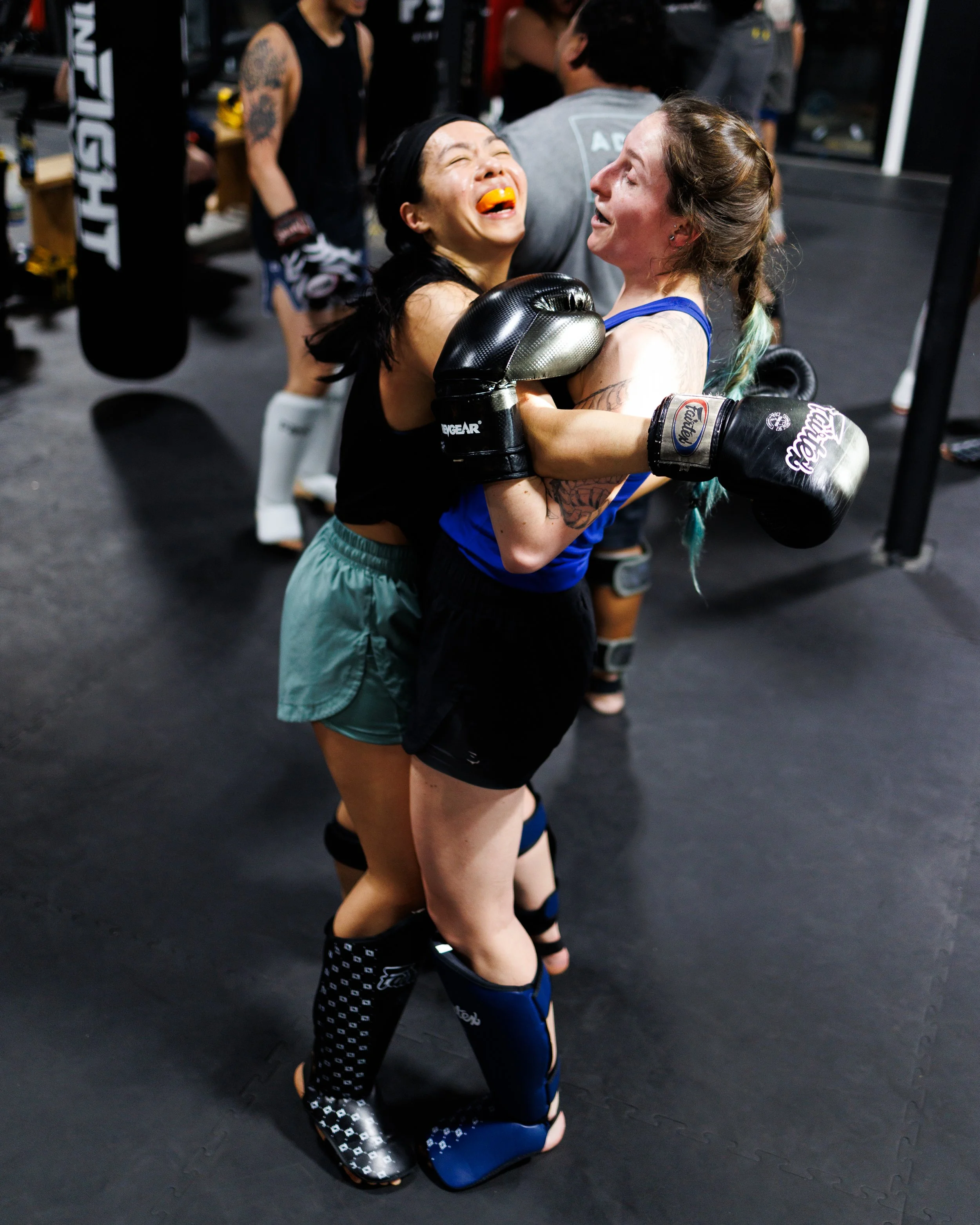
Most people who try Muay Thai don't start because they want to fight. They start because they're bored of the gym, burned out on running, or just looking for a workout that actually challenges them — mentally and physically.
What they don't expect is how much changes in just three months. Not just fitness. Posture. Coordination. Confidence. The way they carry themselves. Muay Thai has a way of reshaping people in ways that treadmills and weight machines simply don't.
The results below are based on training 3 times per week — a realistic and sustainable cadence for most people with jobs, families, and lives outside the gym. Three sessions a week, showing up consistently, is enough to produce the adaptations described here.
"This isn't magic — it's the result of training that demands more from your body than almost any other fitness modality. Muay Thai doesn't leave anything on the table."
What Muay Thai Does That the Gym Can't
- Monotonous — most people train despite the boredom
- Doesn't develop coordination or athleticism
- Mental toughness is limited to pushing through sets
- Minimal community or social connection
- Genuinely engaging — always something new to learn
- Builds strength and athleticism simultaneously
- Develops mental toughness under real pressure
- Strong community built on trust and camaraderie
Is Muay Thai Right for Your Fitness Goals?
If your goals include any of the following, Muay Thai is worth serious consideration:
Losing body fat while building functional muscle. Improving cardiovascular fitness without the monotony of running. Developing real coordination, athleticism, and body awareness. Building mental toughness and stress resilience. Finding a fitness community that keeps you accountable and engaged.
"If your primary goal is maximum muscle hypertrophy or powerlifting, Muay Thai complements but probably shouldn't replace your training. For everything else — it's one of the most complete fitness tools available."
- Coaches including multiple Doctors of Physical Therapy
- 17 classes per week across beginner and experienced levels
- 9,000+ sq ft facility with open gym from 7am–8pm
- Month-to-month memberships — no contracts, no enrollment fees
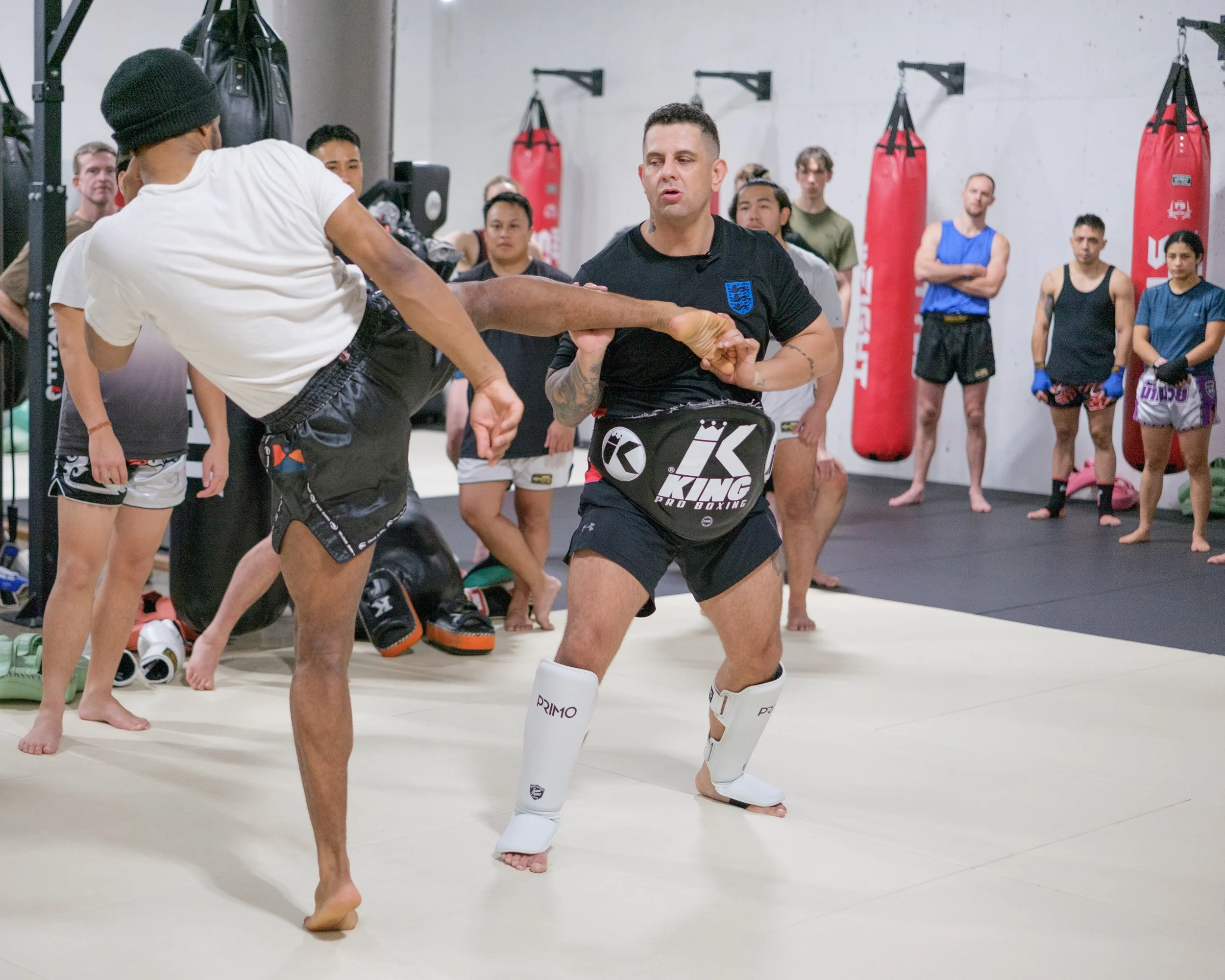
Muay Thai vs Kickboxing: What's the Difference?
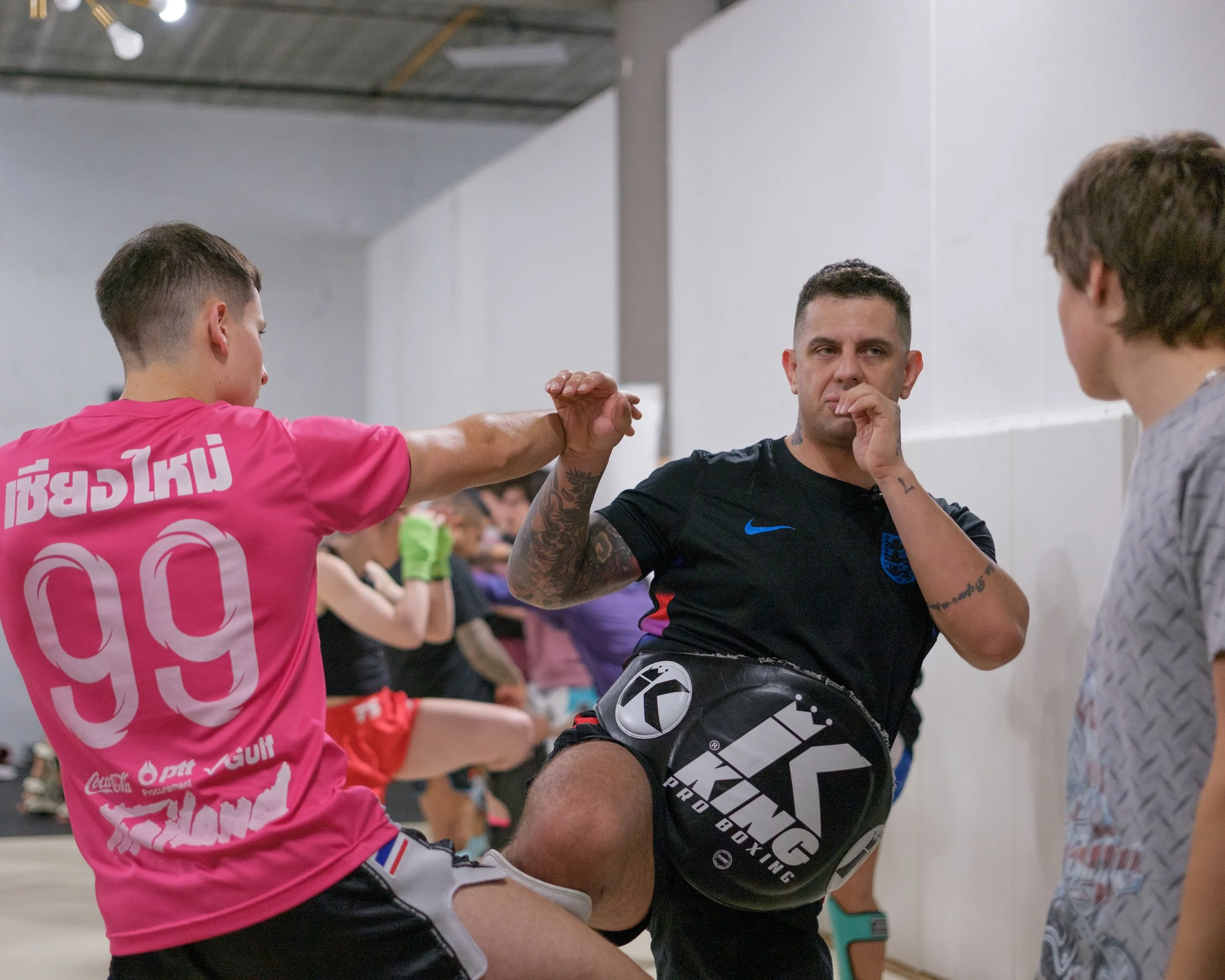
If you've been looking into combat sports or martial arts classes in Seattle, you've probably come across both Muay Thai and kickboxing. From the outside, they look almost identical — people in gloves, throwing punches and kicks. So what's actually different, and does it matter which one you choose?
It matters quite a bit. While they share some surface similarities, Muay Thai and kickboxing are fundamentally different disciplines — in their techniques, their history, their culture, and what they'll teach you.
A Brief History of Each
The Technical Differences
Weapons: 4 vs 8
Kickboxing uses fists and feet — four points of contact. Muay Thai uses fists, feet, elbows, and knees — eight points of contact. Elbows and knees aren't just bonus weapons — they change the entire geometry of a fight. Elbows are devastating at close range where punching loses power. Knees dominate the mid-range clinch, an area kickboxing largely ignores.
The Clinch
In most kickboxing rulesets, when two fighters grab each other the referee immediately separates them. In Muay Thai, the clinch is a core technical domain — fighters spend considerable time learning to control, off-balance, and strike from it. This makes Muay Thai dramatically more complete as a self-defense tool.
Stance and Movement
Muay Thai fighters use a more upright stance with a higher guard. Movement is measured and deliberate — Muay Thai values balance and composure. Kicks are thrown with the shin, not the foot. Kickboxing places more emphasis on boxing combinations and lateral movement, with kicks used to complement the boxing rather than as primary weapons.
| Muay Thai | Kickboxing | |
|---|---|---|
| Striking Weapons | Fists, feet, elbows, knees | Fists and feet |
| Clinch Work | Core technical domain | Broken up immediately |
| Origin | Thailand, centuries old | Japan/USA, 1970s |
| Kick Surface | Shin | Foot or shin |
| MMA Use | Universal striking base | Supplementary |
| Self-Defense | All ranges covered | Gaps at close range |
Head-to-Head Verdicts
"For the vast majority of people — beginners, fitness-focused members, and self-defense seekers alike — Muay Thai is the stronger long-term investment."
So Which Should You Choose?
- You want the most complete striking system
- You're interested in MMA
- You value self-defense effectiveness
- You want deep cultural roots and tradition
- You want to develop clinch and knee game
- Your goal is kickboxing-specific competition
- You're coming from a boxing background
- You want to add kicks without the full Muay Thai curriculum
- Full Muay Thai system — including clinch, elbows, and knee game
- Coaching staff includes multiple Doctors of Physical Therapy
- 17 classes per week across beginner and experienced levels
- 9,000+ sq ft facility in Georgetown with open gym 7am–8pm
- Month-to-month memberships — no contracts, no enrollment fees
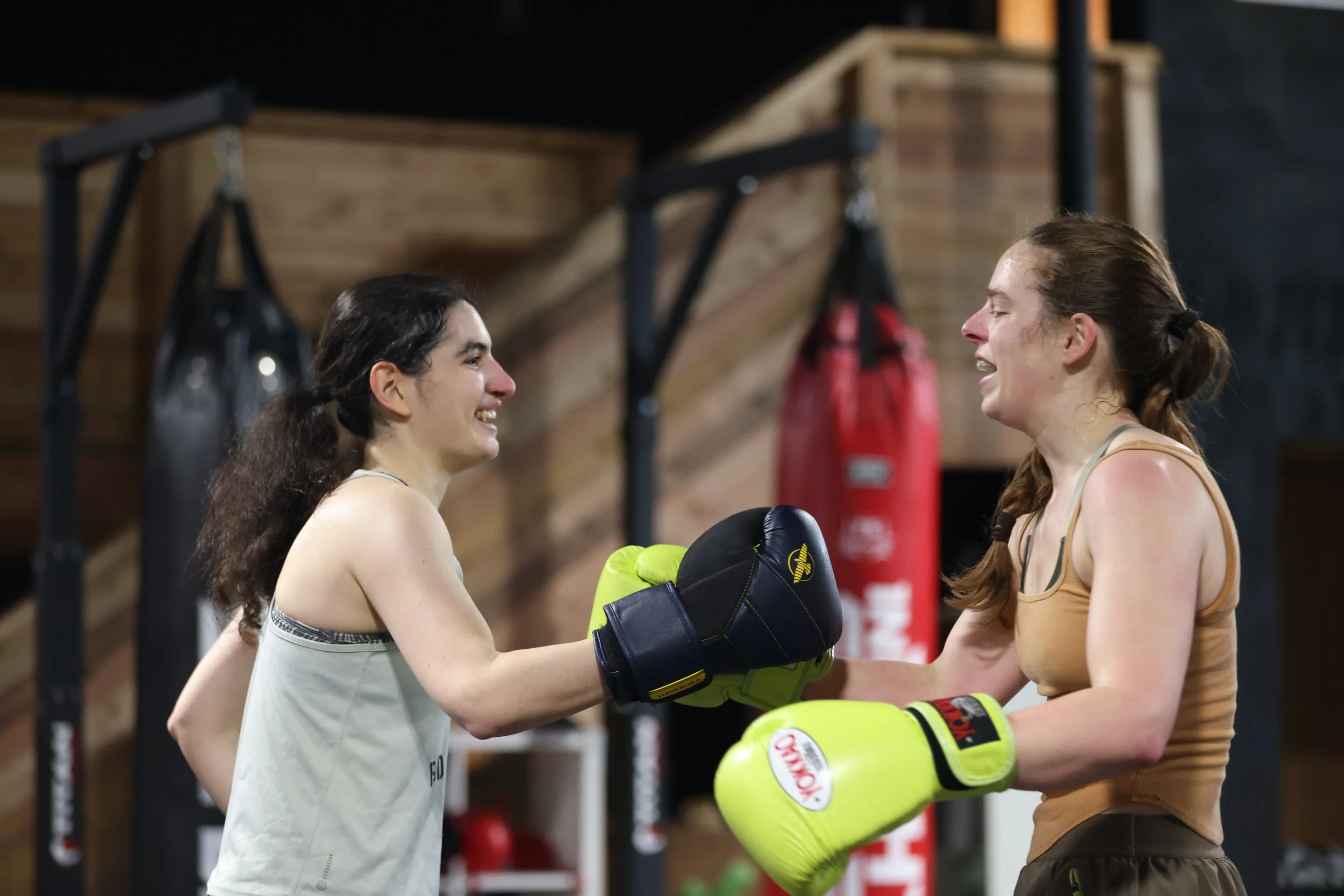
What to Expect at Your First Muay Thai Class
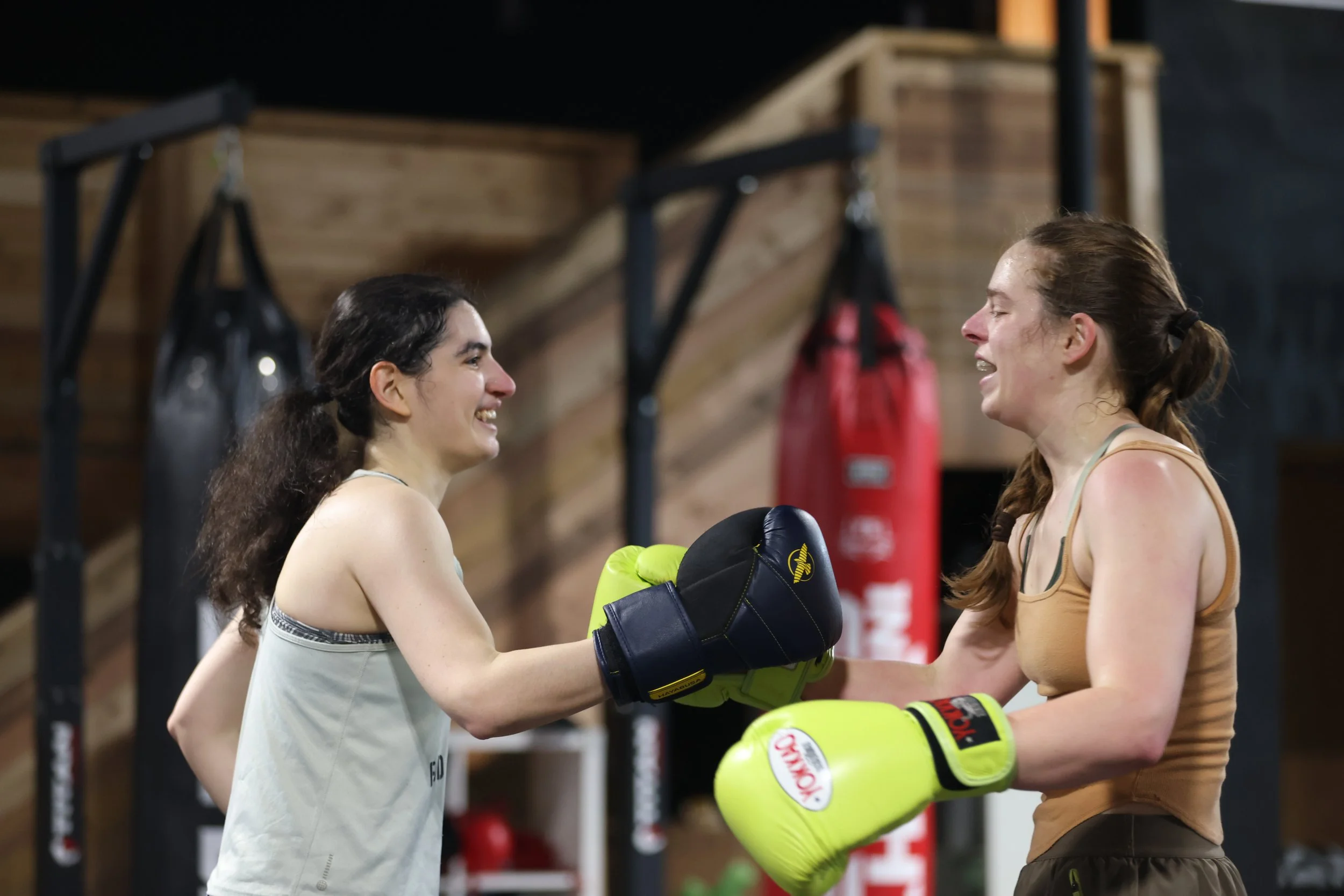
You've been curious about Muay Thai for a while. Maybe you've watched a fight, seen someone training, or just heard it's one of the best full-body workouts around. And now you're thinking about actually showing up — but you're not sure what that first class will look like.
That uncertainty is completely normal. Walking into a martial arts gym for the first time can feel intimidating, especially when you don't know the culture, the terminology, or what's expected of you. This guide walks you through exactly what happens — step by step.
Before You Arrive
The Structure of a Beginner Class
Here's exactly what a well-structured beginner Muay Thai class looks like at a technique-focused gym like Muók Boxing — from the moment class starts to the final stretch.
- Jogging and footwork drills
- Dynamic stretching — hip circles, shoulder rolls, leg swings
- Shadowboxing — throwing punches and kicks without a partner
- Stance — weight distribution, foot positioning, hip alignment
- Guard — protecting your head and body while staying mobile
- The Jab and Cross — foundational punches with correct hip mechanics
- The Teep (push kick) — Muay Thai's long-range weapon
- Basic combinations — linking two or three techniques with rhythm
"Good instruction goes beyond 'put your hand here.' At a technically-focused gym, coaches explain the biomechanics behind each movement — understanding the why accelerates your development significantly."
What Beginners Often Get Wrong
What Makes a Good Gym for Beginners
Not all gyms are created equal. When evaluating a gym for your first experience, look for structured beginner classes — not just open mat time. Coaches who explain technique, not just demonstrate it. A culture of controlled sparring and ego-free training. Class sizes that allow for individual attention. An environment where beginners are welcomed, not tolerated.
"The hardest part of starting Muay Thai is showing up for the first time. Everything after that gets easier."
You don't need to be fit, coordinated, or experienced. You just need to be curious and willing to learn. Every technique you'll practice in your first class has been taught to thousands of beginners — and the coaches at Muók Boxing have the experience to meet you exactly where you are.
- All equipment provided — just show up in athletic clothes
- Beginner classes structured for people with zero experience
- Coaching staff includes multiple Doctors of Physical Therapy
- 17 classes per week · 9,000+ sq ft facility in Georgetown
- No commitment — experience it before you decide