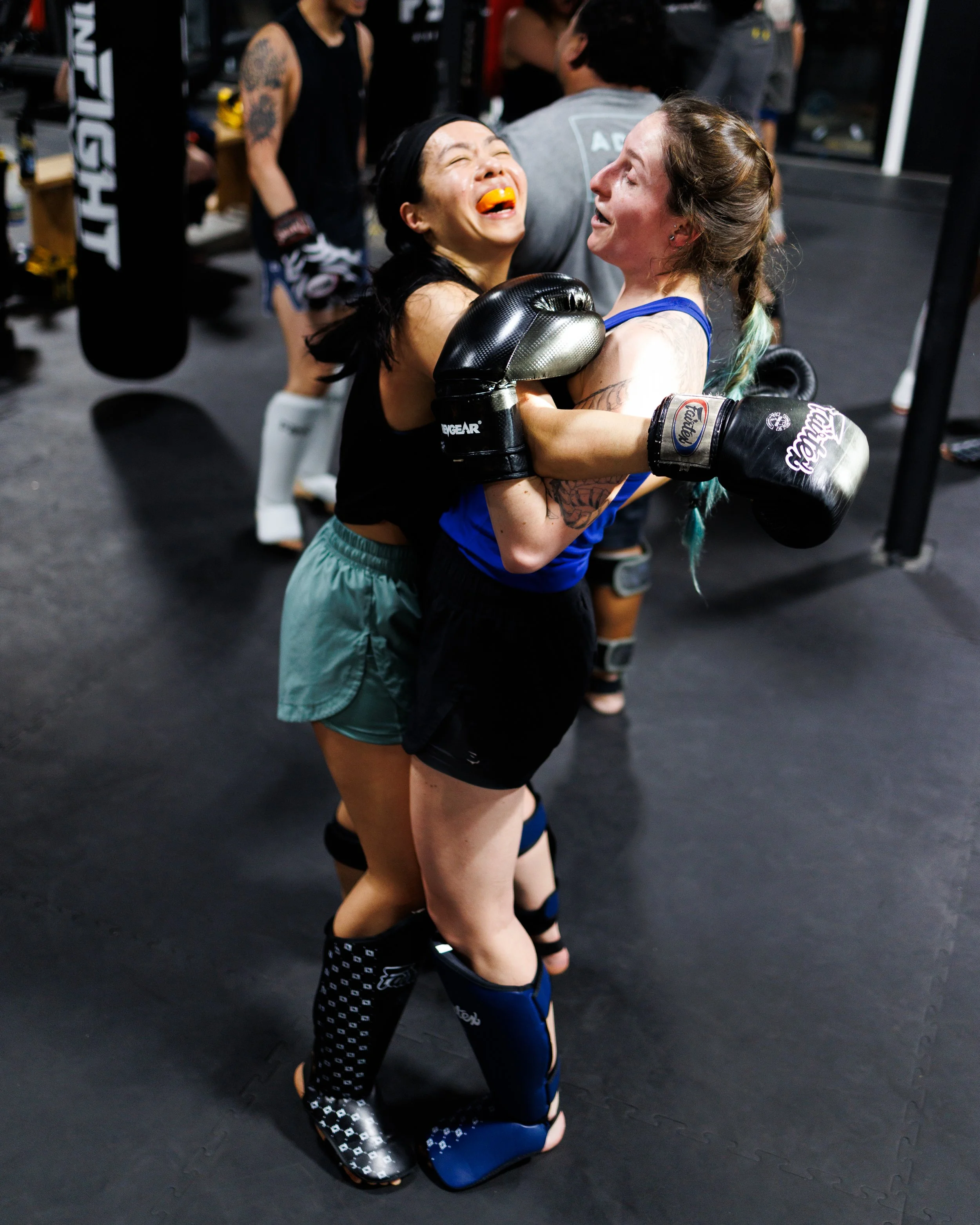
Most people who try Muay Thai don't start because they want to fight. They start because they're bored of the gym, burned out on running, or just looking for a workout that actually challenges them — mentally and physically.
What they don't expect is how much changes in just three months. Not just fitness. Posture. Coordination. Confidence. The way they carry themselves. Muay Thai has a way of reshaping people in ways that treadmills and weight machines simply don't.
3x
Per Week Baseline
600–900
Calories Per Session
90 Days
To Significant Change
The results below are based on training 3 times per week — a realistic and sustainable cadence for most people with jobs, families, and lives outside the gym. Three sessions a week, showing up consistently, is enough to produce the adaptations described here.
Cardiovascular Shock
The first thing most beginners notice is how gassed they get. Muay Thai demands a different kind of fitness — you're using your entire body simultaneously and explosively, while also managing mental focus and coordination. By end of week four, most people notice they're getting through class without feeling completely destroyed. That's your aerobic base beginning to adapt.
Soreness in Unexpected Places
Your shins will be sore. Your hips will be tight. Your shoulders will ache in ways that bench press never caused. The muscles used in Muay Thai — hip flexors, glutes, obliques, shoulder stabilizers — are often undertrained in conventional gym workouts. This subsides significantly by weeks three and four.
Body Composition
Don't expect dramatic visible changes yet. Your body is primarily neurologically adapting — learning movement patterns, building new motor connections. The bigger physical changes come in months two and three.
Cardiovascular Fitness
Your resting heart rate has likely dropped a few beats per minute. You're recovering between rounds faster. Classes that left you breathless in week one are now manageable — and you're able to focus on technique rather than just survival. The adaptation happens faster than steady-state cardio like running or cycling.
Core Strength & Hip Flexibility
Almost every Muay Thai technique is generated from the core. By month two, practitioners consistently report noticeable improvements in core strength — even without doing a single crunch. More importantly, it's functional core strength that stabilizes your spine and improves posture. Hip flexibility also improves dramatically — most people can kick noticeably higher than when they started.
Visible Body Changes
Month two is typically when people start noticing visible changes. Muay Thai burns 600–900 calories per session, and the combination of strength demands and cardiovascular output creates a favorable environment for fat loss and muscle development simultaneously. Changes are most visible in the shoulders, arms, and midsection.
Coordination & Athletic Ability
Muay Thai requires your hands, feet, hips, and eyes to work together in coordinated sequences under time pressure. The neurological adaptations carry over to everything else you do physically. People consistently report improvements in other sports, better balance, faster reaction times, and a general sense of being more physically capable.
Posture
The guard position — chin down, shoulders engaged, core braced — trains the postural muscles constantly. After three months, many practitioners notice they're standing taller, shoulders pulled back naturally, and the rounded-shoulder posture common from desk work has started to correct itself.
Mental Resilience
This one surprises people. Learning to push through hard rounds — consistently, over weeks and months — builds a kind of mental toughness that transfers to the rest of your life. Stress tolerance, focus under pressure, the ability to stay calm when things are uncomfortable. These are skills Muay Thai develops systematically.
"This isn't magic — it's the result of training that demands more from your body than almost any other fitness modality. Muay Thai doesn't leave anything on the table."
What Muay Thai Does That the Gym Can't
Conventional Gym
- Monotonous — most people train despite the boredom
- Doesn't develop coordination or athleticism
- Mental toughness is limited to pushing through sets
- Minimal community or social connection
Muay Thai
- Genuinely engaging — always something new to learn
- Builds strength and athleticism simultaneously
- Develops mental toughness under real pressure
- Strong community built on trust and camaraderie
Is Muay Thai Right for Your Fitness Goals?
If your goals include any of the following, Muay Thai is worth serious consideration:
Losing body fat while building functional muscle. Improving cardiovascular fitness without the monotony of running. Developing real coordination, athleticism, and body awareness. Building mental toughness and stress resilience. Finding a fitness community that keeps you accountable and engaged.
"If your primary goal is maximum muscle hypertrophy or powerlifting, Muay Thai complements but probably shouldn't replace your training. For everything else — it's one of the most complete fitness tools available."
Start Your Transformation
Begin Your 3 Months at Muók Boxing
Georgetown, Seattle · No experience required.
- Coaches including multiple Doctors of Physical Therapy
- 17 classes per week across beginner and experienced levels
- 9,000+ sq ft facility with open gym from 7am–8pm
- Month-to-month memberships — no contracts, no enrollment fees
Start Your Free Trial →