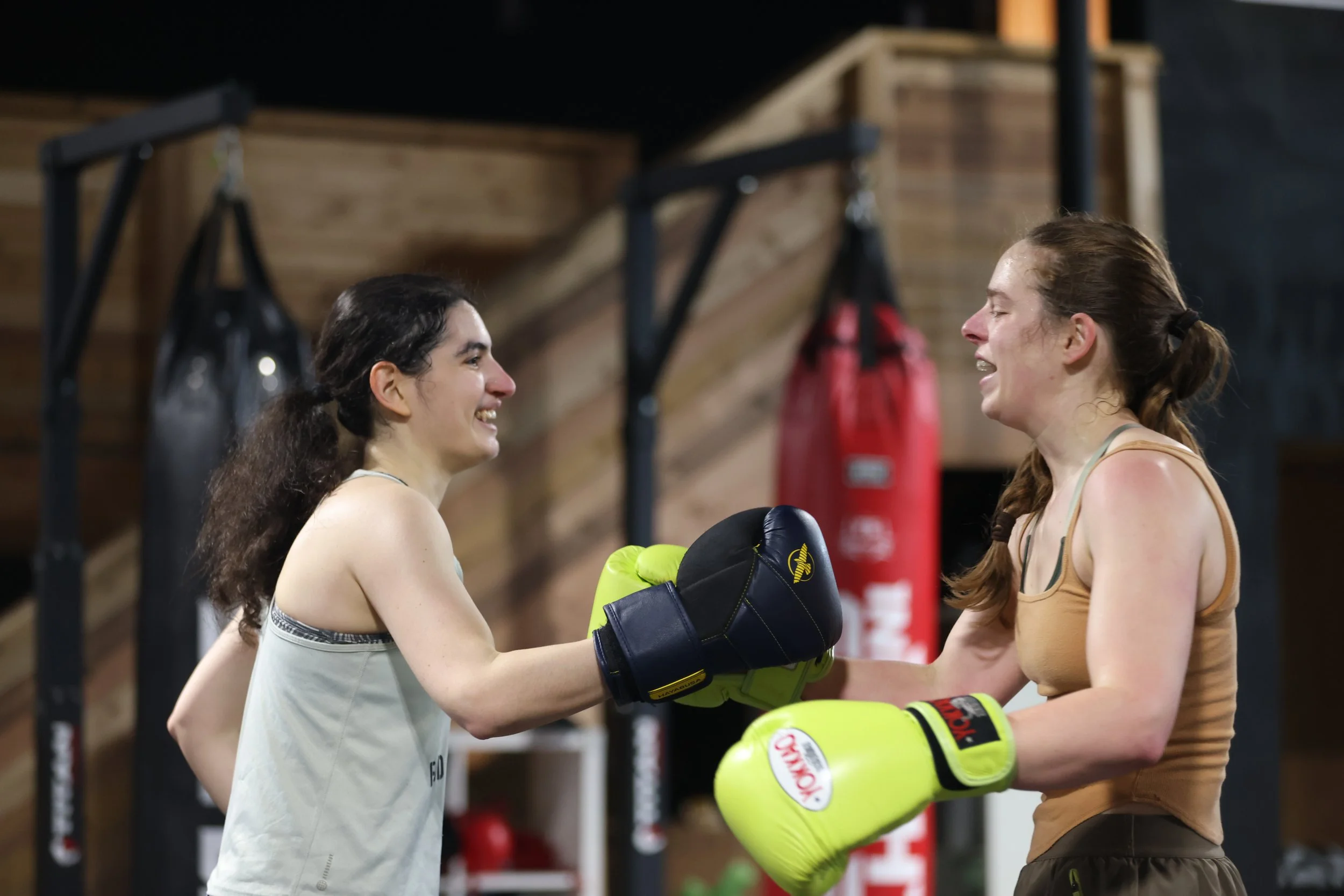
You've been curious about Muay Thai for a while. Maybe you've watched a fight, seen someone training, or just heard it's one of the best full-body workouts around. And now you're thinking about actually showing up — but you're not sure what that first class will look like.
That uncertainty is completely normal. Walking into a martial arts gym for the first time can feel intimidating, especially when you don't know the culture, the terminology, or what's expected of you. This guide walks you through exactly what happens — step by step.
Before You Arrive
01
What to Wear
Comfortable athletic clothing — shorts or athletic pants. Muay Thai is trained barefoot, so no shoes needed on the mat. No special gear required.
02
What to Bring
A water bottle — you will sweat. A small towel. An open mind and willingness to make mistakes. At Muok Boxing, all equipment is provided for your first class.
03
Arrive Early
Give yourself 10–15 minutes before class. This lets you check in, meet a coach, and get oriented without feeling rushed. Coaches appreciate students who arrive ready.
The Structure of a Beginner Class
Here's exactly what a well-structured beginner Muay Thai class looks like at a technique-focused gym like Muók Boxing — from the moment class starts to the final stretch.
01
10–15 min
Warm-Up
Class begins with a group warm-up designed to raise your heart rate, lubricate your joints, and prepare your body for movement. This usually includes:
- Jogging and footwork drills
- Dynamic stretching — hip circles, shoulder rolls, leg swings
- Shadowboxing — throwing punches and kicks without a partner
Shadowboxing at this stage isn't about looking polished. It's a movement warm-up. Don't worry about technique yet — just move.
02
20–30 min
Technique Instruction
A coach demonstrates a technique and breaks it down into component parts. Early classes focus heavily on:
- Stance — weight distribution, foot positioning, hip alignment
- Guard — protecting your head and body while staying mobile
- The Jab and Cross — foundational punches with correct hip mechanics
- The Teep (push kick) — Muay Thai's long-range weapon
- Basic combinations — linking two or three techniques with rhythm
At Muók Boxing, coaching staff includes Doctors of Physical Therapy. Instruction is grounded in movement science — not just habit.
03
15–20 min
Partner Drilling
You'll practice the technique with a partner — one person holds pads while the other strikes, then you switch. If you've never held pads before, a coach or experienced member will show you how. This is where technique starts to become instinct. The repetition and physical feedback of a real target accelerate learning in ways that solo drilling can't replicate.
04
5–10 min
Conditioning
A conditioning block — bodyweight exercises, core work, or bag rounds. This builds the physical base Muay Thai demands: core stability, hip flexibility, shoulder endurance, and cardio. Don't be surprised if this part is harder than the technical work. Your conditioning improves rapidly in the first few weeks.
05
5–10 min
Cool-Down & Stretching
Class ends with static stretching, breathing, and sometimes light partner work. This is an important part of training that beginners often undervalue. Consistent stretching after class meaningfully reduces soreness and improves the hip and shoulder mobility that Muay Thai demands.
"Good instruction goes beyond 'put your hand here.' At a technically-focused gym, coaches explain the biomechanics behind each movement — understanding the why accelerates your development significantly."
What Beginners Often Get Wrong
Trying to Go Hard Too Early
Muay Thai rewards patience. Your first goal isn't power — it's pattern. Throwing a punch correctly at 50% effort is infinitely more valuable than throwing it hard with poor form. The power comes once the mechanics are ingrained.
Tensing Up Constantly
Beginners almost universally hold too much tension in their shoulders, jaw, and hands. Relaxation is a skill in Muay Thai — staying loose makes you faster, more efficient, and less fatigued. Listen when coaches tell you to breathe and relax.
Not Asking Questions
Experienced coaches want you to ask questions. A single clarification can fix a movement pattern that might otherwise take weeks to correct on your own. There are no stupid questions in your first class.
Comparing Yourself to Others
The person moving fluidly next to you may have trained for three years. Focus entirely on your own movement and your own progress — that's the only comparison that matters.
What Makes a Good Gym for Beginners
Not all gyms are created equal. When evaluating a gym for your first experience, look for structured beginner classes — not just open mat time. Coaches who explain technique, not just demonstrate it. A culture of controlled sparring and ego-free training. Class sizes that allow for individual attention. An environment where beginners are welcomed, not tolerated.
"The hardest part of starting Muay Thai is showing up for the first time. Everything after that gets easier."
You don't need to be fit, coordinated, or experienced. You just need to be curious and willing to learn. Every technique you'll practice in your first class has been taught to thousands of beginners — and the coaches at Muók Boxing have the experience to meet you exactly where you are.
Ready to Try It?
Book Your Free Trial at Muók Boxing
Georgetown, Seattle · Arrive 15 minutes early.
- All equipment provided — just show up in athletic clothes
- Beginner classes structured for people with zero experience
- Coaching staff includes multiple Doctors of Physical Therapy
- 17 classes per week · 9,000+ sq ft facility in Georgetown
- No commitment — experience it before you decide
Start Your Free Trial →