
Shin Splints From Muay Thai Training — What's Actually Happening and What to Do
Every Muay Thai athlete has been here. You put in a big week — hard conditioning, a lot of bag rounds, maybe some sparring — and by Thursday evening your shins are letting you know about it. Not the bone bruise from a bad check. Something deeper. A long, dull ache along the inside of your lower leg that's still there when you wake up the next morning.
Most people train through it for a few weeks, hoping it goes away. Sometimes it does. Sometimes it gets worse. And occasionally — if you really push it — it turns into something that puts you out for months instead of weeks.
Shin splints, or medial tibial stress syndrome, is one of the most common overuse injuries in Muay Thai. It's also one of the most mismanaged. Here's what we see at Muók, why it happens specifically in our sport, and what the approach looks like when you handle it right.
-
01Why Muay Thai specifically causes thisRunning, kicking, and checked kicks each stack load onto your shins in different ways. Most sports only hit one or two of those. We hit all three.
-
02How to know how bad it isThe difference between shin splints you can manage and a stress fracture you absolutely cannot train through — and why it matters.
-
03What actually fixes itNot rest alone. A progressive return built around what you need to get back to — bag work, sparring, running, checked kicks and all.
-
04What most people do wrongThe mistakes we see over and over — and why the athletes who handle this well are the ones who stay in the gym longest.
Why Muay Thai Hits Your Shins So Hard
The reason shin splints are so common in Muay Thai is that we load the tibia in three completely different ways within a single training session — and most athletes don't think about the cumulative effect until something starts to hurt.
Kicking
Every roundhouse kick generates rotational force through your hip, through your knee, and into your tibia on the way to impact. Throw a few hundred of those in a week of training — bag rounds, pad work, technical drilling — and the bone and the muscles attached to it are absorbing a significant amount of cumulative stress. This is especially true when you ramp up volume quickly, like before a fight or after a break.
Blocked kicks — the one people don't think about
When your training partner checks your kick, shin meets shin. The impact travels straight into your tibia. Do that repeatedly over a week of sparring and technical work, and you're stacking bone stress on top of whatever you've already accumulated from bag work and running. Most athletes don't connect the dots here because the pain doesn't show up during sparring — it shows up two days later at rest.
Roadwork and conditioning
Running is part of Muay Thai. It's also where shin splints classically show up in every sport. The problem for our athletes is that we're often adding roadwork on top of already high training volume — or we spike it hard during fight prep — without building up to it gradually. Your shins are already loaded from training. Adding a sudden jump in running miles is the thing that pushes you over the edge.
The shin doesn't care whether the load came from kicking, being checked, or running. It's all the same stress on the same bone. Muay Thai stacks all three — which is why we see this more than most sports do.
Is It Shin Splints or Something You Can't Train Through?
Most shin pain in Muay Thai is shin splints — manageable, progressive, something you can work around with the right approach. But occasionally it's a stress fracture. And those two things look similar enough that athletes confuse them all the time.
Shin splints
The pain is spread across a wider area along the inner edge of your shin — not one sharp spot. It hurts more at the start of a session and sometimes eases as you warm up. It aches after training and the next morning. You can press along the inside of your shin and find a stretch of tenderness, not a single point that makes you want to pull your leg away.
Stress fracture
One specific spot on the bone that's acutely painful when you press on it. Doesn't ease up when you warm up — often gets worse as activity continues. If you hop on that leg, you feel it immediately. If there's any chance it's a stress fracture, stop training and get it looked at. Continuing to train through a stress fracture can turn a 6-week problem into surgery.
We've seen athletes push through what they thought was shin splints for months before finding out it was something more serious. If you're not sure, come in and get eyes on it. Our coaches at Root Physical Therapy can tell the difference quickly and get you on the right track — whether that's modified training or something that needs imaging.
What Actually Fixes It
Rest alone doesn't fix shin splints. It reduces the pain, which makes you feel like you've recovered, and then you go back to full training and it comes back within a few weeks. The athletes who actually resolve this are the ones who use the reduced load period to build the strength that protects them when they return.
-
01Back off the things that loaded itCut running volume significantly. Pull back on heavy bag kicking. No sparring with shin contact until you're pain-free at rest. You can still train — upper body work, clinch, technique at low intensity. Keep moving. Just reduce what's stressing the bone.
-
02Build the tissue that takes the loadCalf raises — especially single-leg eccentric work — are the most important thing you can do for shin splints. Your calf is what absorbs ground impact on every run and every kick landing. Weak calves put more stress on the bone. Hip strengthening matters too, because your hip stability directly controls how your shin angles under load when you kick and when you run.
-
03Bring running and kicking back graduallyOnce you're pain-free at rest and on brisk walks, start with short run-walk intervals and light bag work at reduced power. The key word is gradual — no more than a 10% increase in volume per week. If your shins speak up, that's feedback. Back down a notch and hold there longer before progressing.
-
04Return to sparring and checked kicks lastSparring involves unpredictable impact. Checked kicks are direct bone-to-bone load. These come back after everything else — after you're running pain-free, after bag work is back to full power, after two consecutive weeks of full training without symptoms. Don't rush this step. It's the one that resets the clock if you get it wrong.
The Mistakes We See Over and Over
Training through it because it "warms up fine"
Shin splints often ease up once you're moving. Athletes take this as a green light to keep training at full volume. It isn't. The tissue is still under stress. The fact that it stops hurting during activity just means the pain signal is being suppressed — not that the problem is resolved. The ache that comes back that evening is the honest signal.
Spiking roadwork before a fight
Fight prep almost always involves more running. If your shins have been borderline throughout camp and then you add a hard week of roadwork in the final month, you're gambling. The athletes who manage this best are the ones who build their running base consistently between camps — not in a rush at the end of one.
Skipping the strength work because it feels like a waste of time
The calf raises and hip work aren't optional extras. They're the reason the injury doesn't keep coming back. Every athlete who has gone through this properly and done the strength work reports that their training volume tolerance goes up significantly on the other side. The athletes who skip it are usually back dealing with the same thing six months later.
The athletes who last in this sport are the ones who learn to read their body early. Shin splints are one of the clearest signals your training load is outpacing your recovery. The sooner you respond, the less it costs you.
If It Keeps Coming Back
Some athletes deal with shin splints repeatedly — not because they're doing everything wrong, but because there's a mechanical reason underneath it. Overpronation when you run, weakness in a specific part of the hip chain, a gait pattern that puts extra rotational stress on your tibia with every kick. These things don't resolve on their own no matter how carefully you manage load.
This is where getting an actual assessment pays off. Our coaches at Root Physical Therapy — on-site at Root Strength Georgetown, same building as Muók — can watch you move, identify what's driving the pattern, and build a plan around it. Most major insurance plans are accepted. Most members end up paying very little out of pocket. And you don't need a referral.
If your shins have been a recurring problem, that's worth 45 minutes of someone's actual attention — not another round of hoping it resolves itself.
Shins Still Bothering You?
Book a session with Root Physical Therapy — on-site at Root Strength Georgetown, same building as Muók Boxing. Our coaches will assess what's driving it and build a return-to-training plan around your actual schedule.
Book a PT Session →
Root Physical Therapy Is Now Open at Muók Boxing
We've always believed the best training environments do more than push you — they take care of you. That belief just got a lot more concrete.
Root Physical Therapy is now fully operational at 6332 6th Ave S. The PT room is complete, our team of Doctors of Physical Therapy is on-site, and we're ready to take on Muók members as patients. Whether you're dealing with a nagging injury, recovering from something acute, or just want to move and feel better — we're here.
This isn't a clinic across town. It's in the same building where you train, staffed by people who know exactly what your body goes through in a Muay Thai class or a strength training session. That distinction matters more than it might sound.
The biggest gap in most athletic rehab isn't the quality of the PT — it's the disconnect between PT and coaching staff. At Muók, your PT and your coaches talk to each other. That changes everything.
Why This Is Different From a Standard PT Clinic
Most physical therapy clinics treat athletes without knowing anything about how they actually train. You describe your sport, they nod, and they give you a generic protocol built for someone vaguely athletic. If you train Muay Thai, that means your PT has probably never watched a roundhouse kick, doesn't know what pad work feels like on the shoulder, and has no idea what "clinch work" does to the neck and spine.
Our team does. Andy Le — one of our PTs — has been coaching Muay Thai at Muók for over 10 years. Bobby Green is a PTA and Muay Thai coach here simultaneously. Joe Rellora is both Lead PT and a strength coach. The clinical knowledge and the training knowledge exist in the same people, in the same building.
How Recovery Works When PT and Coaching Are Connected
The standard rehab experience goes like this: you get injured, you go to a PT clinic, you do your exercises, you get discharged, and then you try to figure out on your own when it's safe to go back to training. That gap — between PT discharge and full return to sport — is where most re-injuries happen.
At Muók, that gap doesn't exist. Here's how the process actually works:
-
01Assessment and team communicationYour PT evaluates the injury and communicates directly with your Muay Thai and strength coaches — what's safe, what isn't, and what modifications are possible. Everyone is on the same page from day one.
-
02Modified training continuesWhere possible, you keep training with smart modifications. Coaches adapt your sessions around your rehab so you stay active, maintain conditioning, and don't lose the progress you've built.
-
03Progressive return to full trainingPT and coaches work together to reintroduce full training progressively. A clear, coordinated plan — no guesswork, no "you should probably be okay" discharge notes.
-
04Back at full capacityYou return stronger and better informed, with a PT team that knows your history, understands your training demands, and can support you long-term — not just for this injury.
Insurance We Accept
We verify your benefits before your first appointment so there are no surprises. Most Muók members end up paying little to nothing out of pocket.
Don't see your insurance listed? Reach out — we may still be able to help, or arrange a cash-pay rate that works for you.
Meet the PT Team
Four providers, all on-site — each bringing a different clinical specialty, all with a deep understanding of combat sports and strength training.




Who Should Book an Appointment
You have a nagging injury you've been training through
Most training injuries don't stop people — they just make training less effective and more uncomfortable. If you've been managing something for weeks or months, a proper assessment can identify what's actually happening and build a plan that resolves it rather than just tolerating it.
You're recovering from something acute
A sprain, a strain, a collision in sparring — anything that took you off the mat recently. The faster you get into proper rehab, the faster you return to full Muay Thai training. And with our team, that return is coordinated with your coaches from day one.
You want to move and feel better long-term
You don't need to be injured to see a PT. Plenty of our members book sessions for movement screening, mobility work, and building the kind of physical resilience that keeps injuries from happening in the first place. If you train seriously, proactive PT is one of the smartest investments you can make in your long-term training capacity.
Muay Thai for Women in Seattle — What to Expect and Why It Works
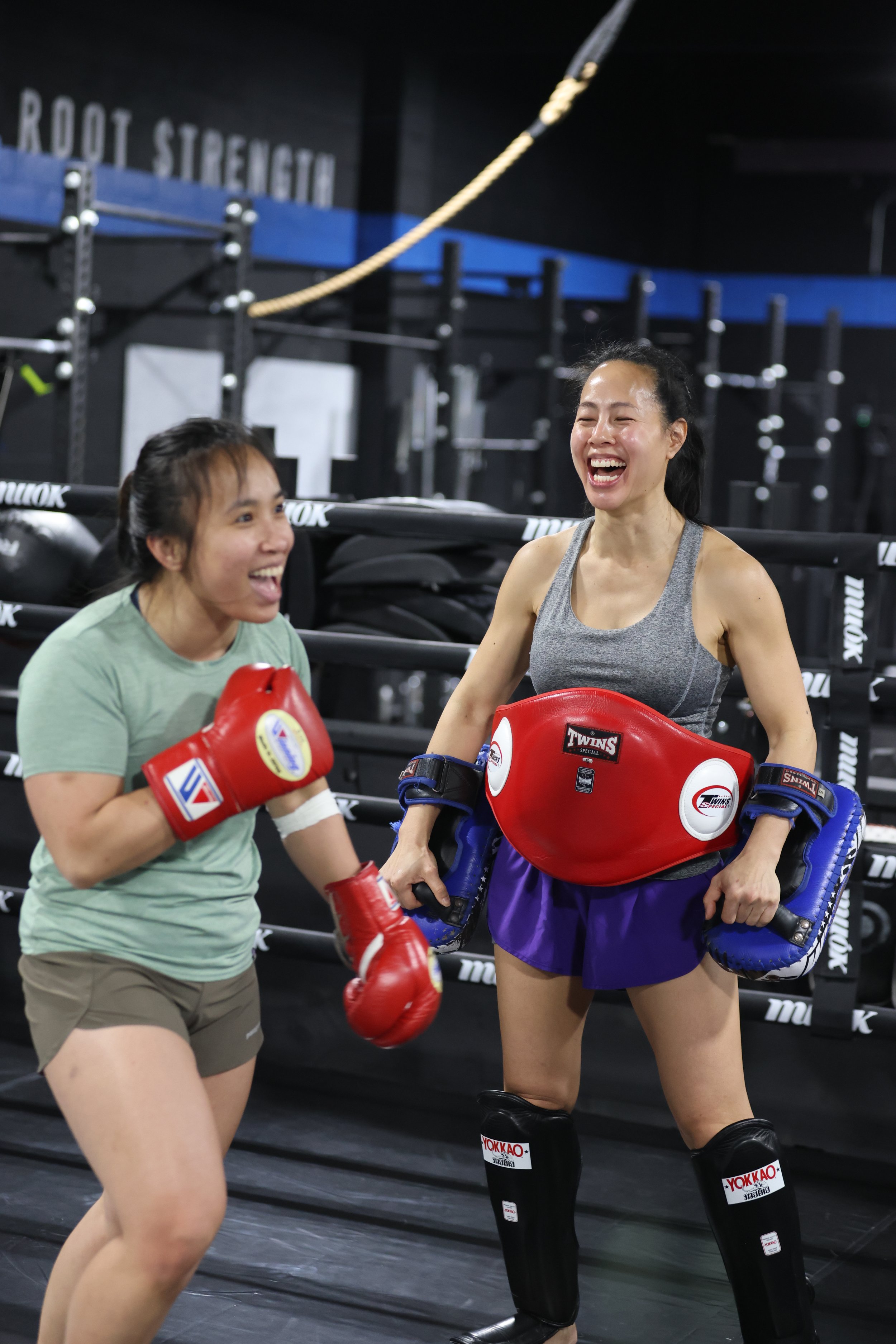
If you've been thinking about trying Muay Thai in Seattle but assumed it wasn't really for you — too aggressive, too intimidating, built for people who already know how to fight — this post is worth reading before you decide.
The assumption is wrong. And the people who are most surprised by that, once they actually walk in, are usually women who spent months convinced it wasn't going to be their thing.
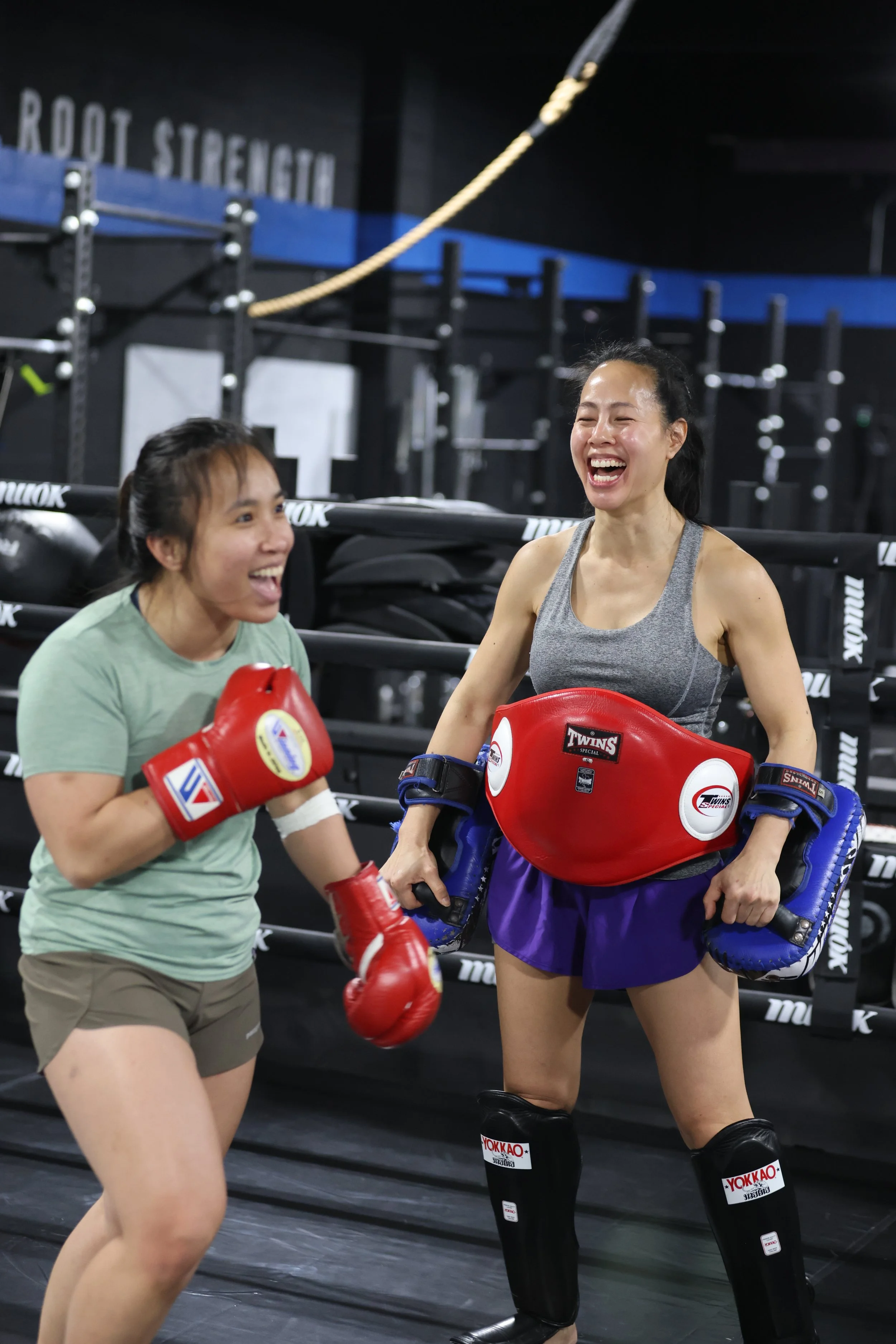
At Muók Boxing, women make up a significant portion of our membership at every level — beginners, intermediate practitioners, and people who've been training for years. That's not accidental. It reflects something real about what Muay Thai actually offers, and how we run our program.
Why Muay Thai Works Especially Well for Women
Most fitness programs ask you to work harder. Muay Thai asks you to work smarter. The techniques are built around leverage, timing, and technique — not brute strength. A well-executed teep doesn't require you to be strong. A well-timed elbow doesn't require you to be bigger than your opponent. This is a martial art designed to work for a smaller practitioner against a larger one — which is exactly why it's one of the most practical self-defense systems available regardless of size or strength.
-
01The fitness outcomes are exceptionalResearch published in Frontiers in Psychology in 2025 found that a 6-week Muay Thai program produced a 13% improvement in physical quality of life and a 22% improvement in mental quality of life. A separate study showed Muay Thai burns around 532 calories per session on average — more than most cardio formats — while building functional strength, coordination, and cardiovascular capacity simultaneously. It's one of the most complete fitness disciplines available. Read more in our post on Muay Thai for fitness in Seattle.
-
02It builds confidence that carries outside the gymLearning to hit with real technique — to throw a roundhouse that actually connects properly, to feel your teep stop someone's forward movement, to work through a sparring round without freezing — builds a kind of confidence that fitness classes don't produce. It's specific and earned. Members consistently describe it as one of the most meaningful things they've developed through training, not just the most physically demanding.
-
03The self-defense capability is real and practicalMuay Thai develops striking tools that work at every range — the teep to manage distance, punches and body kicks at mid range, elbows and knees in close range, and clinch control when someone grabs you. These aren't memorized techniques practiced against a cooperative partner. They're instinctive responses built through thousands of repetitions under gradually increasing pressure. That's the difference between a skill and a memory. For a full breakdown, see our guide to self defense classes in Seattle.
-
04Size and strength are not prerequisitesThis bears repeating because it's the assumption that keeps most women from trying: you don't need to be strong, fast, or athletic to start. You need to show up. Muay Thai technique is built on leverage and timing — qualities that develop through repetition, not natural physical gifts. Many of our most technically sharp members are women who started with zero athletic background and built their skills from scratch over months of consistent training.
-
05The community at most good Muay Thai gyms is genuinely welcomingThe culture of a gym matters as much as the quality of coaching. At Muók, the environment is intentionally ego-free — experienced members remember what it felt like to be a beginner and act accordingly. Women who train here consistently describe the community as one of the reasons they kept coming back after their first class. The technical challenge keeps you engaged; the community makes it a practice you build your week around.
The women who train at Muók aren't the exception to the rule — they are the rule. Muay Thai rewards technique, timing, and intelligence. Those qualities have nothing to do with gender.
What Your First Class Actually Looks Like
This is where the anxiety lives for most people — the not knowing. So here's exactly what happens when you come in for a free trial at Muók.
Before class
You'll be greeted when you walk in and introduced to a coach before the session starts. There's no expectation that you know anything — beginner orientation is built into how we run classes. You'll be placed in the beginner group, which trains alongside but separately from the experienced group, with its own dedicated coaching.
The warm-up
Every class starts with a shared warm-up — both groups together. This is where you start to feel the pace and get a sense of who's in the room. The warm-up is active and athletic but manageable at any fitness level.
Technique work
The beginner group moves into technique work — typically a combination of strikes broken down step by step by a coach. You'll drill it solo, then on pads with a partner. The focus is mechanics: stance, hip rotation, guard position. Nobody expects you to be smooth on day one. Coaches give individual corrections throughout.
Bag and pad rounds
You'll finish with bag work or partner pad rounds — putting the technique into practice at your own pace. This is usually where people realize they've been working harder than they noticed, because the focus on technique keeps the mind occupied.
After class
You'll be exhausted, probably more than you expected, and you'll want to come back. That's the standard first-class experience at a well-run Muay Thai gym.
What to Look for in a Muay Thai Gym as a Woman
Watch how the coaches interact with beginners
If you're evaluating gyms, our guide to Muay Thai classes near me in Seattle covers exactly what to look for. The quality of a gym's culture is visible in the first five minutes. Coaches who take time to explain why a technique works — not just how to do it — are the ones who build genuine capability. Coaches who ignore beginners or rush through corrections are building a gym that works for experienced practitioners and nobody else.
Check the gender breakdown of the membership
A gym where women make up a meaningful portion of the membership has already done something right culturally. If you walk in and every member is male, that tells you something about the environment regardless of what the website says.
Ask about sparring expectations
Sparring is an important part of Muay Thai development — but it should always be optional for beginners and introduced gradually at a pace that's appropriate for you. A gym that pressures new members into sparring before they're ready, or that runs sparring without proper supervision, is not the right environment for someone building their foundation.
Look for DPT credentials in the coaching staff
This is rare in Seattle gyms and genuinely matters — especially for women who may be coming to Muay Thai from a history of injury or physical therapy, or who want to train hard without accumulated damage. Coaches with Doctor of Physical Therapy backgrounds understand load management, injury prevention, and how to build long-term athletic sustainability into a training program.
Common Questions Women Ask Before Starting
-
Do I need to be fit before I start?No. Muay Thai will get you fit — it's not a prerequisite. Every class is scalable. Coaches adjust intensity and volume to where you are on day one, not where they wish you were. The fitness comes from the training itself, not from arriving already in shape.
-
Is sparring required?Never. Sparring is always optional at Muók and is only introduced when both you and your coach feel you're ready. Most members train for months before their first sparring session. Many train long-term and spar occasionally or not at all. Both approaches are completely valid.
-
Will I be the only woman in class?Unlikely. Women train across all class times at Muók. Evening classes in particular tend to have strong female attendance. But the honest answer is: even if you are the only woman in a given session, the environment is welcoming. Nobody is looking at you that way.
-
What do I wear?Athletic shorts or leggings and a fitted athletic top. Muay Thai is barefoot, so no shoes needed on the mat. Gloves and wraps are available to borrow for your first class — you don't need to buy anything before you try it.
-
I've never thrown a punch. Is that okay?That's the ideal starting point. You don't have habits to unlearn. Beginners with no prior experience often progress faster than people with backgrounds in other martial arts because they come in genuinely open to learning. Starting from zero is not a disadvantage here.
-
Is Muay Thai good for weight loss?It's one of the most effective formats available. A single session burns around 532 calories on average — more than most cardio classes — while building lean muscle and improving coordination simultaneously. Members who train 3x per week consistently describe significant body composition changes within the first 2–3 months alongside fitness improvements that go well beyond what the scale shows.
Muay Thai for Women at Muók Boxing — Georgetown, Seattle
Our coaching staff includes multiple Doctors of Physical Therapy — a combination that's genuinely rare in Seattle. It means you're learning technique from coaches who understand movement mechanics, injury prevention, and how to build a training practice that's sustainable for years rather than months.
We run 17 classes per week across morning, midday, and evening slots — specifically because we know your schedule doesn't always cooperate. Every class splits into beginner and experienced groups with dedicated coaching at each level, so your first class isn't you trying to keep up with people who've been training for three years.
The first class is free. No commitment, no pressure — just come in and see if it's the right fit. Most people who try it once find out within the first hour that the assumptions that kept them away were wrong.
Why Olympic Weightlifting Makes You a Better Muay Thai Athlete
The debate about whether Muay Thai athletes should lift weights has been going on for decades. Traditional Thai training camps built conditioning around running, shadow boxing, pad work, and sparring. The weight room was avoided — partly out of tradition, partly out of fear that lifting would add unwanted mass or slow athletes down.
That debate now has a clear answer from peer-reviewed research. A study published in the European Journal of Sport and Exercise Science measured the kick power of Muay Thai fighters before and after an 8-week Olympic weightlifting program — and the results were not subtle.
What the Study Found
Researchers at the University of East London divided Muay Thai fighters into two groups. One group continued their standard Muay Thai training. The other followed an 8-week Olympic weightlifting program using derivatives — movements like the hang clean, power clean, and jump shrug — in addition to their regular training.
Kick power was measured at the start and end of the study using the PowerKube, a device that quantifies the force output of strikes. The weightlifting group improved their roundhouse kick power by 7.41%. The countermovement jump — a direct measure of lower body explosive power — improved by 7.54%. The traditional training group improved kick power by just 1.54% and jump height by 0.33% over the same period.
Critically, the weightlifting group achieved these improvements without any meaningful change in body weight — directly addressing the weight class concern that has historically kept fighters out of the gym.
Elite boxers generate punching force primarily from the legs, not the arms. Lower-ranked fighters rely more on trunk and arm force. The weight room closes that gap.
Why Olympic Lifting Transfers to Muay Thai
The connection between Olympic lifting and Muay Thai performance isn't coincidental. It comes down to biomechanics — specifically how force is generated in a Muay Thai kick.
A Muay Thai roundhouse kick is a full-body explosive movement. Power originates from the ground — through the planted foot, up through the ankle, knee, and hip, rotating through the core, and releasing through the shin. This chain of force production is identical to what happens in the receiving phase of a hang clean or power clean: triple extension of the ankle, knee, and hip in one explosive coordinated movement.
Olympic lifting derivatives train exactly this pattern — at high velocity, under load, with a coordination demand that bodybuilder exercises or simple barbell squats don't replicate. The nervous system learns to recruit maximum motor units and fire them in the right sequence. That neurological adaptation transfers directly to the mechanics of a kick.
The Best Olympic Lifting Movements for Muay Thai
Hang clean
Trains explosive hip extension from a standing position — the same hip drive that generates roundhouse kick power. Lower technical barrier than the full clean from the floor.
Power clean
Full ground-to-rack explosive movement. Develops complete kinetic chain coordination from the floor up. Most directly mirrors the force generation of a high kick.
Jump shrug
A partial Olympic derivative focused on the pull phase. Lower skill demand, high power output. Good entry point for fighters new to weightlifting movements.
Hang high pull
Develops the transition from lower body drive to upper body pull — relevant for the full-body coordination of Muay Thai clinch work and knee strikes.
The Post-Activation Potentiation Effect
A related study published in the Journal of Strength and Conditioning Research in 2023 took this a step further — finding that performing heavy squats immediately before kicking can boost kick power in the short term through a phenomenon called Post-Activation Potentiation (PAP).
The study tested 17 experienced Muay Thai fighters performing 4 heavy squats followed by kicking tests at rest intervals of 2, 5, and 8 minutes. The 5-minute rest interval produced the best results — measurably stronger roundhouse and teep kicks compared to baseline. The mechanism is the same: heavy compound loading temporarily elevates the nervous system's motor unit recruitment capacity, and the kicks that follow benefit from that priming effect.
The practical application is direct. Performing a few heavy squat sets followed by a 5-minute rest before your kicking rounds is a scientifically validated warm-up protocol that can measurably improve performance within a single session.
How to Integrate This Into Your Training
Start with 2 sessions per week
The research supports a 2:1 ratio — two Muay Thai skill sessions for every one strength session. Adding Olympic lifting on days between your technical sessions minimizes fatigue interference while allowing enough frequency for neurological adaptation.
Prioritize movement quality over load
Olympic lifting movements require technical precision. Poor mechanics under load will reinforce bad motor patterns — the opposite of what you want. Start lighter, learn the movement pattern correctly, then progressively load. The performance gains come from quality repetitions, not maximum weight.
Keep sessions short and explosive
Research supports low repetition ranges (3–5 reps per set) at 70–85% of max effort for power development. Long, high-volume sessions will accumulate fatigue that bleeds into your technical training. Keep strength work to 45–60 minutes maximum.
Work with coaches who understand both systems
The biggest risk of adding Olympic lifting to a Muay Thai training schedule is poor load management — too much volume, too close to technical sessions, without proper periodization. This is exactly where having Doctors of Physical Therapy involved in programming makes a practical difference.
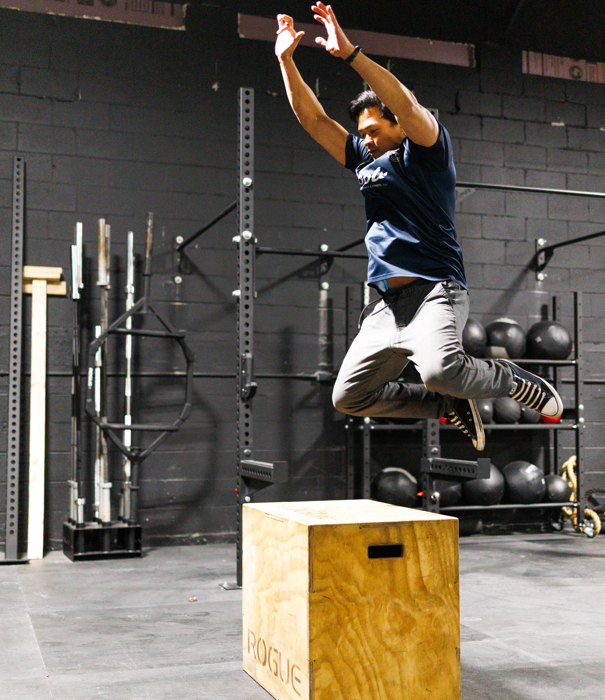
The Science Behind the Kick — What Makes Muay Thai Kicks Powerful
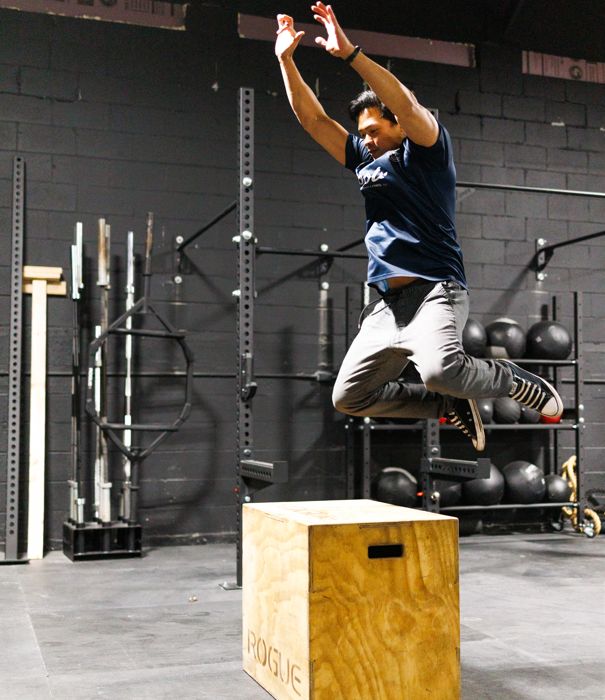
Watch a high-level Muay Thai fighter land a roundhouse kick and something is immediately obvious — the strike carries a quality that's different from a casual kick. It's not just power. It's a kind of concentrated, whipping force that reverberates through whatever it touches. Opponents wince at the sound alone.
What produces that? Researchers have been studying the biomechanics of Muay Thai kicking for years, and the findings are specific enough to have direct training implications. The short answer is that a powerful Muay Thai kick is a whole-body event — and the leg is almost the last part of the chain, not the first.
How Force Is Generated in a Muay Thai Roundhouse
The Muay Thai roundhouse kick begins from the ground. The planted foot pushes into the floor, the hip rotates, the core transfers that rotation to the shoulder, and the shin arrives as the terminal point of a kinetic chain that runs through the entire body. Research into punching biomechanics in boxing found the same principle: elite boxers generate force primarily from the legs and hips, not the arms. Lower-ranked fighters rely more on trunk and arm force — a measurably less efficient pattern.
The same hierarchy applies to kicking. A kick where the hip drives the movement will carry far more force than one where the leg is doing most of the work. This is why coaches at technically-focused gyms spend so much time on hip rotation, stance mechanics, and the pivot of the supporting foot — those aren't aesthetic details. They're the foundation of striking power.
A Muay Thai roundhouse is more similar to an Olympic clean than a soccer kick — it's a hip-driven explosive chain, not a leg swing.
The Five Factors That Determine Kick Power
What the Research on Kick Power Training Shows
What This Means for How You Should Train
Technique is non-negotiable
All the strength development in the world cannot compensate for poor hip rotation, a dead pivot foot, or chronic tension through the kick. Technique determines what percentage of your physical capacity you can express. A technically sound kick from a moderately strong athlete will outperform a technically poor kick from a stronger one. This is why every serious Muay Thai gym invests the most coaching time on mechanics — they have the highest return on investment.
Hip mobility unlocks power
If hip rotation is the primary driver of kick power, then hip flexibility is the limiter. Most adults — particularly those who sit for work — have restricted hip flexors and hip extensors that cap their rotational range. Consistent mobility work, particularly dynamic hip openers and end-range strengthening through the kick motion, directly increases kick power by expanding the range the hip can move through.
Strength training adds what pad work can't
Pad work, bag rounds, and sparring are irreplaceable for developing timing, combinations, and fight-specific conditioning. But they cannot produce the Rate of Force Development and maximum strength gains that directly translate to harder kicks. The research on Olympic lifting and plyometrics shows a 5x performance advantage over traditional training alone for kick power development. Ignoring the weight room is leaving power on the table.
The DPT advantage
Understanding the biomechanics of a kick is one thing. Coaching it correctly — and programming the strength work that supports it without causing injury — requires a level of movement science that goes beyond most martial arts coaching backgrounds. Coaches with Doctors of Physical Therapy credentials bring that clinical understanding to every technique session and every strength program they design.