Self Defense Classes in Seattle — Why Muay Thai Is the Most Practical Choice
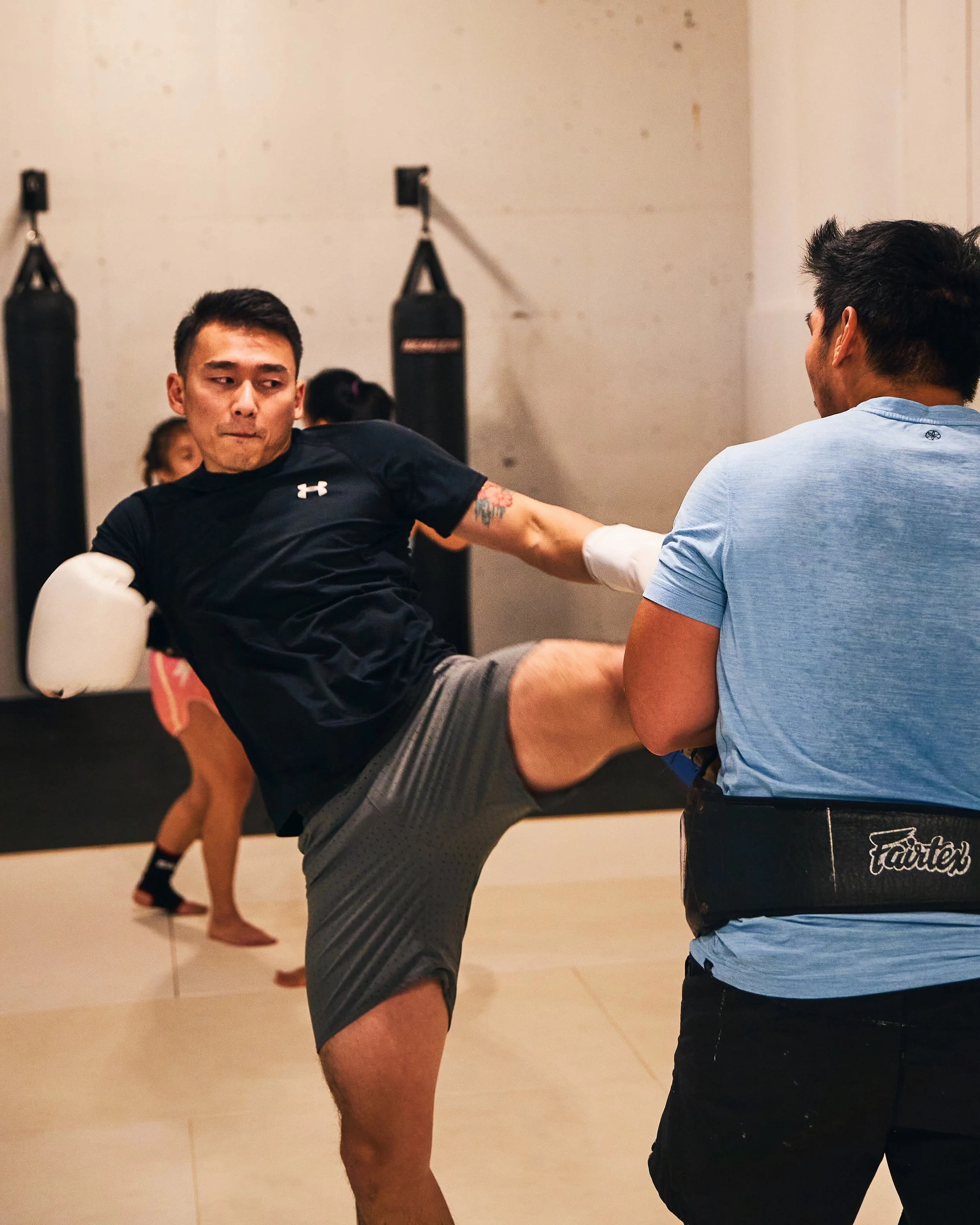
If you're looking for self-defense classes in Seattle, you'll find a wide range of options — weekend seminars, women's self-defense workshops, Krav Maga programs, traditional martial arts schools, and striking gyms. They all promise the same outcome. They don't all deliver it the same way.
This guide is going to give you an honest framework for evaluating self-defense training — what actually works, why consistent martial arts training produces better self-defense capability than isolated technique classes, and why Muay Thai specifically is one of the most practical choices available.
The Problem With Most Self-Defense Classes
Traditional self-defense classes — the one-day seminar, the six-week workshop, the "women's self-defense" course — teach techniques in a controlled, low-pressure environment against a cooperative partner. The techniques themselves are often reasonable. The problem is the training method.
Real self-defense ability is not a collection of memorized techniques. It's the product of thousands of repetitions performed under gradually increasing pressure until the right response becomes instinctive. A wrist escape practiced five times against a cooperative partner in a seminar setting is not a skill — it's a memory. Under real stress, memories don't fire reliably. Instincts do.
"Self-defense isn't a technique you learn — it's a capability you develop. And capability only comes from consistent training under pressure."
This is why martial artists who train regularly are genuinely more capable in self-defense situations than people who have attended self-defense seminars — even if the seminar covered more "self-defense specific" content. The training method is what builds the capability, not the label on the class.
Why Muay Thai Works for Self-Defense
Muay Thai is widely considered one of the most practical stand-up striking arts for real-world self-defense — not because it was designed for the street, but because of the specific tools it develops and the ranges it covers.
-
01It covers every striking rangeMost real confrontations don't stay at a single distance. They start at distance, collapse into mid-range, and often end up in close range or a clinch. Muay Thai develops tools at every stage — the teep to manage long range, punches and kicks at mid range, elbows and knees at close range, and clinch control when someone grabs you. No other stand-up striking art covers all of these ranges.
-
02The elbows and knees are exceptionally practicalElbows and knees work at close range — the range where most real confrontations end up. They require very little space to land, they don't need momentum or a long wind-up, and they're extremely effective. A practitioner who has drilled elbows and knees thousands of times has tools that work in the situations where punches and kicks often don't.
-
03The clinch is a complete systemWhen someone grabs you — which happens constantly in real confrontations — most strikers have no answer. Muay Thai practitioners have an entire game in the clinch: posture control, knee strikes, sweeps, and the ability to disengage or stay dominant at will. This clinch capability is one of Muay Thai's most practically significant advantages over pure boxing or kickboxing.
-
04You develop instinct, not just techniqueBecause Muay Thai training is consistent and progressive — classes multiple times per week, partner drilling, controlled sparring — the techniques become instinctive over time. You don't have to think about what to do. Your body has done it thousands of times. That's the difference between a skill and a memory.
-
05The fitness benefits matter for self-defensePhysical conditioning is a genuine component of self-defense capability. The cardiovascular fitness, coordination, and functional strength developed through regular Muay Thai training make practitioners more capable under physical stress — which is exactly what a real self-defense situation involves.
The Four Ranges — And Why All of Them Matter
What to Look for in Self-Defense Training in Seattle
Consistent training over time
The most important factor in developing real self-defense capability is consistency. A practitioner who trains Muay Thai three times per week for six months has developed genuine instinctive responses. Someone who attended a weekend seminar has not — regardless of what was taught. Look for a training environment you can commit to long-term, not a one-time course.
Graduated pressure and partner work
Self-defense capability is built by gradually increasing the pressure in training — controlled partner drills, technical sparring, situations that require you to apply technique against a non-cooperative partner. Training that only involves solo bag work or cooperative technique drills has a ceiling. Look for a gym with structured partner work at appropriate levels of intensity.
Qualified, experienced coaching
The quality of the coaching is everything. Look for coaches with genuine competitive or high-level training backgrounds — people who have had their techniques tested under pressure and understand what works and what doesn't. Coaching credentials matter more in self-defense training than in almost any other context.
Frequently Asked Questions
-
Is Muay Thai good for self-defense if I've never trained before?Yes — beginners build genuine self-defense capability from day one. You don't need prior experience. The key is consistency: regular training over months is what builds the instinctive responses that work under real pressure. Show up, train consistently, and the capability develops naturally.
-
Is Muay Thai or BJJ better for self-defense?Both are excellent — they address different ranges. Muay Thai covers stand-up striking at every range. BJJ covers ground control and submissions. The most capable self-defense practitioners have tools in both. If you can only choose one, Muay Thai gives you more options before a confrontation goes to the ground — which is where most self-defense situations are best resolved.
-
Is Muay Thai safe for beginners?At a well-run gym, absolutely. Beginner classes build skills safely through controlled drilling and partner work — not full-contact sparring. You control the pace of your progression entirely. Sparring is always optional and only introduced when both you and your coaches feel you're ready.
-
How long does it take to develop real self-defense ability?Meaningful capability develops within a few months of consistent training — three sessions per week. Within six months you have instinctive responses at multiple ranges. Within a year you have a complete striking game. Self-defense ability is not a destination — it grows continuously with your training.
-
Is Muay Thai good for women's self-defense?Exceptionally so. Muay Thai develops tools that work regardless of size difference — the teep to manage distance, the elbow at close range, the knee in the clinch. These weapons are effective precisely because they don't require the practitioner to be physically stronger than their opponent. Many of our most committed and capable members are women.
- Free trial class — experience the training before committing to anything
- Beginner-structured classes — no experience required
- Complete striking system — punches, kicks, elbows, knees, clinch
- Coaching staff including Doctors of Physical Therapy
- Month-to-month membership — no contracts, no enrollment fees