
What the Research Says About Strength Training for Muay Thai
If you train Muay Thai long enough, you'll hear the old argument: lifting weights makes you slow, stiff, and too heavy for your weight class. Traditional gyms — particularly in Thailand — built their conditioning around running, pad work, bag rounds, and sparring. The weight room was seen as a bodybuilder's domain, not a fighter's.
That belief is now directly contradicted by a growing body of peer-reviewed research. Over the last several years, exercise scientists have specifically studied how different types of strength and conditioning interventions affect Muay Thai performance — and the results are significant enough to change how serious practitioners should think about their training.
This post walks through the key findings. It's written by the team at Root Strength — Muók Boxing's in-house strength and conditioning program led by Doctors of Physical Therapy — whose work is built directly on this research.
Elite Muay Thai athletes reach VO₂ max values equivalent to elite distance runners — placing Muay Thai among the highest aerobic demand sports in the world.
The Myth That Held Muay Thai Back
Research published in the Strength & Conditioning Journal identified two specific fears that kept Muay Thai athletes away from the weight room for generations: the belief that lifting would cause unwanted weight gain, forcing them into a higher weight class, and the belief that building muscle would reduce flexibility and slow them down.
Both fears turn out to be unfounded when strength training is programmed correctly. The research shows that well-designed strength programs can increase power output and striking force without meaningfully affecting body composition — and that the flexibility concern is largely a myth when training uses full range-of-motion movements.
What the research also revealed is something even more fundamental: elite boxers were shown to generate punching force primarily from the legs and hips, not the arms. Lower-ranked fighters generated force from the trunk and arms instead. This means that lower body strength training — squats, deadlifts, Olympic lifting derivatives — directly transfers to striking power in ways that pad work and bag rounds alone cannot produce.
Study 1 — Olympic Weightlifting Adds 7.4% to Kick Power
The practical implication is direct: if you want to kick harder, the weight room is more efficient than more pad work. The power gains from Olympic lifting derivatives — movements like the hang clean, power clean, and jump shrug — transfer specifically to the explosive hip extension that drives a Muay Thai roundhouse kick. This is exactly the type of programming Root Strength coaches integrate into Muók members' training.
Study 2 — Plyometric Training Improves Martial Arts Strength and Power
Plyometrics — box jumps, jump squats, depth jumps, medicine ball throws — train the stretch-shortening cycle: the ability of a muscle to store elastic energy in a rapid eccentric contraction and release it explosively. This is exactly what happens in a Muay Thai kick or knee strike. The hip flexors and hip extensors load and fire in a rapid sequence, and plyometric training makes that sequence faster and more powerful.
Study 3 — The Warm-Up Science That Changes Kick Power Immediately
Post-Activation Potentiation (PAP) is the phenomenon where performing a heavy strength exercise temporarily elevates the nervous system's ability to recruit motor units, resulting in greater power output for the exercises that follow. The study found a precise warm-up prescription: 4 heavy squats, then 5 minutes of rest, produces measurably stronger kicks. This is something any serious practitioner can apply immediately — and something the Root Strength coaching team programs into pre-session warm-up protocols for Muók athletes.
What This Means for Your Training
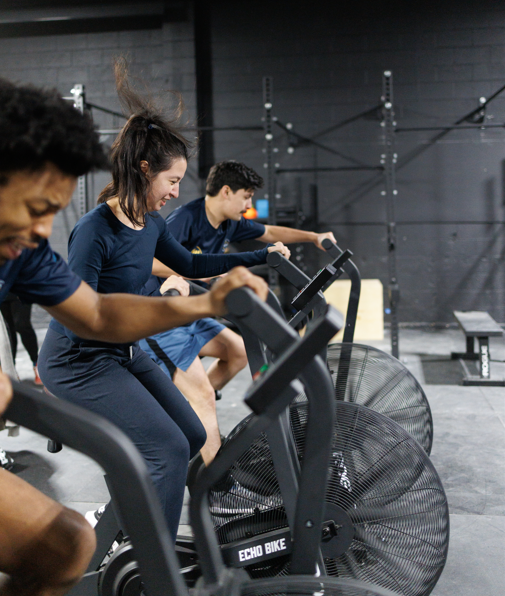
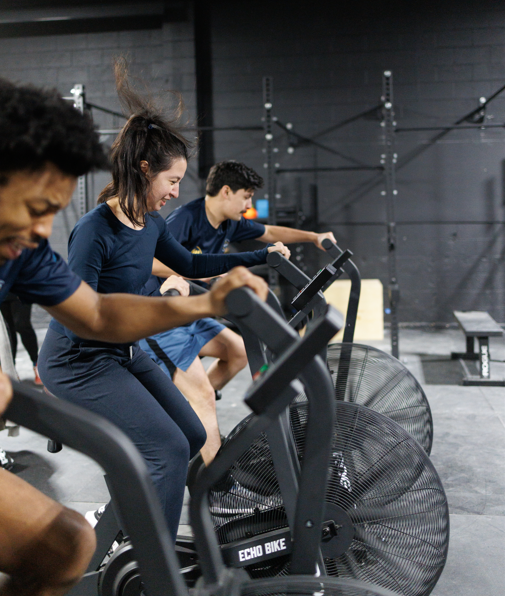
Strength training belongs in every serious Muay Thai program
The research is now clear enough that avoiding the weight room is no longer defensible for athletes who want to maximize performance. The fear of bulk is unfounded when training is programmed correctly — and the gains in kick power, punch force, and explosive capacity from structured strength work are simply not achievable through pad work and sparring alone.
The right modalities matter
Not all strength training transfers equally to Muay Thai. The research specifically supports Olympic lifting derivatives (hang cleans, power cleans) for kick power, plyometrics for explosive speed and agility, and heavy compound lifts (squats, deadlifts) for the ground-force generation that underlies all striking. Isolation exercises and machine-based bodybuilder training have much weaker transfer to combat sports performance.
DPT-informed programming prevents the downside
The legitimate concern with adding strength training to an already demanding Muay Thai schedule is injury risk and recovery management. This is where having Doctors of Physical Therapy involved in programming makes a real difference — they understand load management, movement mechanics, and how to structure strength work that complements rather than competes with technical training. At Muók, that's not an add-on. It's built into the program from day one through Root Strength.
Muay Thai Gyms in Seattle — What to Look For Before You Sign Up
If you're searching for Muay Thai gyms in Seattle, you're going to find plenty of options. That's the good news. The harder part is knowing what to look for — because the word "Muay Thai" gets attached to a wide range of things, from authentic striking programs with deep technical foundations, to cardio kickboxing classes that borrowed the name because it sounds more serious than "fitness boxing."
The difference matters significantly. How you start shapes how you develop. A gym that teaches incorrect mechanics in your first six months can take years to undo. And the right gym — with the right coaching and the right culture — can fundamentally change how you move, compete, and carry yourself.
This guide walks you through what separates a serious Muay Thai gym from a fitness class with pads, what to check before you commit, and what Muók Boxing has built in Georgetown for people who take this seriously.
The gym you choose in your first year shapes your development more than almost any other factor. That decision deserves real thought.
What Separates a Real Muay Thai Gym From a Fitness Class
Not every gym that offers Muay Thai is actually teaching Muay Thai. Before you evaluate any specific option, understand the core differences between authentic Muay Thai programs and martial arts-branded fitness classes.
Authentic vs. fitness-branded
Authentic Muay Thai programs teach the full system — strikes, defense, footwork, timing, the clinch, and the tactical understanding that connects all of it. Fitness-branded programs use Muay Thai movements as a cardio vehicle. The workout might be great, but you won't develop as a martial artist, and the technique you build can actually be harder to unlearn than starting from scratch.
The clearest signal: does the gym teach the clinch? The clinch — close-range Muay Thai grappling using knees, sweeps, and posture control — is one of the most important and technically demanding parts of the art. Gyms that skip it are not teaching real Muay Thai.
Coaching quality
Good Muay Thai coaches don't just demonstrate — they explain. They understand the biomechanics behind each technique. They can tell you why your hip rotation matters for power, how your guard position affects your balance, and what makes a teep function differently at different ranges. Instruction grounded in mechanics produces athletes who last. Instruction based on imitation produces people who hit hard but can't adapt.
If the coach can't explain why a technique works — only how to do it — that's a signal. Great coaching is about understanding, not just demonstration. You should leave every class knowing not just what you practiced, but why it matters.
Six Things to Evaluate at Any Muay Thai Gym in Seattle
Structured beginner classes
Beginners should not be dropped into general or advanced classes. Look for dedicated beginner programming that builds fundamentals in a logical sequence — stance, guard, footwork, then technique. A gym that can't describe its beginner curriculum is a red flag.
Coach-to-student ratio
In large classes with a single coach, beginners get lost. Look for gyms that keep class sizes manageable and have coaches who can observe and correct individual students during drilling — not just call out combinations from the front of the room.
Culture and ego
The best gyms train hard without being aggressive or intimidating. Experienced members should welcome beginners. A gym's culture is set from the top — watch how coaches treat someone walking in for the first time. That treatment reflects everything about the environment.
Class frequency
Consistency is everything in Muay Thai. Three to four sessions per week is the minimum for meaningful development. Look for gyms with enough class times — mornings, evenings, weekends — that you can build a consistent routine without scheduling conflicts.
Honest pricing
Long-term contracts and large enrollment fees are red flags. A gym confident in its product doesn't need to lock you in. Month-to-month memberships with no cancellation fees are the standard at quality programs — and what every gym should offer.
Free trial class
Every serious Muay Thai gym in Seattle should offer a free trial class. If a gym won't let you experience the coaching and culture before spending money, that tells you something important. Always take the trial before committing to anything.
What to Ask Before You Sign Up — Anywhere
When you visit any Muay Thai gym in Seattle, ask these questions directly. How a gym answers them tells you most of what you need to know before committing.
What Muók Boxing Has Built in Georgetown
Muók Boxing is Georgetown, Seattle's technically-focused Muay Thai gym. We opened our current 9,000 sq ft facility in January 2026, and it was built specifically to be a complete training environment — not a repurposed warehouse with a few bags thrown in.
Here's what makes Muók the right choice for people who want real Muay Thai development in Seattle:
DPT-informed coaching
Our coaching staff includes multiple Doctors of Physical Therapy — an entirely unique credential in the Seattle Muay Thai market. This means every technique we teach is grounded in movement science. We understand injury prevention, biomechanical efficiency, and how to develop athletes over the long term rather than just the short term. You learn to throw correctly — in ways that keep you training for years, not just months.
Authentic Muay Thai — nothing watered down
We teach the complete system. Strikes, the clinch, footwork, timing, defense, and the tactical intelligence that connects it all. Our coaches have trained extensively at renowned Thai camps and bring that depth to every class. You'll learn to move well, not just look busy. There are no shortcuts and no simplified versions of the art designed to feel safer or more accessible.
Purpose-built facility
Two full rings. A dedicated heavy bag area. A complete strength and conditioning setup through our Root Strength program — led by Doctors of Physical Therapy. A sauna. Showers. Locker areas. Open gym from 7am to 8pm daily. The facility was designed from the ground up to support serious training at every level.
17 classes per week
Early mornings, evenings, and Saturdays — structured and coached across beginner and experienced levels. Whatever your schedule looks like, you can train three to four times per week without compromise. Every class has a coach. Every class has a structure. Nothing is left to chance.
Zero ego, genuine community
Our members learn each other's names. They look out for training partners. They push each other without the aggression you find in some fight gym environments. Complete beginners and experienced fighters train side by side every day at Muók — and the culture makes that work. It starts with how we coach and filters through every member.
How to Choose
The right Muay Thai gym in Seattle for you depends on what you're looking for. Use the criteria in this guide — coaching quality, beginner structure, culture, class frequency, pricing transparency — and apply them to any gym you visit.
Always take the free trial before committing. Walk in, meet the coaches, watch how they treat someone new, feel the culture of the room. That visit tells you more than any website, review, or guide can.
If you're looking for technically-precise Muay Thai in a purpose-built facility in Georgetown — with coaching grounded in movement science, a zero-ego culture, and a training environment built for lifelong development — come train with us.
Your first class is on us.
How the Gambling System Works in Muay Thai Stadiums
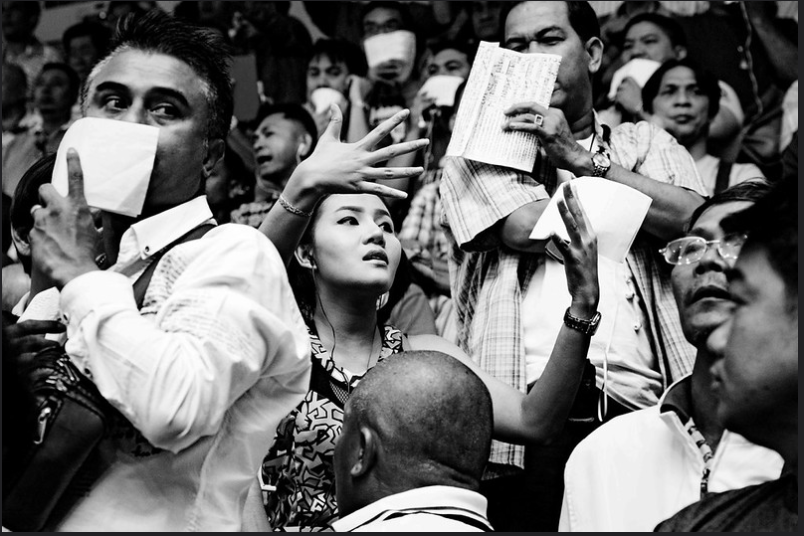
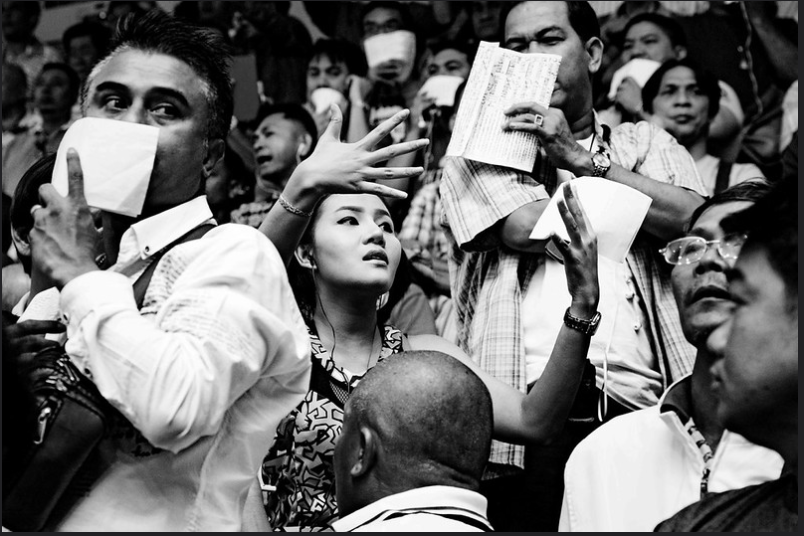
If you've ever watched traditional Muay Thai at a Bangkok stadium, you've seen something that looks chaotic from the outside — a sea of hands waving in coordinated patterns, shouting that rises and falls with the action in the ring, cash changing hands in ways that seem to follow an invisible set of rules. This is the Muay Thai gambling system — one of the most distinctive and influential aspects of the sport's culture, and something that shaped the Golden Era more profoundly than almost any other factor.
Understanding how it works gives you a completely different window into why traditional Muay Thai looks the way it does — the slow first rounds, the strategic fifth rounds, the patterns of pacing and momentum management that confuse first-time viewers. Almost all of it traces back to gambling.
The Legal Exception — Gambling in Thailand
To understand Muay Thai gambling, you first need to understand the paradox it operates within. Gambling is largely illegal in Thailand. Casinos don't exist. Card rooms aren't permitted. The Buddhist values that underpin Thai culture have historically treated gambling as a vice to be restricted.
Muay Thai is the major exception. Betting on fights at licensed stadiums — Lumpinee, Rajadamnern, Channel 7, Omnoi, Rangsit, and others — is explicitly permitted. This legal carve-out reflects how deeply embedded Muay Thai is in Thai cultural identity. The sport isn't just entertainment — it's a national tradition, and the gambling ecosystem around it has been part of that tradition for centuries.
"In Thailand, there are typically two kinds of people at a Muay Thai stadium — foreigners and gamblers. The only locals going are normally looking to bet."
The Players — Who's Involved
How Odds Are Set — Before the Fight
The process begins at the weigh-in. The Big Legs — or their representatives — attend to assess each fighter in person. They check whether fighters made weight cleanly or had to cut aggressively. They observe physical condition: is the fighter sharp, or does the weight cut show? Are there signs of injury or illness? This intelligence directly informs the opening odds.
Once the opening odds are established, betting begins as soon as the wai kru — the pre-fight ritual — starts. And critically, bets continue to be placed and modified throughout the entire fight, round by round, as momentum shifts. This live, dynamic betting system is what makes the gambling ecosystem so sophisticated — and what explains so much about how traditional Muay Thai fights are structured.
The Hand Signals — A Language of Their Own
Muay Thai stadium gambling uses a system of hand signals that functions like a trading floor — fast, precise, and incomprehensible to outsiders. Here's how the basic system works:
Odds in a single fight can range from 1:1 in an evenly matched bout up to 1:120 in a heavily favored contest. Typical bets fall between 1,000 and 100,000 Thai Baht, with marquee fights seeing individual wagers up to 250,000 Baht. Million-Baht bets have occurred — but are rare even at the highest levels.
Because misreading a hand signal can result in a significant financial dispute, the system requires everyone involved to be fluent in its language. Errors happen — and the Wikipedia entry for Rajadamnern Stadium notes that fights between gamblers over misunderstood signals have occasionally broken out in the stands.
How Gambling Shaped the Way Traditional Muay Thai Looks
This is the part that changes how you watch traditional Muay Thai forever. Many of the strategic patterns that confuse first-time viewers of traditional stadium Muay Thai exist specifically because of gambling.
The slow first round
Fighters start extremely slow in round one — often barely engaging — because the opening round is when odds are being set. A mistake in round one immediately shifts the odds against you, and you spend the rest of the fight playing catch-up while gamblers have already positioned against you. Starting slow keeps the odds as even as possible and gives you maximum flexibility for the rounds that follow.
The quiet fifth round
Traditional Muay Thai fights go five rounds. The fifth round often sees dramatically reduced action — sometimes fighters barely engaging — which baffles viewers expecting a big finish. The reason: if you've already done enough to win, why risk it? The gamblers who bet on you tell your corner to fight defensively, protect the lead, and don't give your opponent a window to change the outcome at the last moment.
Pacing and momentum management
Traditional Muay Thai scoring rewards the fighter who is more dominant in the later rounds — particularly rounds three and four. This creates a specific pattern of pacing: fighters often conserve in early rounds, escalate strategically in the middle, and then manage the result in the fifth. The gambling ecosystem reinforces this pattern — gamblers are adjusting their bets based on round-by-round momentum, and fighters who understand this can use it to their advantage.
Cornermen and gambler communication
Perhaps most striking to outside observers: during fights, gamblers in the stands will directly advise cornermen between rounds — telling them what their fighter should do in the next round based on where the gambling positions have landed. While experienced and reputable cornermen maintain their own judgment, younger fighters in the stadium scene often look to the gamblers for guidance on whether they're winning or losing.
"In razor-close fights, it's usually the gamblers who can tell you who's winning. They know the scoring better than almost anyone in the building."
The Positive Impact — What Gambling Gave the Sport
-
It funded the sport's existenceGamblers are the majority of ticket buyers at traditional Bangkok stadiums. Without them, the economic model that sustained elite Muay Thai competition — particularly during the Golden Era — would not have been viable. The gate revenue that funded fighter purses, stadium operations, and promotional events came overwhelmingly from gamblers.
-
It created the best matchmaking in historyGamblers demand competitive, high-quality fights — because a predictable fight is an uninteresting betting market. This demand created relentless pressure on promoters to match the best against the best, frequently and seriously. The extraordinary depth of competition in the Golden Era is directly traceable to gambling's demand for genuine contests.
-
It supplemented fighter earningsFighter purses in traditional Thai stadium Muay Thai have historically been modest. The tip system — where gamblers pool money to reward standout performances — significantly supplemented what fighters earned. A dramatic comeback or an impressive finish could earn a fighter substantially more than their fight purse alone. This financial incentive kept fighters performing at their highest level throughout every fight.
-
It built deep expertiseThe most experienced Sian Muay possess encyclopedic knowledge of fighters, camps, styles, and matchups. This expertise, accumulated over decades, contributed to the sophisticated understanding of the sport that made the Golden Era's matchmaking so exceptional. Some of the deepest tactical knowledge of traditional Muay Thai exists not in coaches' notebooks but in the minds of long-time stadium gamblers.
The Dark Side — Corruption and Its Consequences
The same financial stakes that created the best matchmaking in history also created serious corruption risks. When enormous sums of money are wagered on fight outcomes, the incentive to influence those outcomes becomes significant.
Match-fixing has occurred throughout Muay Thai's history. Fighters have been offered bribes to deliberately lose — and some have accepted. In recent years, high-profile cases including Saoek (lifetime ban) and Roycherng Singmawin have confirmed that the practice continues.
Referee influence is another documented concern. The Sian Muay's financial stakes can create pressure on officials, subtly or explicitly affecting how close fights are scored.
Most disturbing is the documented practice of poisoning fighters before matches. Investigative reporting from Vice's Fightland documented multiple cases of fighters being given sedative-laced water or food before fights — dropping significant weight rapidly and losing the ability to perform. In some documented cases, fighters believed the perpetrator was their own trainer or gym owner, who had placed bets against them. This is the darkest expression of what happens when gambling corruption goes unchecked.
It was ultimately this corruption — combined with Thailand's financial crisis of the mid-1990s — that contributed significantly to the decline of the Golden Era. As audiences began to question whether outcomes were genuine, attendance fell and the economic model that had sustained the sport's peak began to unravel.
The Modern Shift — Away From Gambling Culture
The sport has been moving away from its gambling roots in recent years — partly by choice, partly by necessity. Lumpinee Stadium has banned gambling entirely under its new management. Rajadamnern Stadium doesn't permit gambling at its Saturday Rajadamnern World Series events. ONE Championship, which has brought Muay Thai to a global audience, operates completely outside the stadium gambling ecosystem.
This shift has produced real changes in how the sport looks. Entertainment Muay Thai — designed for international audiences unfamiliar with traditional scoring — rewards aggression, knockouts, and action in every round. The slow tactical rounds that gambling culture produced are increasingly absent. Some argue this makes the sport more watchable. Others argue it has fundamentally altered the art — forcing technical fighters like Muay Femur stylists to adapt or disappear, as their patient, strategic approach doesn't reward the knockout-hungry entertainment format.
The tension between traditional stadium Muay Thai with its gambling culture and modern entertainment Muay Thai without it defines the current state of the sport's evolution. Both versions are real. Both have value. And understanding both requires understanding where the gambling system came from and what it actually produced.
"Gambling didn't just fund Muay Thai — it shaped the art itself. The slow first round, the strategic fifth, the pacing, the scoring — all of it traces back to a betting ecosystem that rewarded a very specific kind of intelligence."
Why This Matters for Practitioners
If you train Muay Thai, understanding the gambling system reframes everything about how traditional fights are structured. The next time you watch a Golden Era fight and wonder why round one looks like two fighters warming up, or why round five suddenly goes quiet — you have your answer. The gambling ecosystem created those patterns deliberately, and the fighters who mastered the art of navigating them were the ones who survived and thrived in the most competitive environment the sport has ever produced.
At Muók Boxing, we teach traditional Muay Thai — which means we teach the strategic depth that the stadium system produced. The pacing, the scoring awareness, the round-by-round intelligence — these are real components of the art, shaped by decades of competition in an ecosystem where every round had financial stakes attached to it.
- Authentic technique with real cultural and historical context
- Coaches trained at renowned Thai camps — direct lineage to the tradition
- 17 classes per week — beginner and experienced levels
- 9,000+ sq ft Georgetown facility with open gym 7am–8pm
- Free trial class — no commitment, no contracts
The Golden Era of Muay Thai — What Made the 1980s and 90s So Special

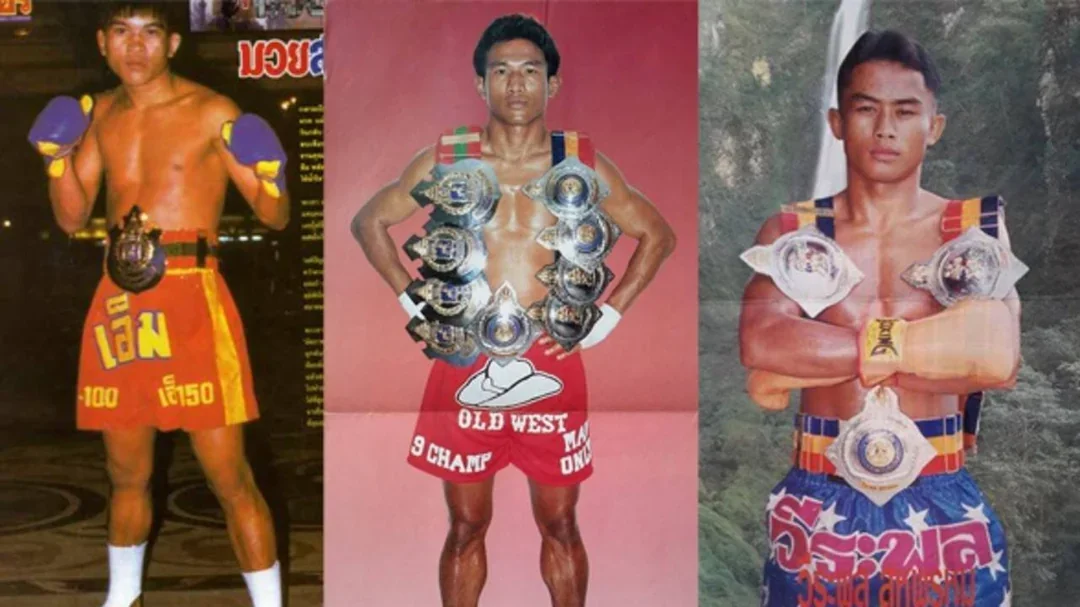
If you train Muay Thai seriously, you've probably heard the term Golden Era. It refers to a specific period — roughly the 1980s through the mid-1990s — when the sport reached heights of talent, competition, and cultural significance that have never quite been replicated. Understanding what made this era special isn't just a history lesson. It's a window into why certain techniques are taught the way they are, why certain fighters are still studied decades later, and what authentic Muay Thai actually looks like at its highest level.
The video below from Combat Culture does an excellent job breaking down what drove the Golden Era, who defined it, and why it eventually ended. We've built on that foundation here with additional context for practitioners who want to understand the art they're training.
The Context — Why the 1980s Created the Perfect Storm
The Golden Era didn't happen by accident. It was the product of a specific set of economic and cultural conditions in Thailand that converged in the 1980s and produced something extraordinary.
Thailand's economic boom of the 1980s transformed Muay Thai from a regional tradition into a national spectacle. Rising incomes meant more disposable money flowing into entertainment — and Muay Thai at Bangkok's two great stadiums, Lumpinee and Rajadamnern, became the destination for that spending. Attendance records were broken repeatedly. Gate revenue soared. And as the financial stakes rose, so did the quality of competition that the money attracted.
"Imagine if every NBA legend from every era was playing at the same time, forced to compete against each other constantly. That's what Muay Thai was like in the 1980s."
The gambling culture surrounding the stadiums — while controversial — played a significant role in driving this concentration of talent. Gamblers demanded competitive, high-quality fights. Promoters who delivered them prospered. This created a relentless pressure on fighters to be exceptional — not just good, but better than the extraordinary competition surrounding them on every card.
The Three Forces That Made the Era Exceptional
The Legends Who Defined the Era
The Golden Era produced a generation of fighters whose techniques are still studied and taught worldwide. Here are the names every serious Muay Thai practitioner should know.
-
Samart Payakaroon — "The Jade-Faced Tiger"The Greatest of All TimeWidely considered the most complete Muay Thai fighter in history. A four-division Lumpinee champion who later became a WBC world boxing champion. His fluid technique, exceptional fight IQ, and defensive mastery set a standard that no one has fully replicated. Samart is the benchmark against which all Muay Femur fighters are measured — technically perfect, almost impossible to hit cleanly, and capable of finishing at any moment.
-
Dieselnoi Chor Thanasukarn — "The Sky Piercing Knee"The Undefeated Knee MachineUndefeated Lumpinee champion for four years — and the reason he eventually retired wasn't defeat, it was that nobody would fight him. His clinch and knee game was so dominant that opponents literally declined matches against him. At 6'2" with extraordinary reach, his collar tie was nearly impossible to escape. Dieselnoi is the definitive Muay Khao fighter and the reason the clinch is studied as seriously as it is in authentic Muay Thai programs.
-
Oley Kiatoneway — "The Black Pearl of Andaman"The Beautiful Stylist — And the Inspiration Behind Our MuralOne of the most technically beautiful Muay Femur fighters of the Golden Era. Oley is known for an exceptionally refined style built around timing, distance management, and a signature lean-back defense — a move executed at extremely close range to dodge kicks with minimal movement. So little effort, so much effectiveness. That iconic lean-back moment, captured against Therdkiat at Lumpinee Stadium in October 1993, is the direct inspiration behind the mural at Muók Boxing. It represents everything the Golden Era stood for — mastery, confidence, and the art of Muay Thai at its most beautiful.
-
Chamophet, Boonlai & LangsuanThe Supporting Cast of LegendsThe depth of the Golden Era meant that even fighters who might have been the greatest in any other era were competing against multiple all-time greats simultaneously. Chamophet, Boonlai, Langsuan, and others were exceptional practitioners whose careers were defined by competing at the highest level in the most competitive environment the sport has ever seen.
The Decline — And Why It Matters
Nothing lasts forever — and the Golden Era ended as abruptly as it began, brought down by a combination of factors that damaged both the quality and integrity of the sport.
Why the Golden Era Still Matters for Practitioners Today
Understanding the Golden Era isn't purely academic — it has direct implications for how you train and what you study.
The five fighting styles that serious Muay Thai programs teach — Muay Mat, Muay Femur, Muay Tae, Muay Khao, Muay Sok — were all defined and refined by fighters of the Golden Era. Samart is the reference point for Muay Femur. Dieselnoi is the reference point for Muay Khao. Studying these fighters isn't nostalgia — it's studying the clearest examples of each style executed at the absolute highest level.
The techniques that coaches still emphasize today — the hip-driven roundhouse, the collar tie clinch, the diagonal elbow, the teep as a range control tool — were developed and refined through thousands of high-level competitive bouts during this period. The reason they're taught the way they are is because this era proved what works under real pressure against world-class opposition.
"Watching Golden Era Muay Thai isn't just watching history. It's watching the techniques you drill in class executed by the people who proved they work — against the best competition the sport has ever seen."
How We Teach the Art at Muók Boxing
At Muók Boxing, our coaches have trained at some of the same camps that produced Golden Era practitioners — PK Saenchai, Manasak, Sitjaopho. The lineage matters. The techniques we teach aren't assembled from YouTube highlight reels — they're passed down through a coaching tradition that traces directly back to the era that proved what works.
We also encourage our members to study Golden Era footage — not just as entertainment but as active technical study. When you understand what Dieselnoi was doing in the clinch, your clinch training in class immediately means more. When you watch Samart's footwork and counter-striking, the Muay Femur concepts your coach talks about become concrete rather than abstract.
The Golden Era produced the clearest possible answers to the question of what works in Muay Thai. We teach from those answers.
- Coaches trained at camps with direct lineage to Golden Era technique
- Five fighting styles taught in depth — Muay Mat, Femur, Tae, Khao, Sok
- 17 classes per week — beginner and experienced levels
- 9,000+ sq ft Georgetown facility — purpose-built for serious training
- Free trial class — no commitment, no contracts
Kickboxing Classes in Seattle — What to Expect and How to Choose
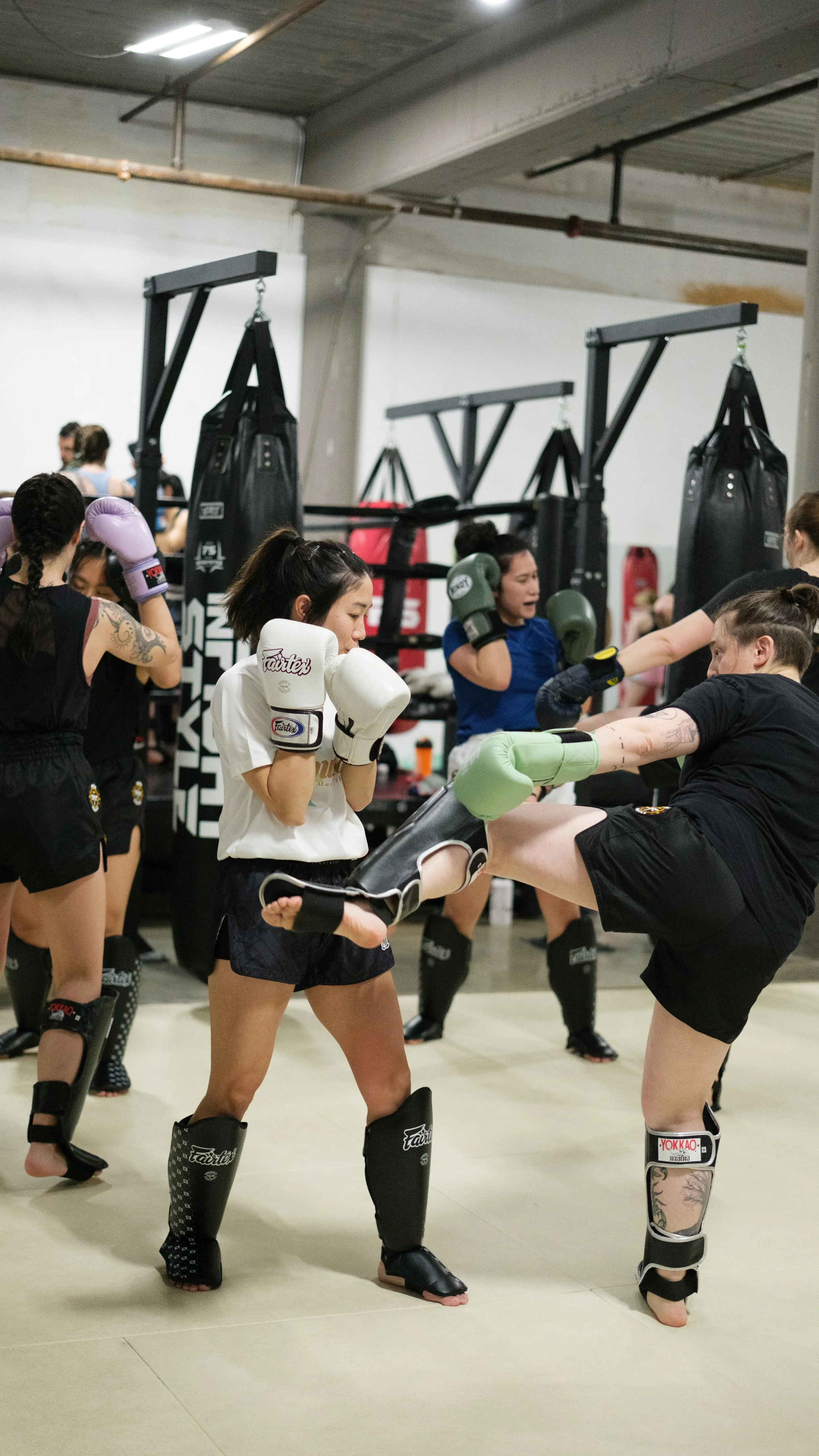
Searching for kickboxing classes in Seattle puts you in front of a wide range of options — boutique fitness studios, martial arts schools, boxing gyms with kickboxing sessions, and dedicated Muay Thai gyms. They all look similar from the outside. Inside, they're very different experiences.
This guide breaks down what actually happens inside different types of kickboxing classes, what to look for when you visit, and why the most complete kickboxing class in Seattle might not be labeled "kickboxing" at all.
What Happens Inside a Kickboxing Class
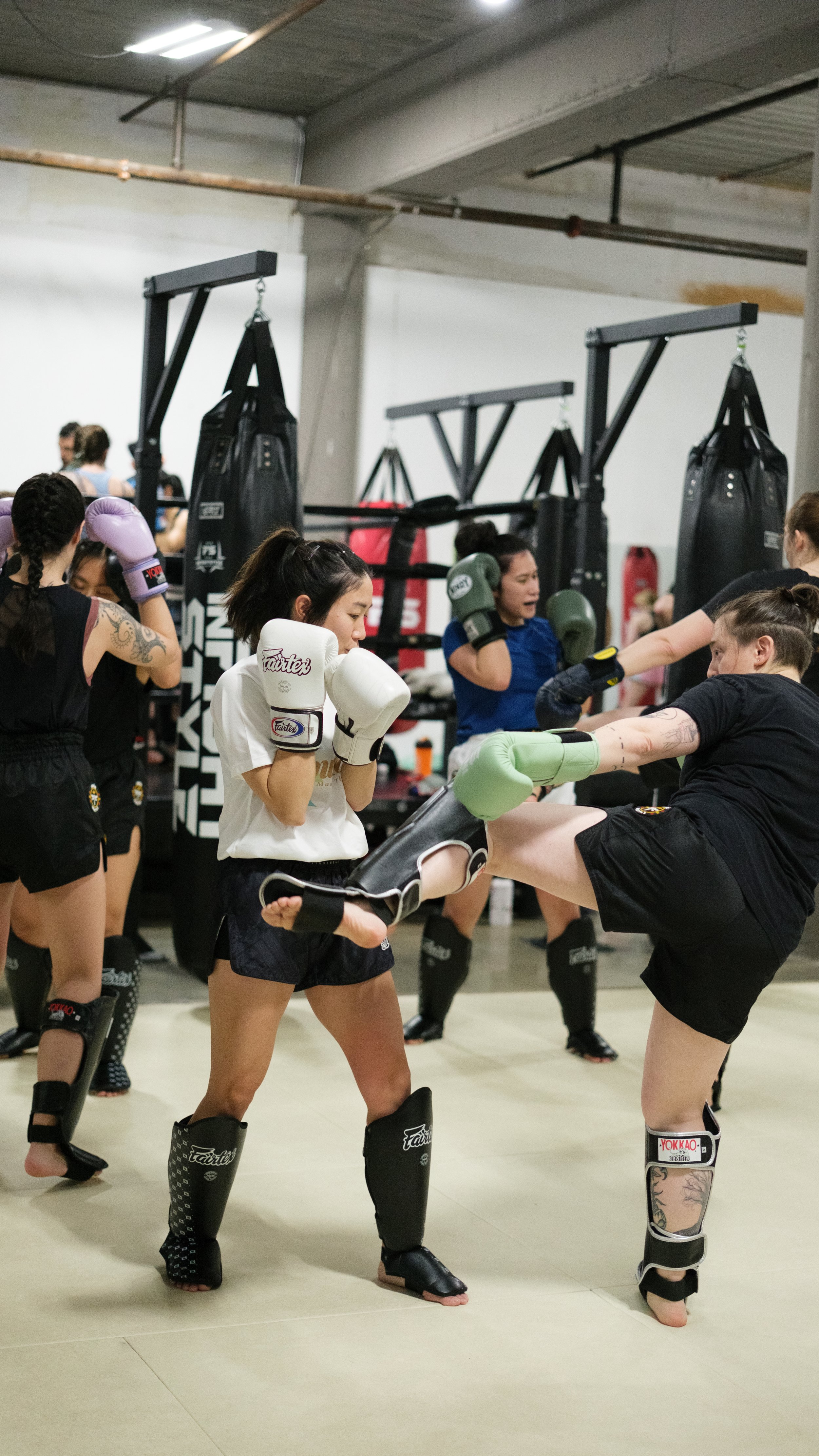
The structure of a class tells you immediately what kind of training you're getting. Here's what you'll typically find across the different formats available in Seattle:
"The best kickboxing class is the one that makes you a better striker every time you attend — not just more tired. Look for technical instruction, real feedback, and progressive challenge."
What a Good Kickboxing Class Looks Like — Step by Step
-
01Warm-up with purposeA good warm-up isn't just getting the heart rate up — it prepares the specific joints and movement patterns you're about to use. Hip circles for kicking. Shoulder mobility for punching and guard. Footwork drills that reinforce the movement patterns of the session. If the warm-up feels random, that tells you something about how deliberately the class is structured.
-
02Technique instruction with real explanationThe coach demonstrates a technique and explains the mechanics — not just what it looks like but why it works. Hip rotation before shoulder. Weight distribution through the kick. Guard position during a combination. This is the difference between a class that builds skill and one that just moves you through sequences.
-
03Drilling — solo and with a partnerRepetition of the session's techniques — first solo to build the movement pattern, then with a partner for timing and live feedback. Partner drilling is where kickboxing training separates itself from fitness classes. You can't develop real striking timing on a stationary bag.
-
04PadworkThe heart of a technical kickboxing class. A coach or partner holds pads while you strike — giving you real-time feedback on timing, accuracy, power, and combination flow. Good padwork is a conversation between striker and holder. It accelerates skill development faster than any other training method.
-
05Conditioning and cool-downFunctional conditioning that builds the specific fitness demands of striking — core work, hip stability, shoulder endurance. A good cool-down includes mobility work that addresses the areas most used in the session. This is where DPT-informed coaching makes a real difference in long-term joint health.
Why Muay Thai Classes Give You More Than Kickboxing
If you're looking for kickboxing classes in Seattle, Muay Thai is worth understanding as the more complete option. Here's the honest comparison:
Standard kickboxing uses punches and kicks. Muay Thai uses punches, kicks, elbows, knees, and clinch — eight points of contact compared to four. That's not a minor addition. Elbows and knees are the weapons that work at close range, where most kickboxing exchanges eventually end up. And the clinch — a complete grappling system within Muay Thai — gives practitioners tools that kickboxing simply doesn't develop.
For fitness, the outcomes are comparable. For skill development and real-world application, Muay Thai is the more complete investment. The classes are structured the same way — warm-up, technique, drilling, padwork, conditioning. You're just learning a more complete art in the same amount of class time.
Frequently Asked Questions
-
Do I need experience to join a kickboxing class?No. The best gyms offer dedicated beginner classes that start from zero — no prior experience required. Show up, listen, and let the instruction do the work. The coordination comes with repetition, not prerequisites.
-
What should I wear to my first kickboxing class?Athletic clothing — shorts and a t-shirt work fine. Bring a water bottle. A good gym provides gloves and wraps for trial classes so you don't need to buy anything before you know you're going to stick with it.
-
How many kickboxing classes per week do I need?Three sessions per week is the sweet spot for real skill development and fitness progress. Consistency over months matters far more than frequency in any given week.
-
Is kickboxing or Muay Thai better for fitness?The fitness outcomes are very similar — both are full-body, high-intensity, technically demanding. Muay Thai gives you more tools to develop alongside the fitness, which tends to keep people engaged and training longer. The best fitness program is the one you keep showing up for.
-
Will I have to spar?No. Sparring is always optional and only introduced when you and your coaches feel you're ready — typically several months into training. Many members train for years without sparring. Both approaches are completely valid and supported at a well-run gym.
Kickboxing and Muay Thai Classes at Muók Boxing
At Muók Boxing we run 17 classes per week — across beginner and experienced levels, morning, midday, and evening time slots. Our classes are technical, coach-led, and structured around real skill development. Every session includes technique instruction, drilling, and padwork — not just bag circuits or choreographed fitness sequences.
- Free trial class — no commitment, no pressure
- Beginner and experienced levels — 17 classes per week
- Technical padwork every session — real skill development, not just cardio
- Coaches trained at elite Thai camps — authentic technique from day one
- Month-to-month membership — no contracts, no enrollment fees