
Muay Thai Classes Near You in Seattle — What to Look for Before You Sign Up

If you're searching for Muay Thai classes near you in Seattle, you're probably close to making a decision — you've done some research, you've shortlisted a few gyms, and now you want to know what to actually look for before you commit. This guide gives you a practical framework for evaluating what you find.
Not all Muay Thai classes are equal. The difference between a good gym and an average one isn't always obvious from a website — but it becomes very clear the moment you walk in. Here's what to pay attention to.
What to Look for in a Muay Thai Class Schedule
The schedule is the first filter. A gym that only offers three or four classes per week gives you almost no flexibility — miss one and you've lost a third of your training for the week. Look for a gym that runs enough classes across enough time slots to fit your actual life.
Morning, midday, and evening options
Your work schedule will change. Your energy levels will vary. A gym that only offers evening classes leaves you with no options when life doesn't cooperate. Morning and midday classes — even one or two — make a meaningful difference in how consistently you can show up.
Weekend classes
Saturday morning classes are one of the most popular time slots for working adults. If a gym doesn't run weekend classes, a significant portion of your potential training time is just unavailable.
Enough classes to train three times per week
Three sessions per week is the baseline for real progress. Make sure the schedule you're looking at actually makes that possible given your availability — not just theoretically, but realistically on the days you can train.
How to Evaluate Coaching Quality When You Visit
The trial class is your best evaluation tool. Here's what to pay attention to while you're there:
- Does the coach explain why, not just what? A good coach tells you the mechanics behind a technique — why the hip rotates before the shoulder, why the guard position is where it is. If a coach only demonstrates without explaining, you're getting imitation rather than understanding.
- Do they give individual corrections? Watch whether the coach circulates and gives personalized feedback, or whether they just call out combinations from the front of the room. Individual attention is what actually improves technique.
- Do they control the pace for beginners? A well-structured beginner class builds complexity gradually. If you're thrown into advanced combinations on your first day with no foundation, that's a flag about how the gym manages progression.
- Do experienced members help newer ones? The culture of a gym shows up in how senior members treat beginners. A gym that values its community will have experienced practitioners who look out for newer members — not ones who ignore or intimidate them.
- Is the sparring culture controlled? If you get to see sparring during your visit, watch whether it's technical and controlled or aggressive and ego-driven. This tells you more about a gym's culture than any marketing can.
Red Flags to Watch For
- Long-term contracts with large enrollment fees. A gym that believes in what it offers doesn't need to lock you in financially. Month-to-month with no enrollment fee is the structure of a gym that earns your continued membership.
- No free trial. Any reputable gym offers a free trial class. If a gym asks you to pay before you've ever trained there, that tells you something about how much they trust their own product.
- Everyone in the same class regardless of level. Beginners and experienced practitioners training together without any level separation is a flag. Beginners get overwhelmed; experienced members don't get challenged appropriately. Look for gyms with dedicated beginner programming.
- Coaches who can't explain what they're teaching. If you ask why a technique works a certain way and the answer is "that's just how it's done" — the coaching depth isn't there. Understanding why things work is what separates authentic martial arts coaching from fitness instruction using martial arts movements.
- Aggressive or unwelcoming culture. You'll know it when you feel it. If the environment feels intimidating rather than challenging, ego-driven rather than community-oriented — trust that instinct. The best gyms are genuinely welcoming without being soft.
"The right gym is the one where you feel challenged and welcomed at the same time. Both of those things are possible — and both of them should be present from your very first class."
What Your First Class Should Feel Like
Your first Muay Thai class should be challenging — your coordination won't be there yet, the movements will feel unfamiliar, and your cardio will be tested. All of that is normal and temporary.
What it should also feel like: welcomed. A coach who takes time to introduce the basics before the class starts. Experienced members who are patient with a new face. An environment where being a beginner is treated as the starting point of something, not a deficiency.
If you leave your first class feeling physically challenged but genuinely welcome — you've found the right gym. If you leave feeling overwhelmed, ignored, or uncomfortable — keep looking. The art is worth finding the right place to learn it.
Muay Thai Classes at Muók Boxing — Georgetown, Seattle
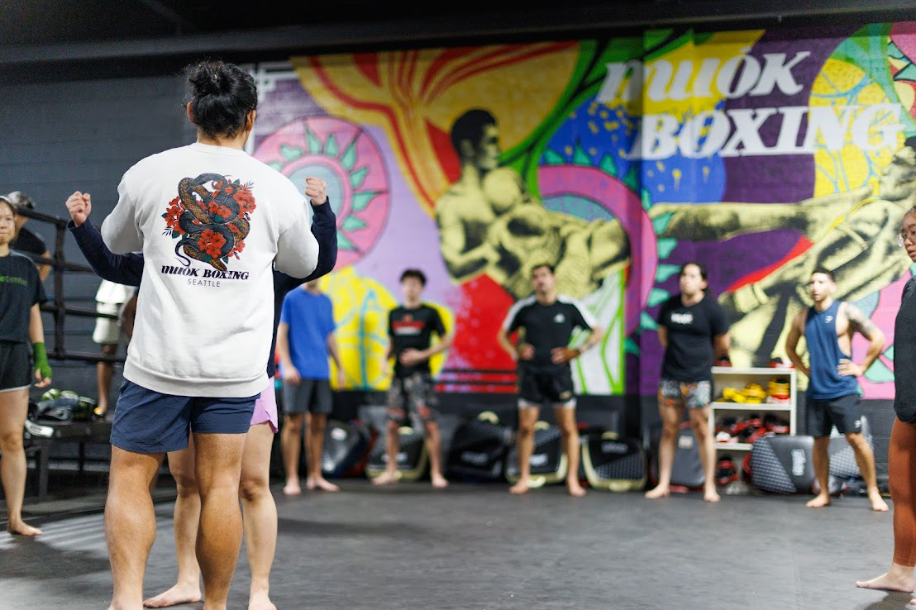
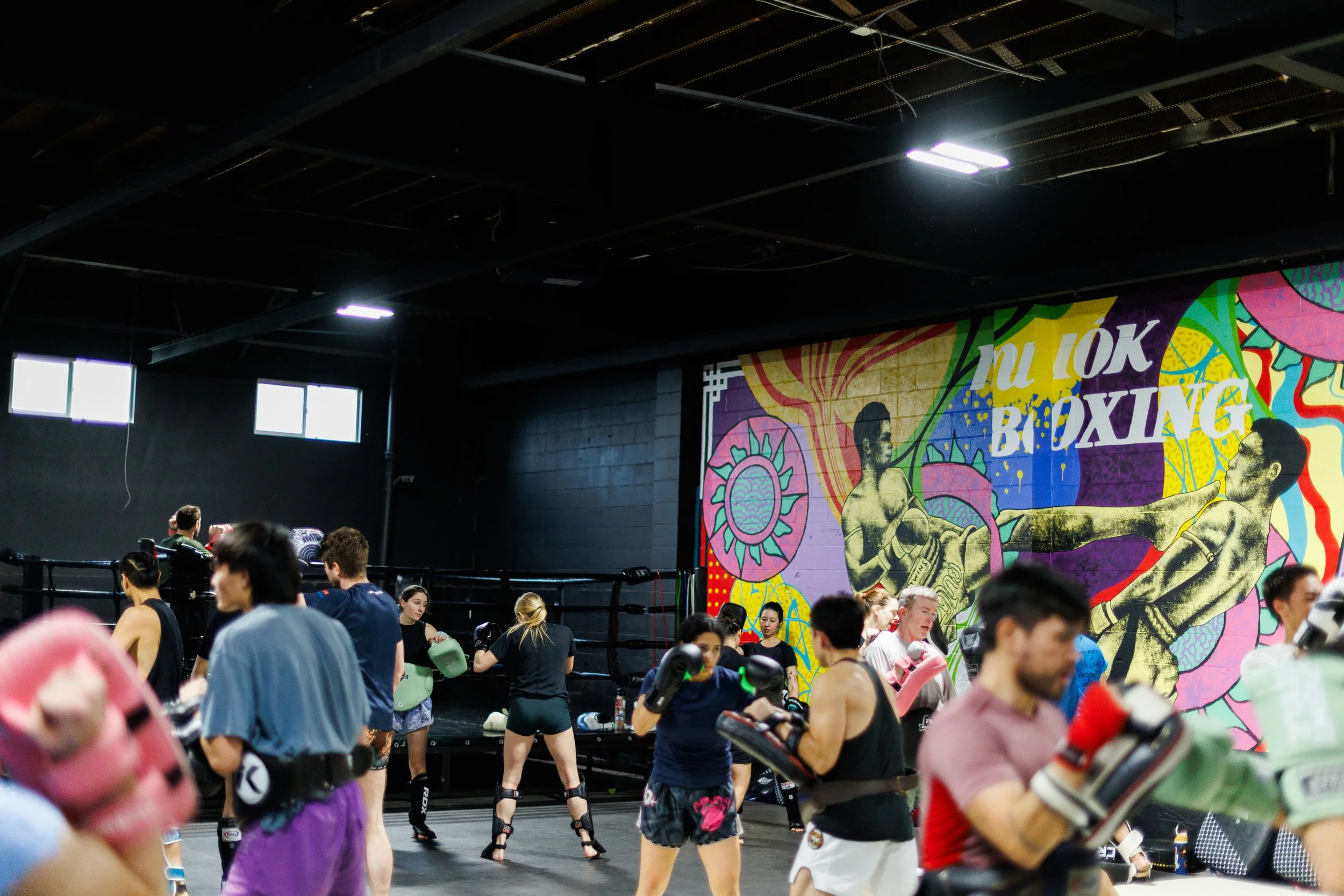
We run 17 Muay Thai classes per week across morning, midday, and evening time slots — specifically because we know your schedule doesn't always cooperate. Every class is split into beginner and experienced groups with dedicated coaching at each level, so you're always training at the right pace with the right instruction.
Georgetown, Seattle WA 98108
Free parking in lower and upper lots
What Makes Muók Different
Authentic Muay Thai technique — coaches trained at renowned Thai camps including PK Saenchai, Manasak, and Sitjaopho. Coaching staff including multiple Doctors of Physical Therapy. A community consistently described as one of the most welcoming in Seattle. 200+ five-star Google reviews. Month-to-month membership with no enrollment fees and no contracts.
The best way to know if it's right for you is to come in. Your first class is free — no commitment, no pressure, just come train.
- Free trial class — no commitment, no pressure
- Beginner and experienced levels — dedicated coaching at each
- Morning, midday, and evening time slots — 17 classes per week
- Month-to-month membership — no enrollment fees, no contracts
- 200+ five-star Google reviews — Seattle's most reviewed Muay Thai gym
Physical Therapy Gym in Seattle — Train Hard, Recover Smart at Muók Boxing
Most people think of physical therapy as something you do after you get hurt. You train, something breaks down, you stop training, you go to PT, you recover, you start again — usually making the same mistakes that caused the injury in the first place.
Muók Boxing is built around a different model. Our coaching staff includes multiple licensed Doctors of Physical Therapy — and their expertise isn't reserved for when something goes wrong. It's built into how we coach every class, every technique, every progression from day one. The person teaching your roundhouse kick understands the biomechanics of your hip well enough to treat it if something went wrong. That's not a small thing.
What a Physical Therapy Gym Actually Means
The term gets used loosely — some gyms partner with a PT clinic down the street. Some have a staff member with a PT background who doesn't actively apply it to coaching. What we mean at Muók Boxing is more specific: our head coach Andy Le and Root Strength coach Joe Rellora are both licensed Doctors of Physical Therapy who apply that training to every aspect of how they coach — technique instruction, load progression, movement assessment, and injury prevention.
"The best injury is the one that never happens. Physical therapy expertise in a coaching context means understanding what causes injuries — and building training around preventing them from the start."
How DPT Expertise Changes the Way You're Coached
-
01Technique taught with biomechanical precisionA coach with a DPT background doesn't just show you how a technique looks — they understand what's happening at every joint, why the hip has to rotate before the shoulder, why the guard position protects the rotator cuff, why proper knee tracking in a squat matters for long-term joint health. That depth of understanding changes how corrections are delivered and how quickly members improve without developing compensatory movement patterns that cause problems later.
-
02Movement assessment from day oneExperienced coaches with DPT training notice movement deficits that standard coaches miss — a hip that lacks external rotation, a shoulder that compensates for limited thoracic mobility, a landing pattern that puts excessive load on the knee. These patterns don't always cause pain immediately. They cause pain six months later, after thousands of repetitions have loaded a compromised position. Identifying and addressing them early is the difference between training continuously and training around injuries.
-
03Load progression designed for your bodyGeneric programming applies the same load progression to everyone. DPT-informed programming accounts for individual capacity, recovery rate, and existing limitations. For members returning from injury, managing chronic pain, or simply older athletes whose bodies recover differently — this individualization is the difference between sustainable progress and repeated setbacks.
-
04The gap between training and rehab disappearsAt most gyms, when something hurts, you leave — referred to a separate PT clinic where the therapist has no visibility into your training environment, and your coach has no visibility into your rehabilitation. At Muók Boxing, the expertise exists in one place. When a member has a shoulder issue, the coach who knows their training history and the DPT expertise that can address the problem are the same person. That continuity produces faster, more complete recovery.
-
05Long-term sustainability over short-term performanceThe goal of training isn't to be fit for six months — it's to be active and capable for decades. DPT-led coaching prioritizes training decisions that build toward longevity: adequate recovery, movement quality over load, addressing chronic issues before they compound. Members who train at Muók Boxing tend to stay training — because the approach keeps them healthy enough to keep showing up.
Who Benefits Most From This Approach
Meet the Coaching Staff
The Programs
Muay Thai — technique coached with DPT precision
17 classes per week across beginner and experienced levels. Every technique taught with an understanding of what's happening biomechanically — not just what looks correct, but why it's correct and how to execute it without creating injury risk over thousands of repetitions.
Root Strength — strength and conditioning led by DPTs
Dedicated strength and conditioning program built around compound lifts, explosiveness, stability, and longevity. Available standalone or combined with Muay Thai membership. The two programs are designed to complement each other — stronger practitioners move better, and better movers get stronger more safely.
Open gym — 7am to 8pm daily
Full facility access for additional training between classes. One of the longest open gym windows in Seattle — designed for athletes who want to train on their own schedule without being limited to class times.
- Muay Thai and Root Strength coached by licensed DPTs
- Injury prevention built in from day one — not addressed after the fact
- 9,000+ sq ft Georgetown facility with open gym 7am–8pm
- Month-to-month membership — no contracts, no enrollment fees
- Free trial class — experience the difference before committing
Strength Training Gym in Seattle — Why Root Strength at Muók Boxing Is Different
If you're looking for a strength training gym in Seattle, the options are plentiful — big box gyms, boutique strength studios, CrossFit affiliates, and independent lifting facilities. Most of them offer the same thing: equipment, programming, and coaching of varying quality. What most of them don't offer is what Root Strength at Muók Boxing brings to every session: strength and conditioning programming led by licensed Doctors of Physical Therapy.
That distinction changes everything about how the program is built, how it's coached, and how long members are able to train without the injuries that derail progress at most gyms.
The Problem With Most Strength Programs
Most people who strength train consistently will tell you the same story: they made great progress for a year or two, then something got hurt — a shoulder, a knee, a lower back — and suddenly weeks or months of training were lost to recovery. The injury wasn't bad luck. It was the predictable outcome of programming that didn't account for movement quality, individual biomechanics, or sustainable load progression.
"Getting strong is the goal. Staying strong for years is the achievement. The difference between the two is understanding how to train without accumulating damage."
What Root Strength Is
Root Strength is the dedicated strength and conditioning program at Muók Boxing, led by Joe Rellora — a Doctor of Physical Therapy specializing in athletic wellness — alongside Andy Le, also a Doctor of Physical Therapy and head coach of Muók Boxing. Together they've built a program that combines the outcomes of elite strength training with the injury prevention philosophy of physical therapy.
The program is available as a standalone membership or combined with Muay Thai — and for members who do both, the two programs are designed to complement each other. Strength training makes you a more powerful and resilient Muay Thai practitioner. Muay Thai training develops the coordination and athleticism that makes your strength training more transferable to real movement.
The Four Pillars of Root Strength Programming
-
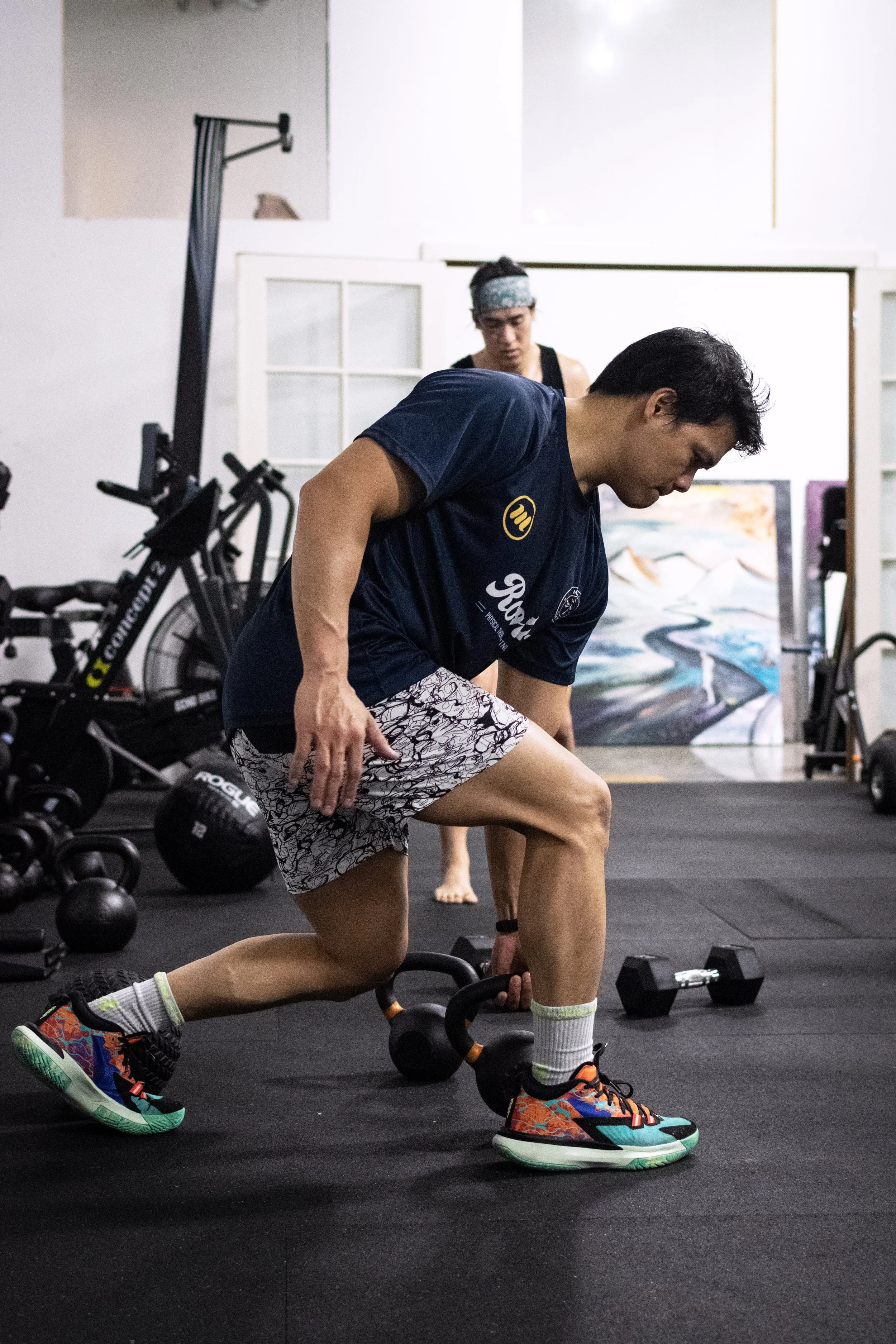
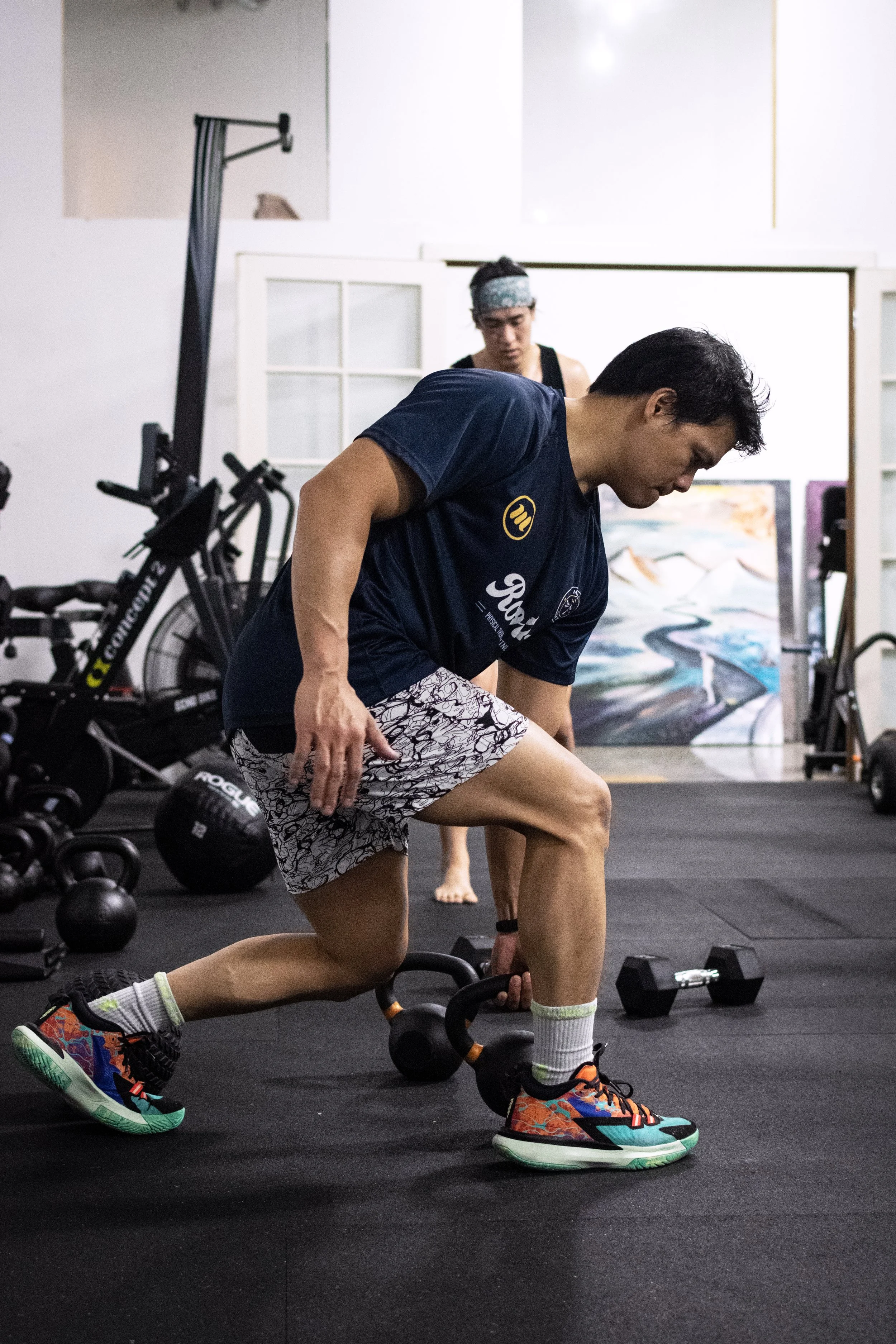
01Compound lifts — the foundation of everythingSquat, hinge, push, pull, carry. The fundamental movement patterns that build strength across the whole body rather than isolating individual muscles. Root Strength programming is built around these patterns because they produce the most transferable strength — the kind that shows up in sport, in life, and in every other physical activity you pursue.
-
02Explosiveness — power that translatesStrength without power has limits. Root Strength develops explosive capacity — the ability to express strength quickly — through plyometric work, Olympic lift variations, and power-focused programming. For Muay Thai practitioners specifically, explosive hip and leg power translates directly into more effective kicks, knees, and clinch entries.
-
03Stability — the platform for everything elsePower without stability is dangerous. Root Strength gives equal attention to single-leg stability, shoulder stability, core anti-rotation, and hip control — the less glamorous work that prevents the injuries that derail long-term progress. This is where the DPT background is most valuable: understanding which stability deficits create injury risk, and programming to address them before they become problems.
-
04Longevity — training for years, not monthsThe ultimate measure of a strength program is not how fast it builds strength — it's how long you can sustain training without accumulating injuries that force you to stop. Root Strength programming accounts for recovery, load management, and individual biomechanics in ways that most commercial strength programs don't. The goal is a body that gets stronger every year — not one that burns bright for six months and then breaks down.
The Coaching Team
Why Root Strength and Muay Thai Work Together
- Stronger legs from Root Strength = more powerful kicks and clinch entries in Muay Thai
- Shoulder and hip stability from Root Strength = better guard position and reduced injury risk in Muay Thai
- Explosive power development carries directly into striking speed and power
- Muay Thai coordination improves the athleticism you bring to strength training
- Both programs designed by the same DPT-led team — programming that accounts for the demands of both
- Combined membership available at a discounted rate — two complete programs, one gym
Who Root Strength Is For
People returning to training after injury or a long break
The DPT-led coaching is invaluable for people coming back to training after an injury or a significant gap. Movement assessment from day one means programming that accounts for where you actually are — not where a generic program assumes you should be.
Athletes who want to train smarter, not just harder
If you've been training for years and hitting the same injuries on repeat, Root Strength's approach to movement quality and load management will change how you train. Strong isn't just a number on a bar — it's the ability to keep loading that bar for years.
Muay Thai practitioners who want to be more powerful
The most complete martial artists are also strong athletes. Root Strength is designed with the demands of Muay Thai training in mind — building the specific strength qualities that make practitioners more powerful, more durable, and more capable on the mat.
Anyone who wants more from their training than equipment access
If you're paying for a gym membership and largely training on your own without meaningful coaching, Root Strength offers something fundamentally different — structured programming, expert coaching, and the kind of individual attention that actually moves the needle.
- Strength programming led by licensed Doctors of Physical Therapy
- Available standalone or combined with Muay Thai membership
- 9,000+ sq ft Georgetown facility — dedicated strength zone
- Month-to-month membership — no contracts, no enrollment fees
- Free trial — come in and experience the difference
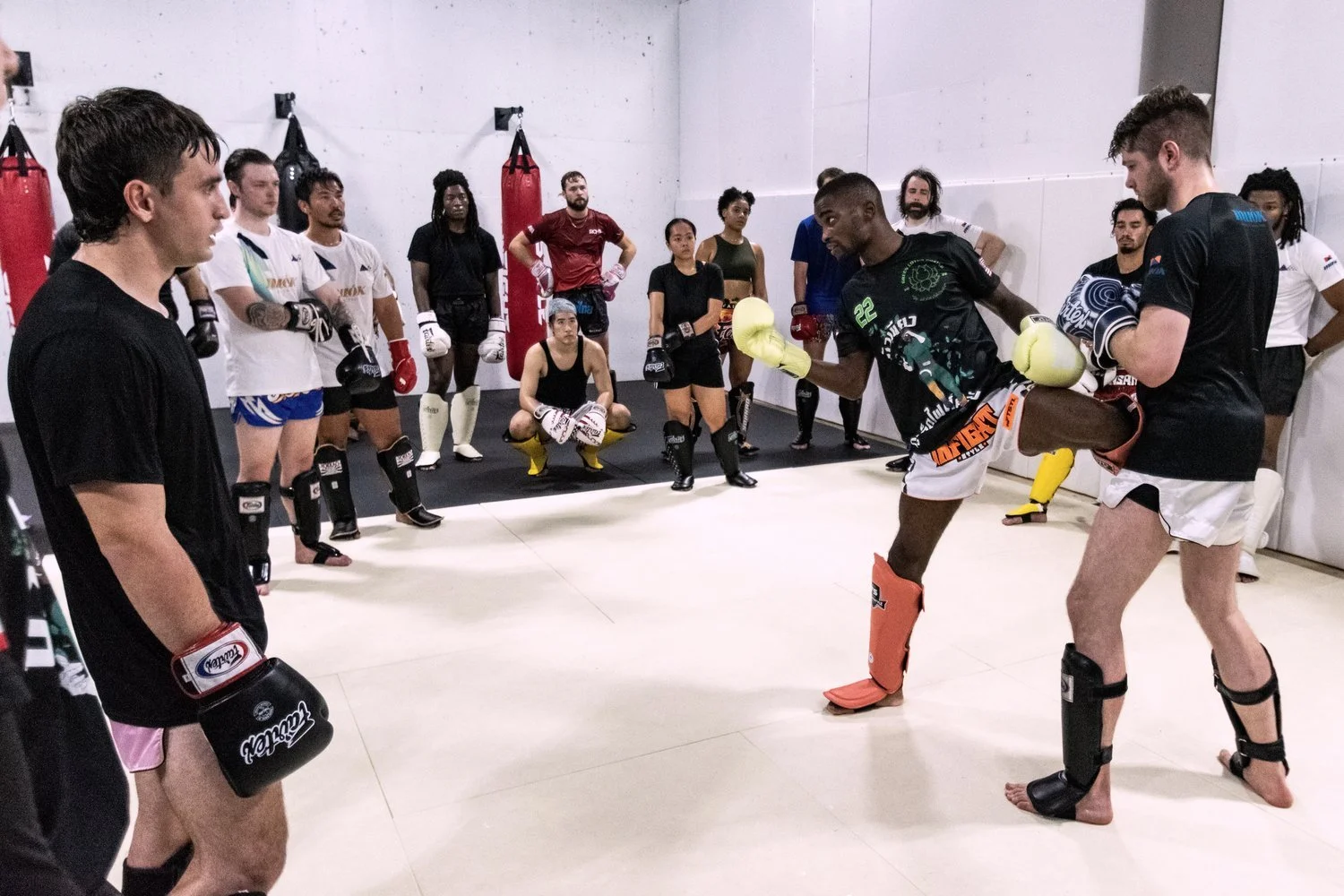
Muay Thai for Fitness in Seattle — What to Expect From Your Body in 90 Days
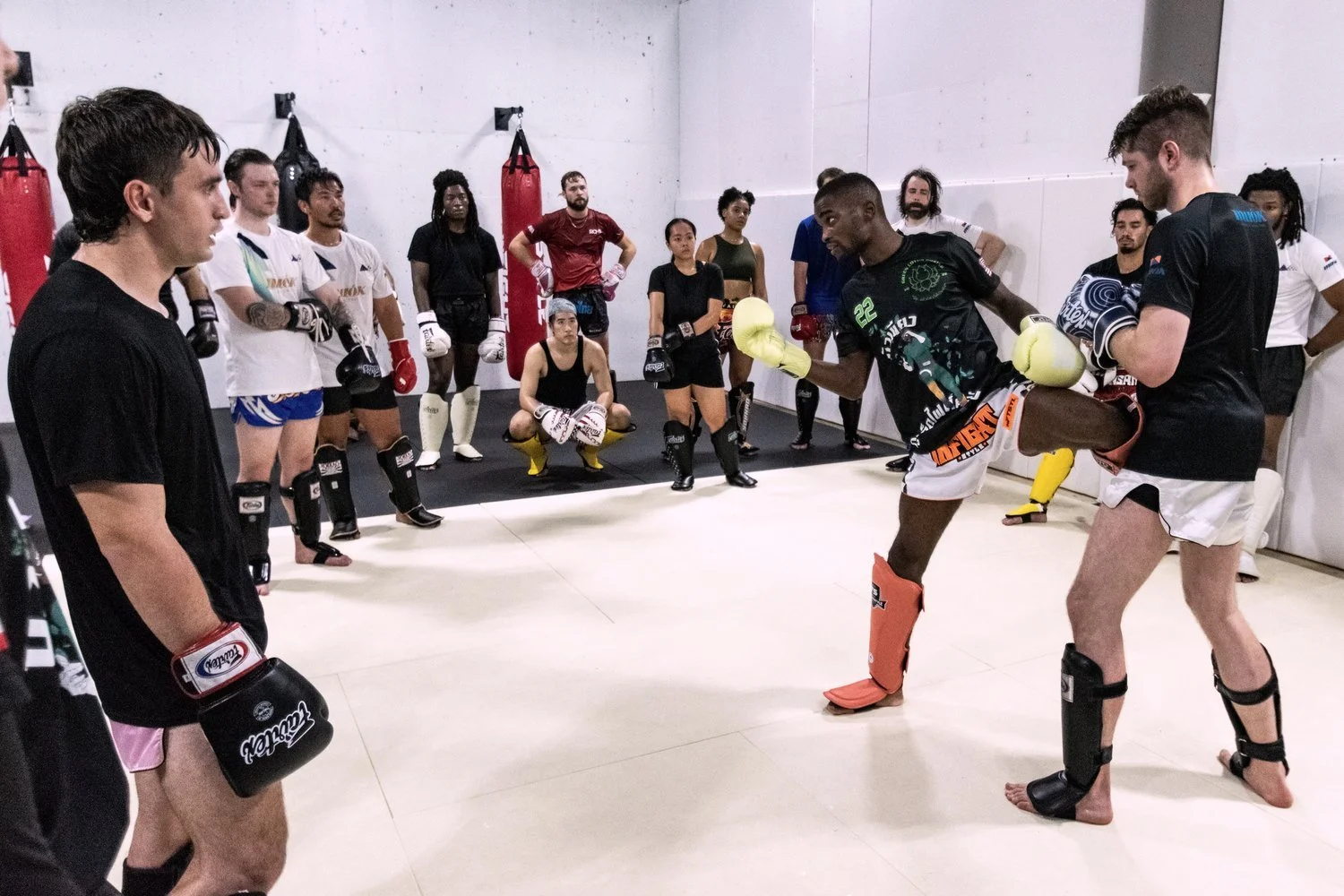
Most people who start Muay Thai don't come in because they want to fight. They come in because they're bored of the gym, burned out on running, or looking for something that challenges them in a way a treadmill never will. And what they discover is that Muay Thai produces fitness outcomes that most conventional training programs can't match — not because it's more intense, but because it develops the whole body as a coordinated system rather than isolating individual muscles or metrics.
This post is an honest breakdown of what Muay Thai training does to your body over 90 days — what changes, why it changes, and why those changes tend to stick in ways that gym results often don't.
Why Muay Thai Produces Better Fitness Results Than the Gym
The gym works. Lifting weights builds strength. Running builds cardio. But both have a ceiling that most people hit within a year — and more importantly, both require willpower to maintain because neither is inherently engaging. You go to the gym because you're disciplined. You go to Muay Thai because you actually want to be there.
That distinction matters more than most people realize. The single biggest predictor of fitness outcomes is consistency over time. And the single biggest driver of consistency is enjoying what you're doing. Muay Thai solves the motivation problem that derails most fitness programs — because there's always something new to learn, always a combination to refine, always a skill developing that makes the next class more interesting than the last.
"The best workout is the one you keep showing up for. Muay Thai solves the consistency problem that derails most fitness programs — because learning a skill is inherently more engaging than repeating a routine."
What Changes in Your First 90 Days
The Specific Fitness Benefits of Muay Thai
-
01Cardiovascular fitness — real cardio, not steady-stateMuay Thai training alternates between high-intensity bursts and active recovery — the same pattern as interval training, but built into the structure of the art. Three rounds of padwork at genuine effort develops cardiovascular fitness faster than most steady-state cardio programs. Within two months of consistent training, members routinely describe cardio improvements that carry over to every other physical activity in their lives.
-
02Body composition — functional leannessMuay Thai training burns calories at a high rate — estimates range from 500–900 calories per hour depending on intensity and body weight. But more importantly, it builds functional muscle while burning fat simultaneously. The result isn't the bulk of weightlifting or the gauntness of extreme cardio — it's the lean, athletic build that comes from moving your whole body explosively, consistently, over months.
-
03Coordination and proprioceptionThrowing a proper roundhouse kick requires hip rotation, weight transfer, shoulder counter-rotation, core engagement, and precise foot placement — all coordinated in a fraction of a second. Muay Thai develops whole-body coordination at a level that gym training simply cannot replicate. Members who train consistently describe improvements in athletic performance across every other sport or physical activity they pursue.
-
04Flexibility and mobilityHigh kicks require hip flexor flexibility and hip external rotation. The teep requires hamstring length and hip mobility. The clinch requires shoulder flexibility and thoracic rotation. Muay Thai training develops functional mobility — not the static flexibility of yoga, but the dynamic range of motion that makes you move better in real life. Most members notice significant hip and shoulder mobility improvements within their first few months.
-
05Stress relief — the underrated benefitThere is something uniquely satisfying about hitting pads with genuine effort after a long day. The combination of intense physical output, skill focus (which requires full mental presence — you can't think about work while you're trying to land a proper combination), and the community of training partners produces stress relief that most other forms of exercise don't match. Members consistently describe Muay Thai as the best stress management tool they've found.
-
06Posture and functional strengthThe guard position develops shoulder stability and upper back strength. Hip-driven techniques build glute and hip strength. Core rotation builds functional abdominal strength that carries over to everything. Unlike isolation exercises, these strength adaptations come from learning to move correctly — which means they transfer to real life in ways that isolated gym exercises often don't.
How Often Should You Train for Fitness Results?
Three sessions per week is the sweet spot for most people training Muay Thai for fitness. It gives your body enough stimulus to adapt and improve while allowing adequate recovery between sessions. Three consistent sessions per week for 90 days produces results that are visible to people around you and measurable in every physical metric that matters.
More is fine once your body has adapted — but three consistent sessions beats five inconsistent ones every time. The members who get the best results over a year are rarely the ones who train the most in any given week. They're the ones who show up reliably, three times a week, for months.
Do I Need to Be Fit to Start?
No — and this is worth saying clearly. Muay Thai will get you fit. You don't need to arrive fit. Every person who trains at Muók Boxing started somewhere, and the ones who started with the least fitness experience often describe the biggest transformations — precisely because the gap between where they started and where consistent training took them was so significant.
Show up at whatever fitness level you're at. Let the training do the work. Come back three times a week. The results follow — reliably, for everyone who stays consistent.
- Free trial class — no commitment, no pressure
- Beginner and experienced levels — 17 classes per week
- Root Strength program available alongside Muay Thai
- Open gym 7am–8pm daily for extra training sessions
- Month-to-month membership — no contracts, no enrollment fees
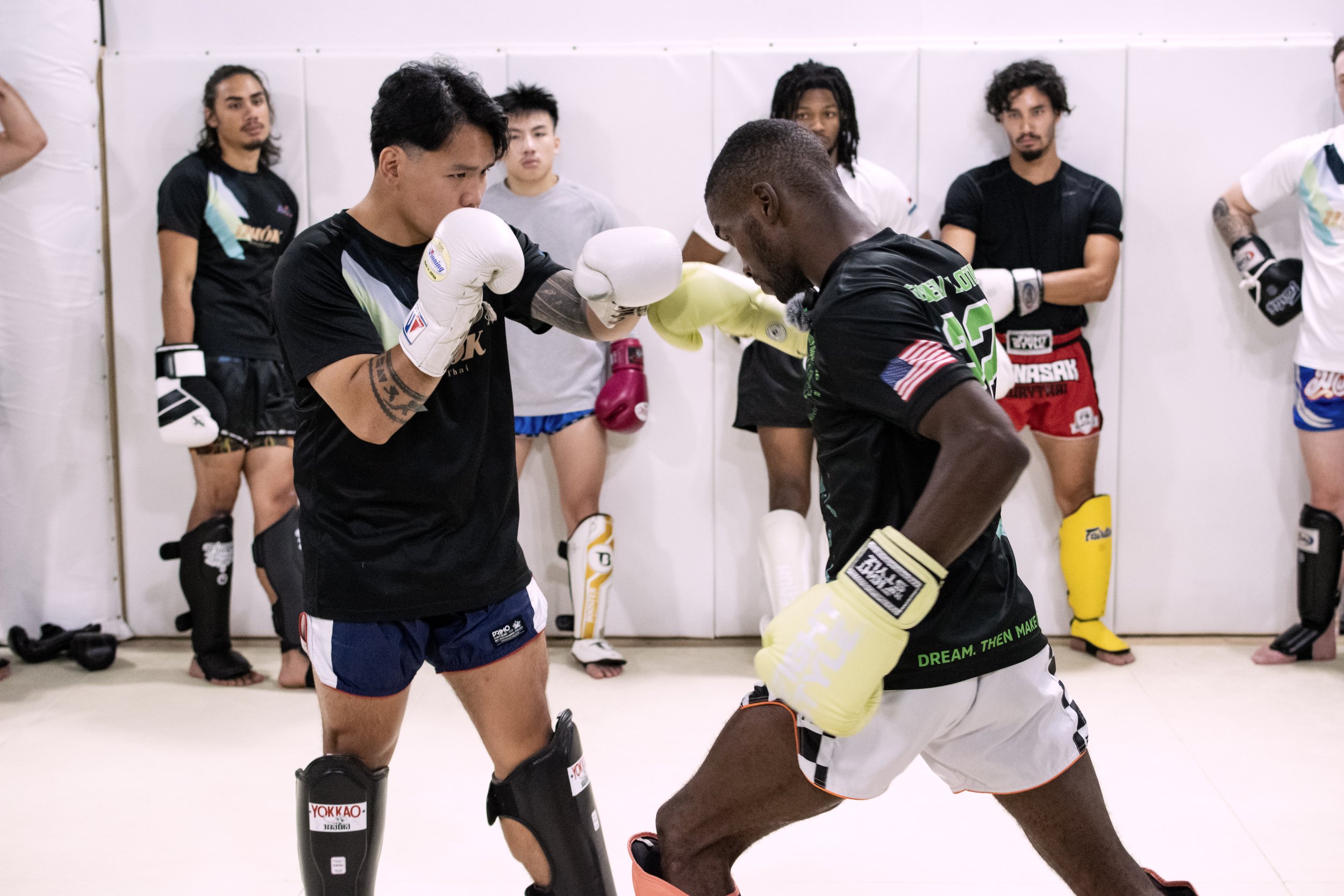
Looking for a Gym in Georgetown Seattle? Here's What We Offer
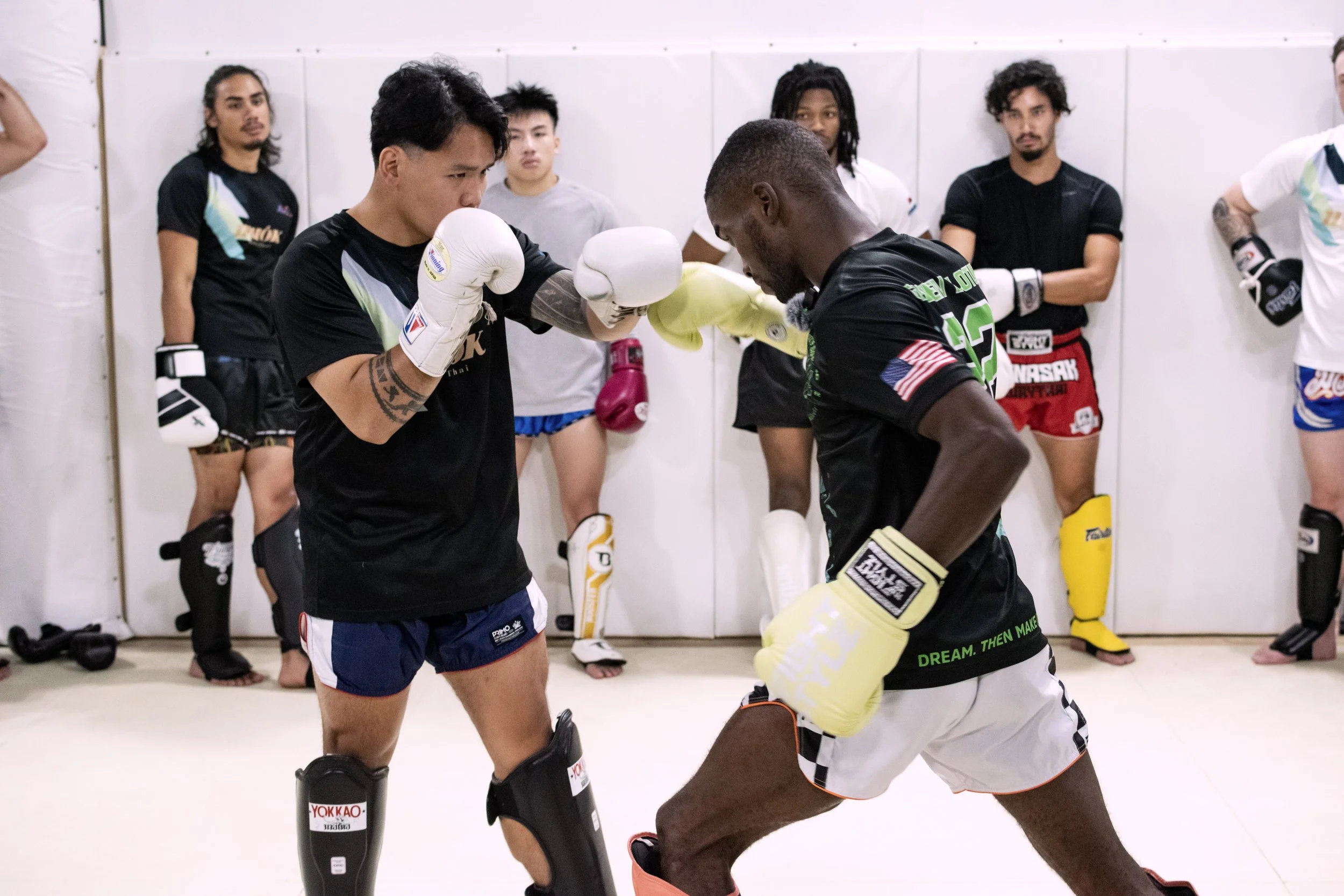
If you live or work in Georgetown and you're looking for a gym, you already know the neighborhood. Industrial roots, creative energy, locally owned businesses that take what they do seriously. Muók Boxing fits that mold — a purpose-built training facility at 6332 6th Ave S that offers more under one roof than most gyms in Seattle manage across separate memberships.
This page covers everything we offer — the programs, the facility, the schedule, and what makes training here different from a standard gym membership.
What We Offer
The Facility
We train out of a 9,000+ square foot warehouse in the heart of Georgetown — not a cramped strip mall box. The space was purpose-built for serious training, with dedicated areas for each program and enough room to move properly.
- Dedicated Muay Thai training floor — full mat space for padwork, partner drills, clinch work, and sparring
- Full bag area — heavy bags, thai pads, and striking equipment for open gym sessions
- Root Strength zone — dedicated strength and conditioning area with full equipment
- Sauna — on-site for post-training recovery
- Showers and changing facilities — train before work, after work, or at lunch without planning around it
- Free parking — lower and upper lots, both accessible from 6th Ave S
- Open gym 7am–8pm daily — one of the longest open gym windows in Seattle
"We built this space because we believed members who train seriously deserve somewhere serious to train. Not a repurposed storage unit. Not a shared fitness floor. A real gym."
The Coaching Staff
What makes Muók different isn't just the facility — it's who's coaching in it. Our team brings together authentic Muay Thai expertise and physical therapy credentials in a combination that's genuinely rare in Seattle.
Muay Thai coaching
Andy Le — Doctor of Physical Therapy, head coach, and founder. Over a decade of Muay Thai experience with training at elite Thai camps. His DPT background means every technique is taught with biomechanical precision — understanding not just what works but why, and how to do it without getting hurt.
Bobby Green — Technical Muay Thai instructor with amateur competition experience. Precision-focused approach to hand skills and combination work.
Van Nguyen — Trained extensively at renowned Thai camps. Brings authentic Thai technique and training methodology to every class.
Root Strength coaching
Joe Rellora — Doctor of Physical Therapy specializing in athletic wellness. Leads Root Strength programming with an evidence-based, longevity-focused approach that keeps members training for years without accumulating the injuries that derail progress at most gyms.
By the Numbers
Membership Options
All memberships are month-to-month — no enrollment fees, no cancellation penalties, no long-term contracts. We're confident enough in what we offer that we don't need to lock you in.
Muók Boxing — Muay Thai only
Unlimited access to all 17 weekly Muay Thai classes plus open gym 7am–8pm daily. The most complete Muay Thai program in Georgetown.
Muók Boxing + Root Strength
Full access to both programs — Muay Thai and dedicated strength and conditioning — at a combined rate. The most complete training program available at any single gym in Georgetown.
Class Schedule Overview
Where We Are in Georgetown
We're at 6332 6th Ave S, Seattle WA 98108 — in the heart of Georgetown, less than 10 minutes from SoDo, Beacon Hill, Columbia City, and West Seattle. Free parking in both the lower and upper lots. Easy to find, easy to get to, and worth the drive if you're coming from further out.
Georgetown is one of Seattle's most interesting neighborhoods — industrial character, creative community, great local food and coffee nearby. It's the kind of place that attracts people who take what they do seriously. That's who we built this gym for.
- Free trial class — experience it before committing to anything
- Muay Thai, Root Strength, open gym, sauna — all under one roof
- Coaching staff including multiple Doctors of Physical Therapy
- Month-to-month membership — no enrollment fees, no contracts
- 200+ five-star Google reviews — Georgetown's most reviewed gym