Kickboxing Classes in Seattle — What to Expect and How to Choose
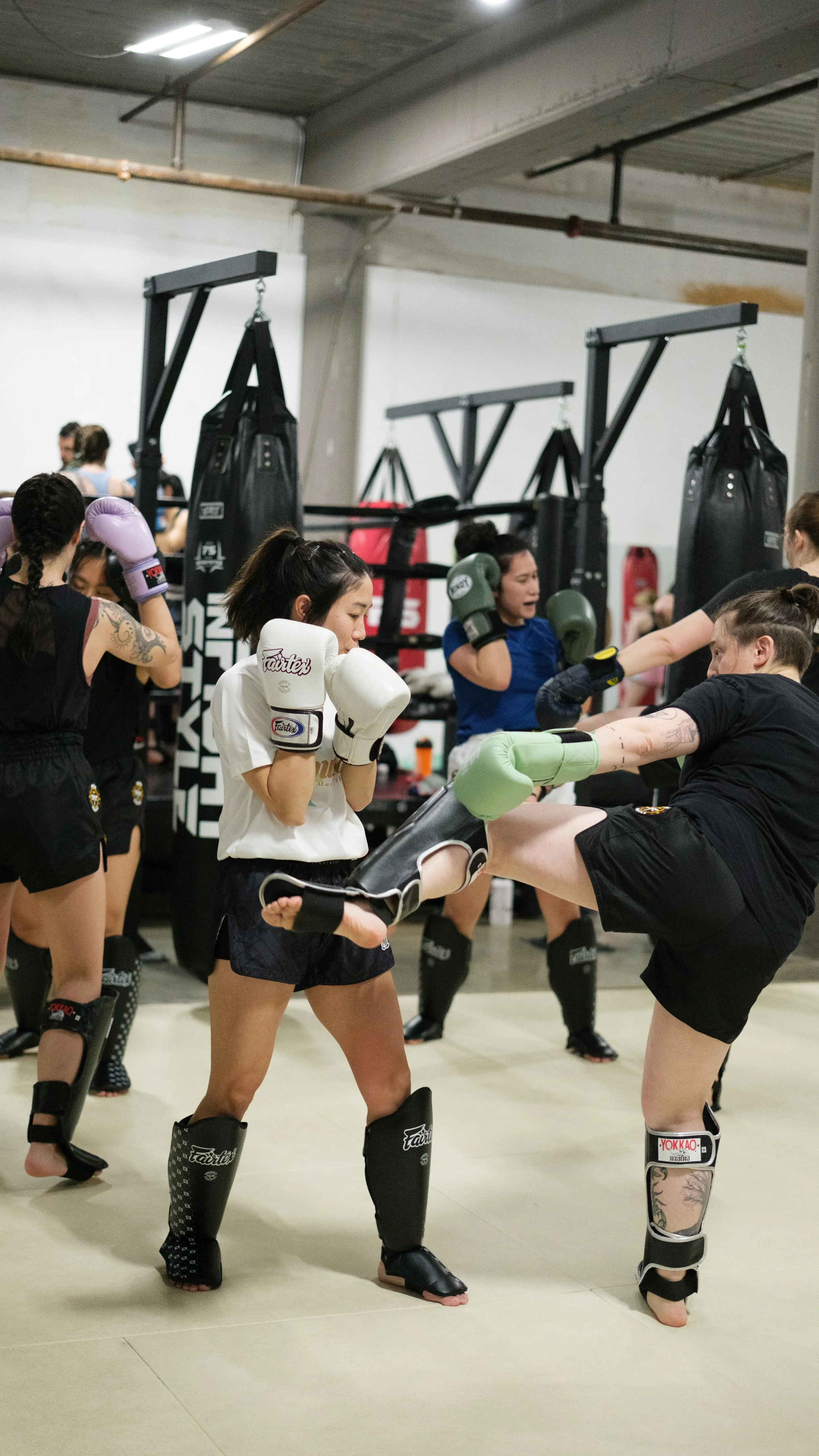
Searching for kickboxing classes in Seattle puts you in front of a wide range of options — boutique fitness studios, martial arts schools, boxing gyms with kickboxing sessions, and dedicated Muay Thai gyms. They all look similar from the outside. Inside, they're very different experiences.
This guide breaks down what actually happens inside different types of kickboxing classes, what to look for when you visit, and why the most complete kickboxing class in Seattle might not be labeled "kickboxing" at all.
What Happens Inside a Kickboxing Class
The structure of a class tells you immediately what kind of training you're getting. Here's what you'll typically find across the different formats available in Seattle:
"The best kickboxing class is the one that makes you a better striker every time you attend — not just more tired. Look for technical instruction, real feedback, and progressive challenge."
What a Good Kickboxing Class Looks Like — Step by Step
-
01Warm-up with purposeA good warm-up isn't just getting the heart rate up — it prepares the specific joints and movement patterns you're about to use. Hip circles for kicking. Shoulder mobility for punching and guard. Footwork drills that reinforce the movement patterns of the session. If the warm-up feels random, that tells you something about how deliberately the class is structured.
-
02Technique instruction with real explanationThe coach demonstrates a technique and explains the mechanics — not just what it looks like but why it works. Hip rotation before shoulder. Weight distribution through the kick. Guard position during a combination. This is the difference between a class that builds skill and one that just moves you through sequences.
-
03Drilling — solo and with a partnerRepetition of the session's techniques — first solo to build the movement pattern, then with a partner for timing and live feedback. Partner drilling is where kickboxing training separates itself from fitness classes. You can't develop real striking timing on a stationary bag.
-
04PadworkThe heart of a technical kickboxing class. A coach or partner holds pads while you strike — giving you real-time feedback on timing, accuracy, power, and combination flow. Good padwork is a conversation between striker and holder. It accelerates skill development faster than any other training method.
-
05Conditioning and cool-downFunctional conditioning that builds the specific fitness demands of striking — core work, hip stability, shoulder endurance. A good cool-down includes mobility work that addresses the areas most used in the session. This is where DPT-informed coaching makes a real difference in long-term joint health.
Why Muay Thai Classes Give You More Than Kickboxing
If you're looking for kickboxing classes in Seattle, Muay Thai is worth understanding as the more complete option. Here's the honest comparison:
Standard kickboxing uses punches and kicks. Muay Thai uses punches, kicks, elbows, knees, and clinch — eight points of contact compared to four. That's not a minor addition. Elbows and knees are the weapons that work at close range, where most kickboxing exchanges eventually end up. And the clinch — a complete grappling system within Muay Thai — gives practitioners tools that kickboxing simply doesn't develop.
For fitness, the outcomes are comparable. For skill development and real-world application, Muay Thai is the more complete investment. The classes are structured the same way — warm-up, technique, drilling, padwork, conditioning. You're just learning a more complete art in the same amount of class time.
Frequently Asked Questions
-
Do I need experience to join a kickboxing class?No. The best gyms offer dedicated beginner classes that start from zero — no prior experience required. Show up, listen, and let the instruction do the work. The coordination comes with repetition, not prerequisites.
-
What should I wear to my first kickboxing class?Athletic clothing — shorts and a t-shirt work fine. Bring a water bottle. A good gym provides gloves and wraps for trial classes so you don't need to buy anything before you know you're going to stick with it.
-
How many kickboxing classes per week do I need?Three sessions per week is the sweet spot for real skill development and fitness progress. Consistency over months matters far more than frequency in any given week.
-
Is kickboxing or Muay Thai better for fitness?The fitness outcomes are very similar — both are full-body, high-intensity, technically demanding. Muay Thai gives you more tools to develop alongside the fitness, which tends to keep people engaged and training longer. The best fitness program is the one you keep showing up for.
-
Will I have to spar?No. Sparring is always optional and only introduced when you and your coaches feel you're ready — typically several months into training. Many members train for years without sparring. Both approaches are completely valid and supported at a well-run gym.
Kickboxing and Muay Thai Classes at Muók Boxing
At Muók Boxing we run 17 classes per week — across beginner and experienced levels, morning, midday, and evening time slots. Our classes are technical, coach-led, and structured around real skill development. Every session includes technique instruction, drilling, and padwork — not just bag circuits or choreographed fitness sequences.
- Free trial class — no commitment, no pressure
- Beginner and experienced levels — 17 classes per week
- Technical padwork every session — real skill development, not just cardio
- Coaches trained at elite Thai camps — authentic technique from day one
- Month-to-month membership — no contracts, no enrollment fees