What the Research Says About Strength Training for Muay Thai
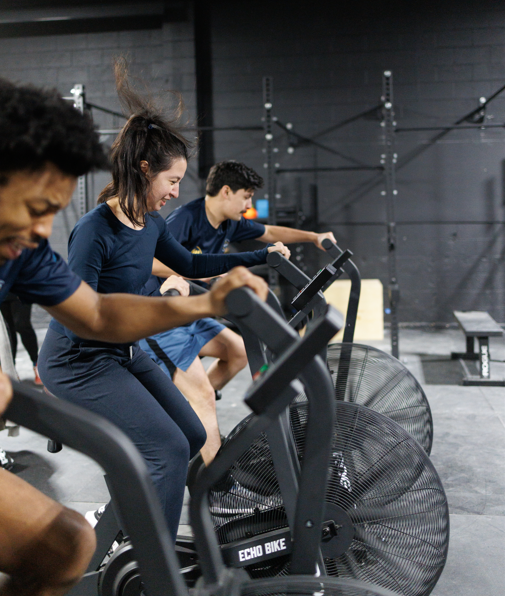
If you train Muay Thai long enough, you'll hear the old argument: lifting weights makes you slow, stiff, and too heavy for your weight class. Traditional gyms — particularly in Thailand — built their conditioning around running, pad work, bag rounds, and sparring. The weight room was seen as a bodybuilder's domain, not a fighter's.
That belief is now directly contradicted by a growing body of peer-reviewed research. Over the last several years, exercise scientists have specifically studied how different types of strength and conditioning interventions affect Muay Thai performance — and the results are significant enough to change how serious practitioners should think about their training.
This post walks through the key findings. It's written by the team at Root Strength — Muók Boxing's in-house strength and conditioning program led by Doctors of Physical Therapy — whose work is built directly on this research.
Elite Muay Thai athletes reach VO₂ max values equivalent to elite distance runners — placing Muay Thai among the highest aerobic demand sports in the world.
The Myth That Held Muay Thai Back
Research published in the Strength & Conditioning Journal identified two specific fears that kept Muay Thai athletes away from the weight room for generations: the belief that lifting would cause unwanted weight gain, forcing them into a higher weight class, and the belief that building muscle would reduce flexibility and slow them down.
Both fears turn out to be unfounded when strength training is programmed correctly. The research shows that well-designed strength programs can increase power output and striking force without meaningfully affecting body composition — and that the flexibility concern is largely a myth when training uses full range-of-motion movements.
What the research also revealed is something even more fundamental: elite boxers were shown to generate punching force primarily from the legs and hips, not the arms. Lower-ranked fighters generated force from the trunk and arms instead. This means that lower body strength training — squats, deadlifts, Olympic lifting derivatives — directly transfers to striking power in ways that pad work and bag rounds alone cannot produce.
Study 1 — Olympic Weightlifting Adds 7.4% to Kick Power
The practical implication is direct: if you want to kick harder, the weight room is more efficient than more pad work. The power gains from Olympic lifting derivatives — movements like the hang clean, power clean, and jump shrug — transfer specifically to the explosive hip extension that drives a Muay Thai roundhouse kick. This is exactly the type of programming Root Strength coaches integrate into Muók members' training.
Study 2 — Plyometric Training Improves Martial Arts Strength and Power
Plyometrics — box jumps, jump squats, depth jumps, medicine ball throws — train the stretch-shortening cycle: the ability of a muscle to store elastic energy in a rapid eccentric contraction and release it explosively. This is exactly what happens in a Muay Thai kick or knee strike. The hip flexors and hip extensors load and fire in a rapid sequence, and plyometric training makes that sequence faster and more powerful.
Study 3 — The Warm-Up Science That Changes Kick Power Immediately
Post-Activation Potentiation (PAP) is the phenomenon where performing a heavy strength exercise temporarily elevates the nervous system's ability to recruit motor units, resulting in greater power output for the exercises that follow. The study found a precise warm-up prescription: 4 heavy squats, then 5 minutes of rest, produces measurably stronger kicks. This is something any serious practitioner can apply immediately — and something the Root Strength coaching team programs into pre-session warm-up protocols for Muók athletes.
What This Means for Your Training
Strength training belongs in every serious Muay Thai program
The research is now clear enough that avoiding the weight room is no longer defensible for athletes who want to maximize performance. The fear of bulk is unfounded when training is programmed correctly — and the gains in kick power, punch force, and explosive capacity from structured strength work are simply not achievable through pad work and sparring alone.
The right modalities matter
Not all strength training transfers equally to Muay Thai. The research specifically supports Olympic lifting derivatives (hang cleans, power cleans) for kick power, plyometrics for explosive speed and agility, and heavy compound lifts (squats, deadlifts) for the ground-force generation that underlies all striking. Isolation exercises and machine-based bodybuilder training have much weaker transfer to combat sports performance.
DPT-informed programming prevents the downside
The legitimate concern with adding strength training to an already demanding Muay Thai schedule is injury risk and recovery management. This is where having Doctors of Physical Therapy involved in programming makes a real difference — they understand load management, movement mechanics, and how to structure strength work that complements rather than competes with technical training. At Muók, that's not an add-on. It's built into the program from day one through Root Strength.