
Muay Thai for Fitness: What Happens to Your Body After 3 Months of Training
Most people who try Muay Thai don't start because they want to fight. They start because they're bored of the gym, burned out on running, or just looking for a workout that actually challenges them — mentally and physically.
What they don't expect is how much changes in just three months. Not just fitness. Posture. Coordination. Confidence. The way they carry themselves. Muay Thai has a way of reshaping people in ways that treadmills and weight machines simply don't.
The results below are based on training 3 times per week — a realistic and sustainable cadence for most people with jobs, families, and lives outside the gym. Three sessions a week, showing up consistently, is enough to produce the adaptations described here.
"This isn't magic — it's the result of training that demands more from your body than almost any other fitness modality. Muay Thai doesn't leave anything on the table."
What Muay Thai Does That the Gym Can't
- Monotonous — most people train despite the boredom
- Doesn't develop coordination or athleticism
- Mental toughness is limited to pushing through sets
- Minimal community or social connection
- Genuinely engaging — always something new to learn
- Builds strength and athleticism simultaneously
- Develops mental toughness under real pressure
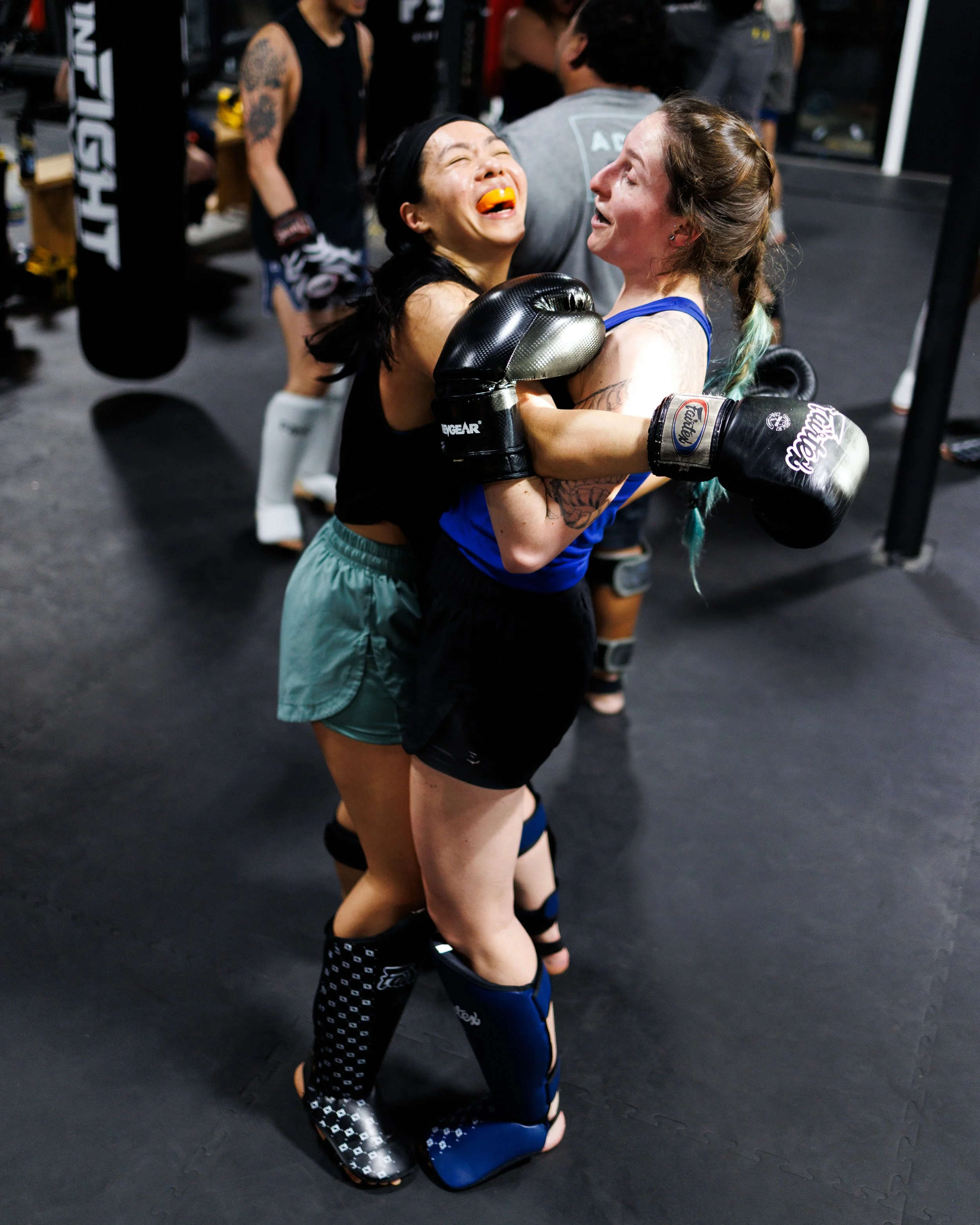
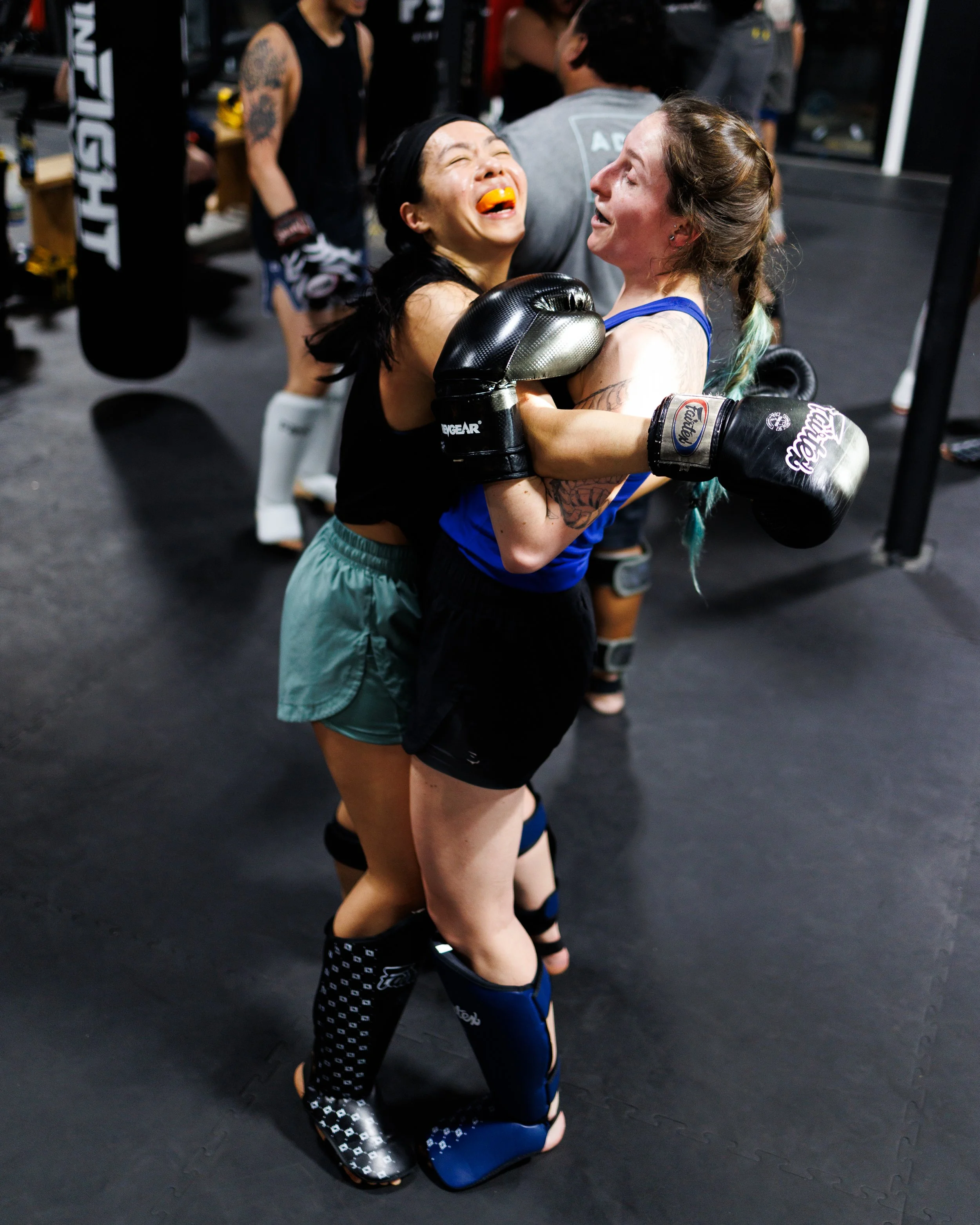
- Strong community built on trust and camaraderie
Is Muay Thai Right for Your Fitness Goals?
If your goals include any of the following, Muay Thai is worth serious consideration:
Losing body fat while building functional muscle. Improving cardiovascular fitness without the monotony of running. Developing real coordination, athleticism, and body awareness. Building mental toughness and stress resilience. Finding a fitness community that keeps you accountable and engaged.
"If your primary goal is maximum muscle hypertrophy or powerlifting, Muay Thai complements but probably shouldn't replace your training. For everything else — it's one of the most complete fitness tools available."
- Coaches including multiple Doctors of Physical Therapy
- 17 classes per week across beginner and experienced levels
- 9,000+ sq ft facility with open gym from 7am–8pm
- Month-to-month memberships — no contracts, no enrollment fees
Muay Thai vs Kickboxing: What's the Difference?
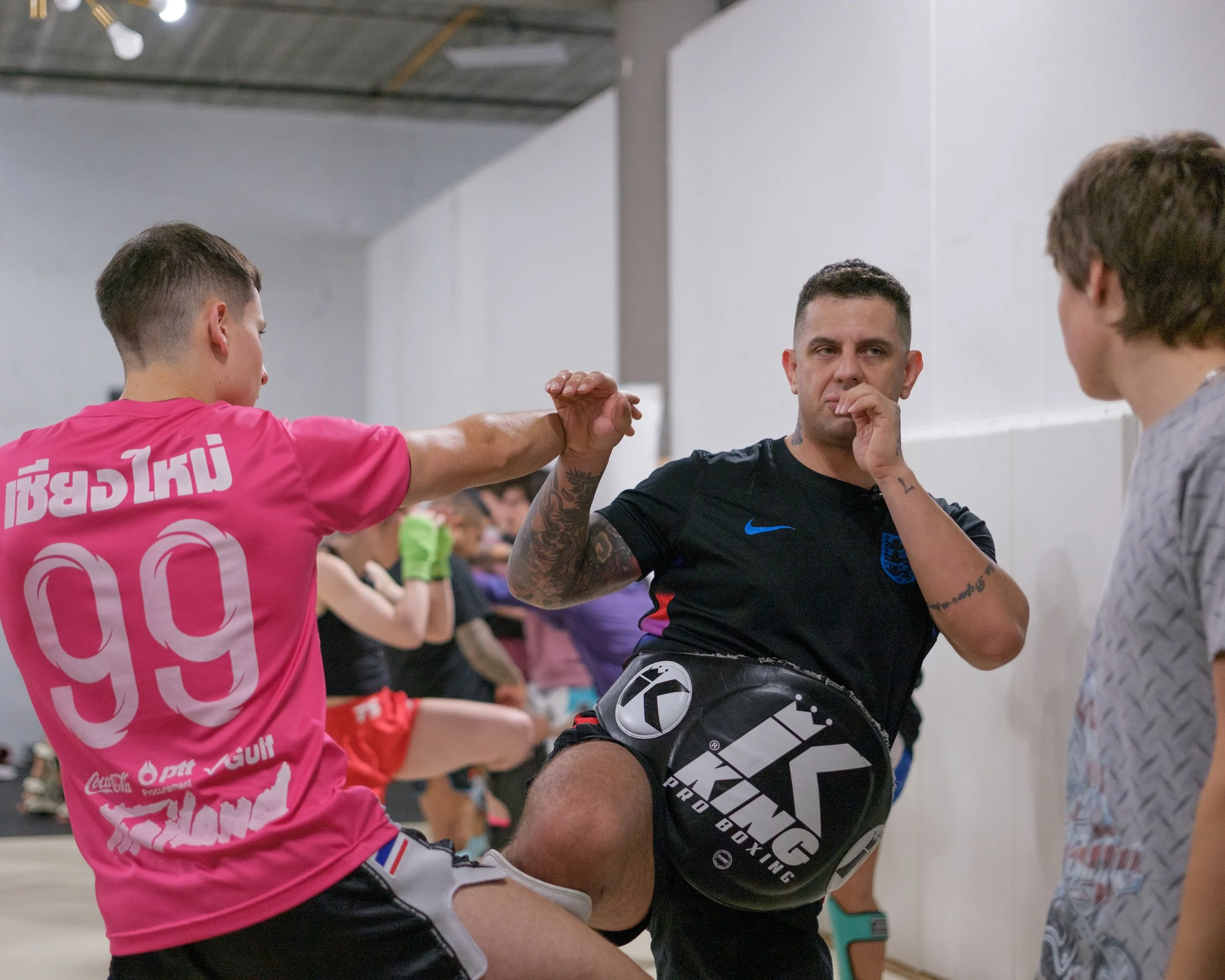
If you've been looking into combat sports or martial arts classes in Seattle, you've probably come across both Muay Thai and kickboxing. From the outside, they look almost identical — people in gloves, throwing punches and kicks. So what's actually different, and does it matter which one you choose?
It matters quite a bit. While they share some surface similarities, Muay Thai and kickboxing are fundamentally different disciplines — in their techniques, their history, their culture, and what they'll teach you.
A Brief History of Each
The Technical Differences
Weapons: 4 vs 8
Kickboxing uses fists and feet — four points of contact. Muay Thai uses fists, feet, elbows, and knees — eight points of contact. Elbows and knees aren't just bonus weapons — they change the entire geometry of a fight. Elbows are devastating at close range where punching loses power. Knees dominate the mid-range clinch, an area kickboxing largely ignores.
The Clinch
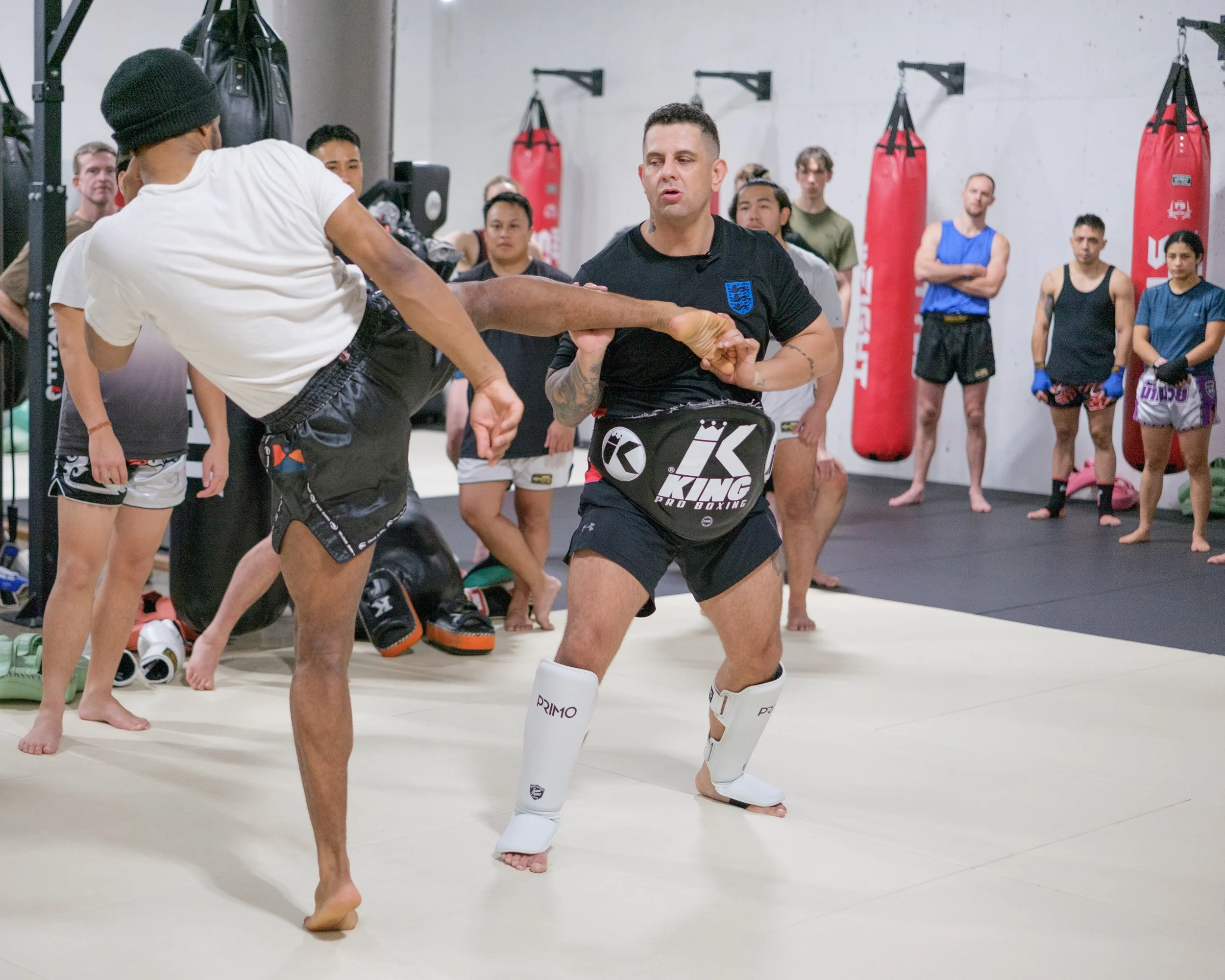
In most kickboxing rulesets, when two fighters grab each other the referee immediately separates them. In Muay Thai, the clinch is a core technical domain — fighters spend considerable time learning to control, off-balance, and strike from it. This makes Muay Thai dramatically more complete as a self-defense tool.
Stance and Movement
Muay Thai fighters use a more upright stance with a higher guard. Movement is measured and deliberate — Muay Thai values balance and composure. Kicks are thrown with the shin, not the foot. Kickboxing places more emphasis on boxing combinations and lateral movement, with kicks used to complement the boxing rather than as primary weapons.
| Muay Thai | Kickboxing | |
|---|---|---|
| Striking Weapons | Fists, feet, elbows, knees | Fists and feet |
| Clinch Work | Core technical domain | Broken up immediately |
| Origin | Thailand, centuries old | Japan/USA, 1970s |
| Kick Surface | Shin | Foot or shin |
| MMA Use | Universal striking base | Supplementary |
| Self-Defense | All ranges covered | Gaps at close range |
Head-to-Head Verdicts
"For the vast majority of people — beginners, fitness-focused members, and self-defense seekers alike — Muay Thai is the stronger long-term investment."
So Which Should You Choose?
- You want the most complete striking system
- You're interested in MMA
- You value self-defense effectiveness
- You want deep cultural roots and tradition
- You want to develop clinch and knee game
- Your goal is kickboxing-specific competition
- You're coming from a boxing background
- You want to add kicks without the full Muay Thai curriculum
- Full Muay Thai system — including clinch, elbows, and knee game
- Coaching staff includes multiple Doctors of Physical Therapy
- 17 classes per week across beginner and experienced levels
- 9,000+ sq ft facility in Georgetown with open gym 7am–8pm
- Month-to-month memberships — no contracts, no enrollment fees
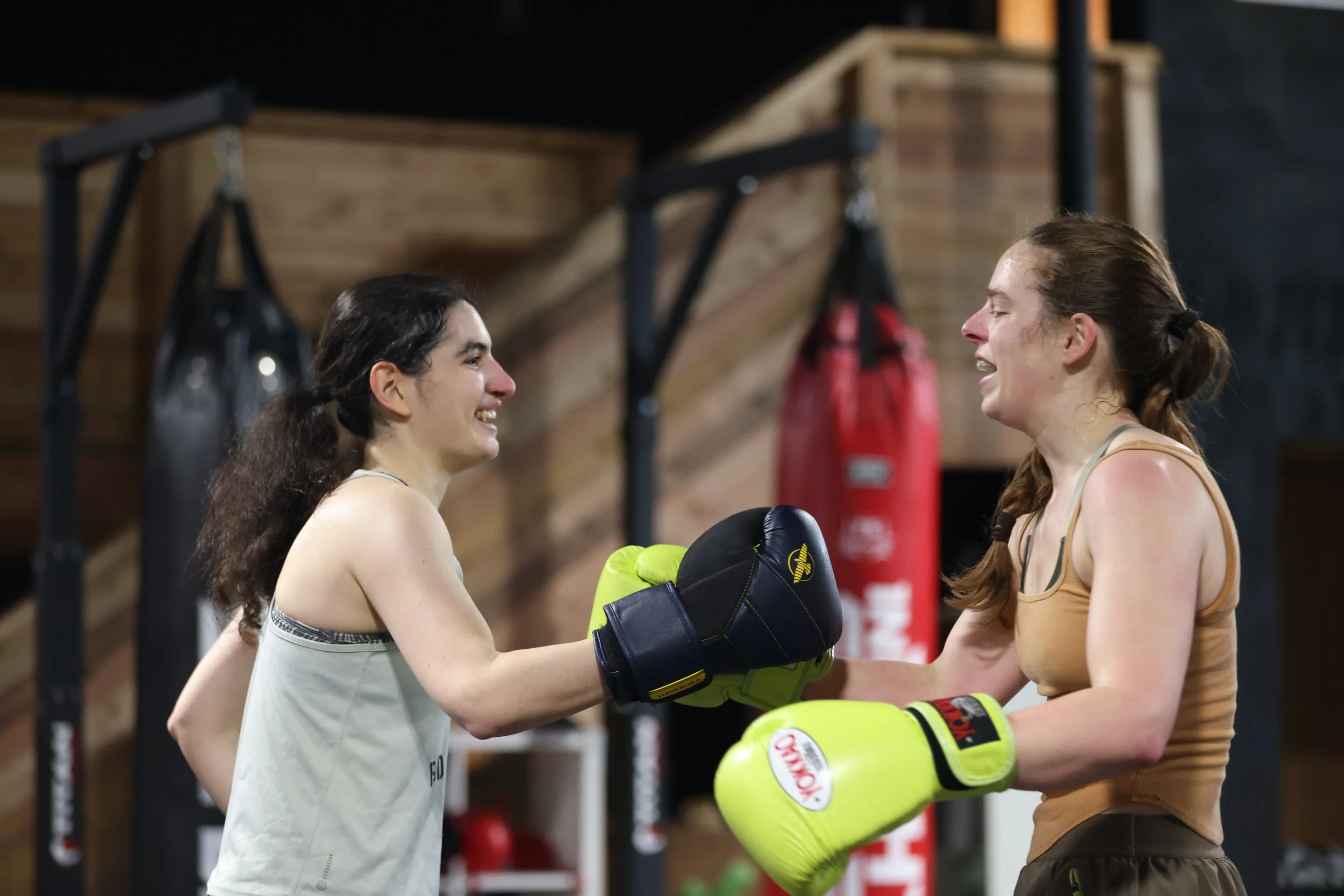
What to Expect at Your First Muay Thai Class
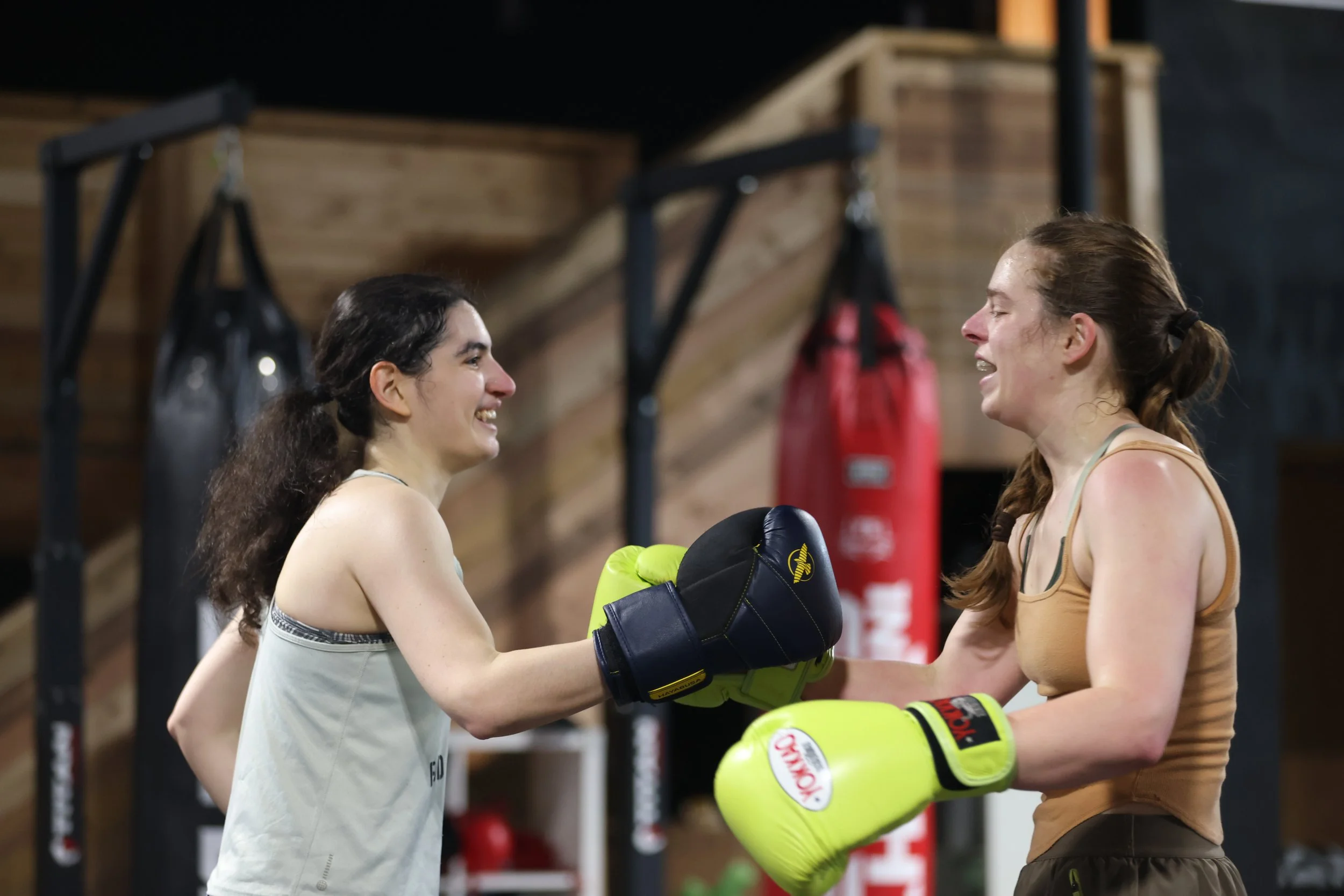
You've been curious about Muay Thai for a while. Maybe you've watched a fight, seen someone training, or just heard it's one of the best full-body workouts around. And now you're thinking about actually showing up — but you're not sure what that first class will look like.
That uncertainty is completely normal. Walking into a martial arts gym for the first time can feel intimidating, especially when you don't know the culture, the terminology, or what's expected of you. This guide walks you through exactly what happens — step by step.
Before You Arrive
The Structure of a Beginner Class
Here's exactly what a well-structured beginner Muay Thai class looks like at a technique-focused gym like Muók Boxing — from the moment class starts to the final stretch.
- Jogging and footwork drills
- Dynamic stretching — hip circles, shoulder rolls, leg swings
- Shadowboxing — throwing punches and kicks without a partner
- Stance — weight distribution, foot positioning, hip alignment
- Guard — protecting your head and body while staying mobile
- The Jab and Cross — foundational punches with correct hip mechanics
- The Teep (push kick) — Muay Thai's long-range weapon
- Basic combinations — linking two or three techniques with rhythm
"Good instruction goes beyond 'put your hand here.' At a technically-focused gym, coaches explain the biomechanics behind each movement — understanding the why accelerates your development significantly."
What Beginners Often Get Wrong
What Makes a Good Gym for Beginners
Not all gyms are created equal. When evaluating a gym for your first experience, look for structured beginner classes — not just open mat time. Coaches who explain technique, not just demonstrate it. A culture of controlled sparring and ego-free training. Class sizes that allow for individual attention. An environment where beginners are welcomed, not tolerated.
"The hardest part of starting Muay Thai is showing up for the first time. Everything after that gets easier."
You don't need to be fit, coordinated, or experienced. You just need to be curious and willing to learn. Every technique you'll practice in your first class has been taught to thousands of beginners — and the coaches at Muók Boxing have the experience to meet you exactly where you are.
- All equipment provided — just show up in athletic clothes
- Beginner classes structured for people with zero experience
- Coaching staff includes multiple Doctors of Physical Therapy
- 17 classes per week · 9,000+ sq ft facility in Georgetown
- No commitment — experience it before you decide
We’ve Moved — Welcome to Our New Home in Georgetown
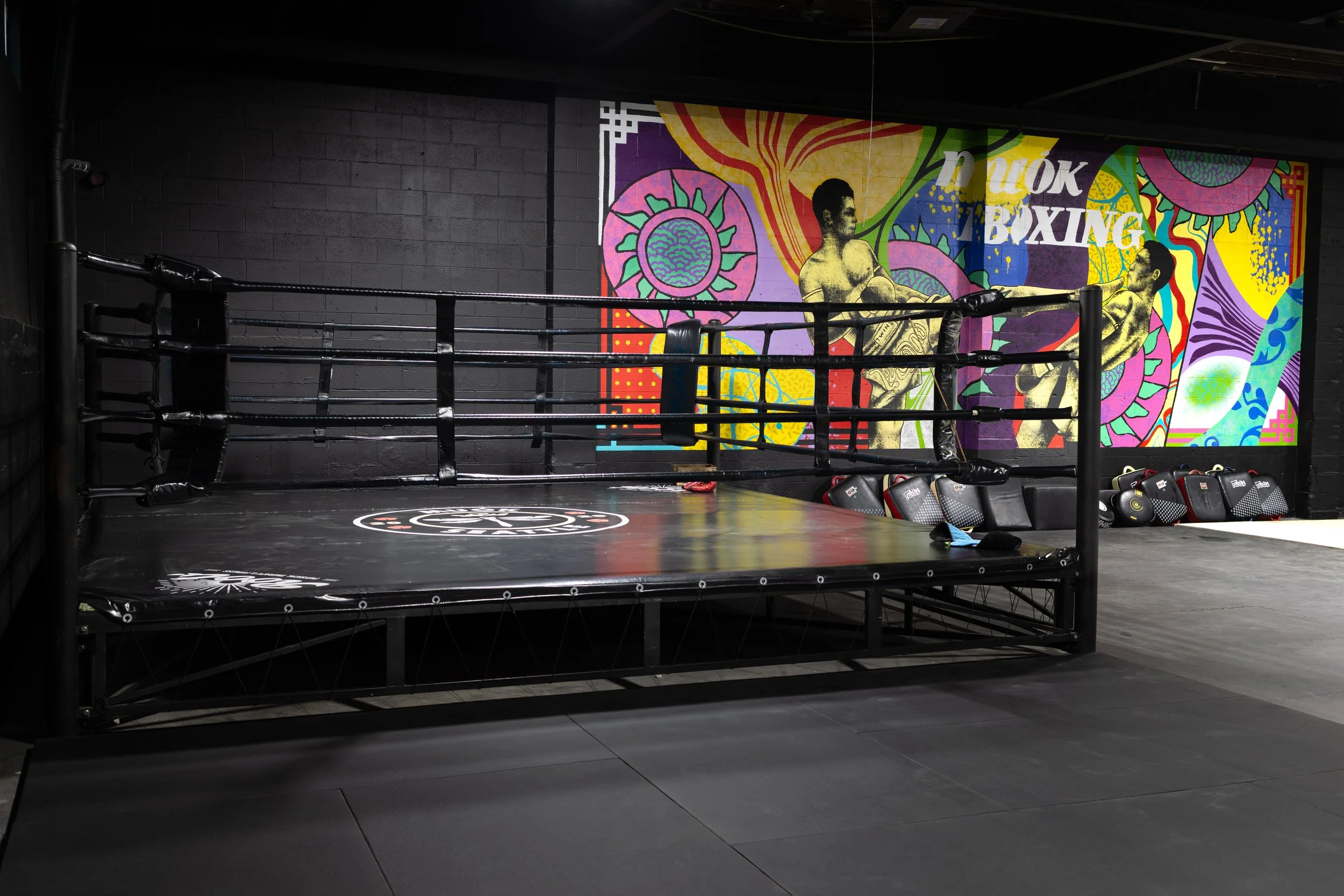
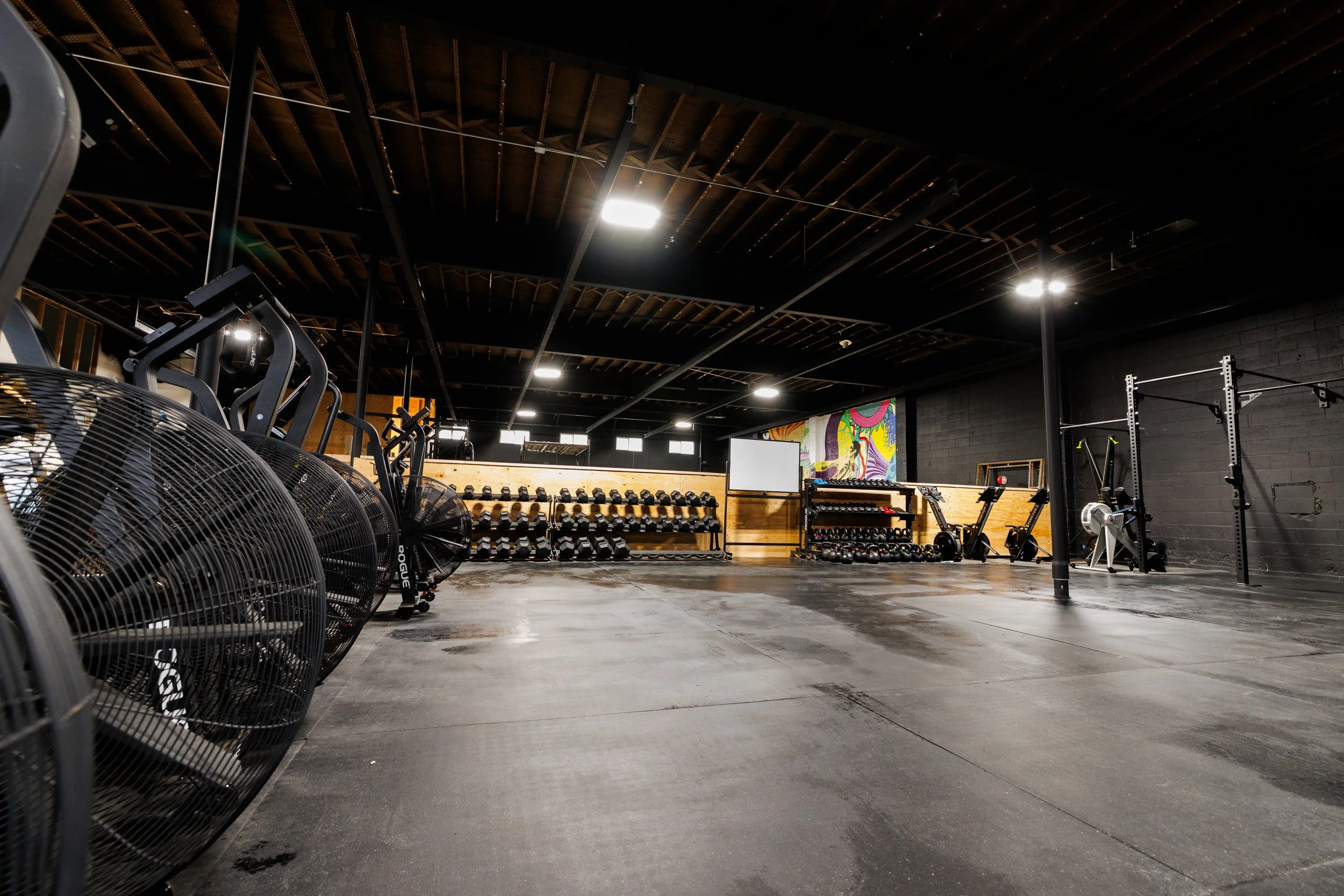
We're officially settled into our new location, and we couldn't be more excited to share it with you. Our move to Georgetown marks a big step forward for Muók Boxing — more room, more flexibility, and more opportunities to train together — while keeping the authentic Muay Thai culture and community you know and love.
What's New
Take a Look Inside
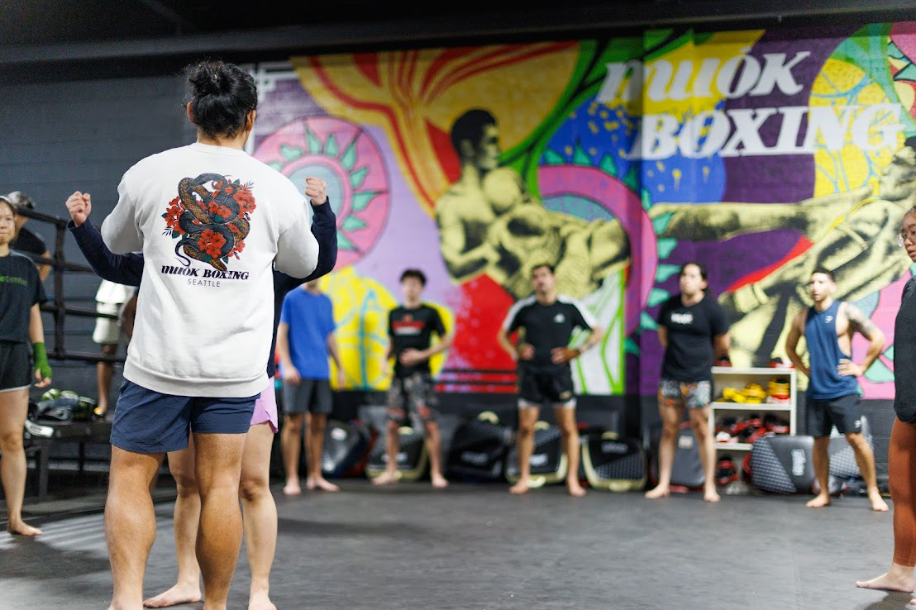
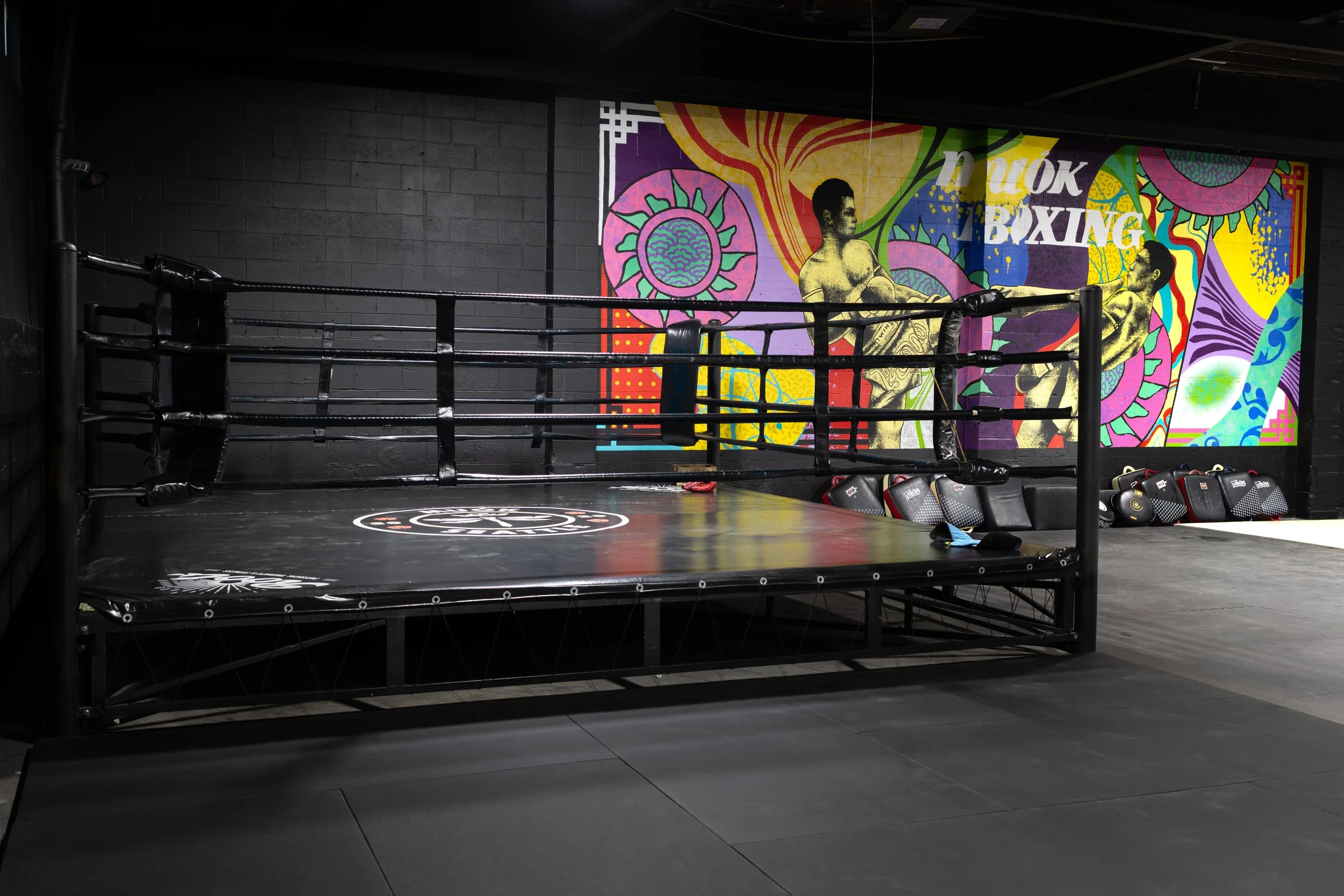
From the expanded training floor to the details throughout the gym, everything was designed with intention. One of the highlights we're especially proud of is the new mural — a visual reflection of Muók Boxing's roots, grit, and identity. It sets the tone the moment you walk in and reminds us why we train the way we do.
"The new space gives us more room, more flexibility, and more opportunities to train together — while keeping the authentic Muay Thai culture and community you know and love."
Book Your Classes
Spots fill up quickly with the expanded schedule. To stay up to date and reserve your spot, make sure to log into your Zen Planner account using the app.
- 9,000+ sq ft training facility in the heart of Georgetown
- 17 Muay Thai classes per week across all levels
- Open gym from 7am–8pm on weekdays
- On-site physical therapy · Sauna · Showers & lockers
- Not a member yet? Start with a free trial — no commitment needed
From the Garage to Here: A Walk Down Memory Lane
From the Garage to What We’ve Built Today
As we step into the new year, let’s take a walk down memory lane together and look back at how Muok Boxing grew from humble beginnings into the community it is today.
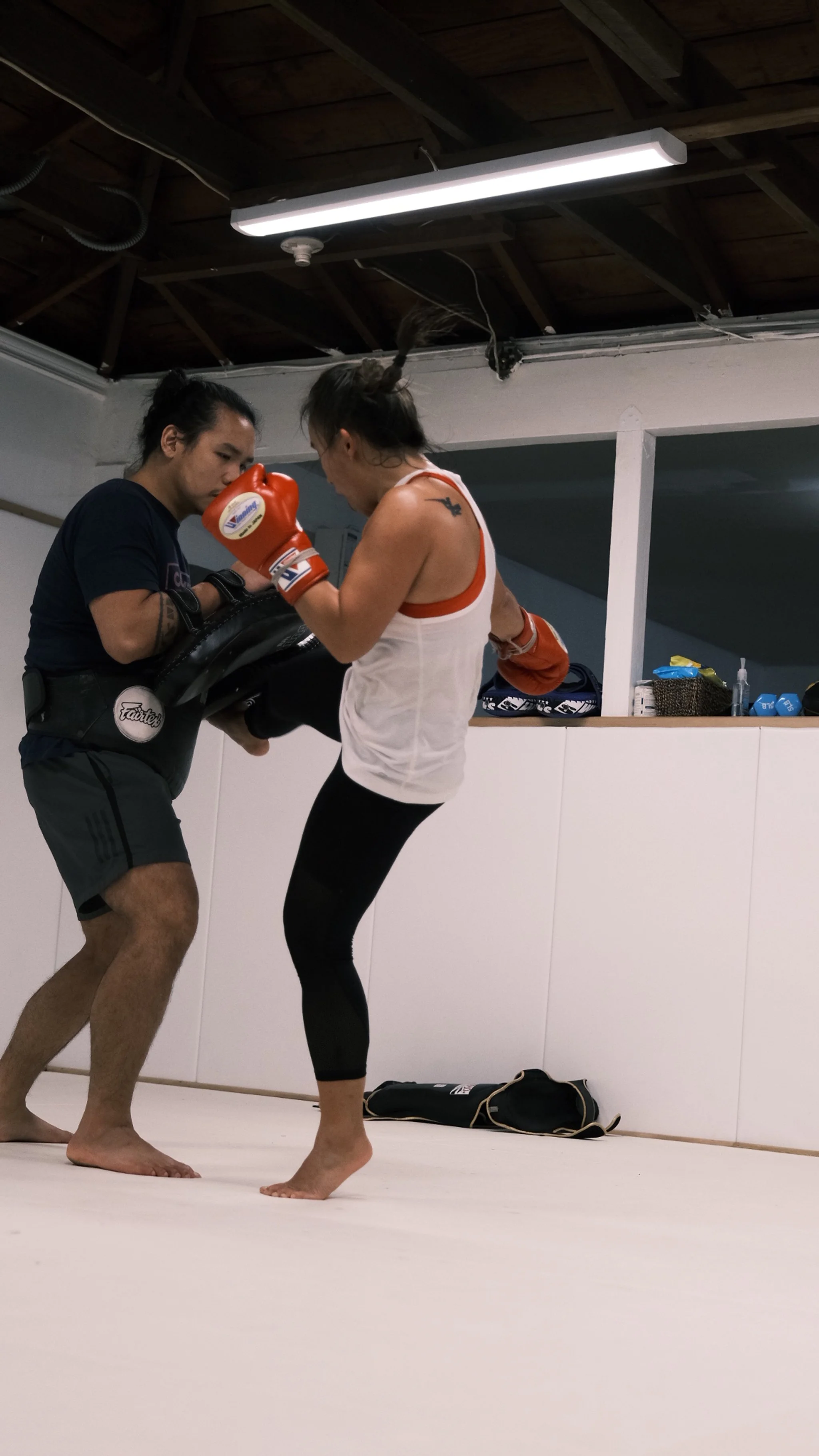
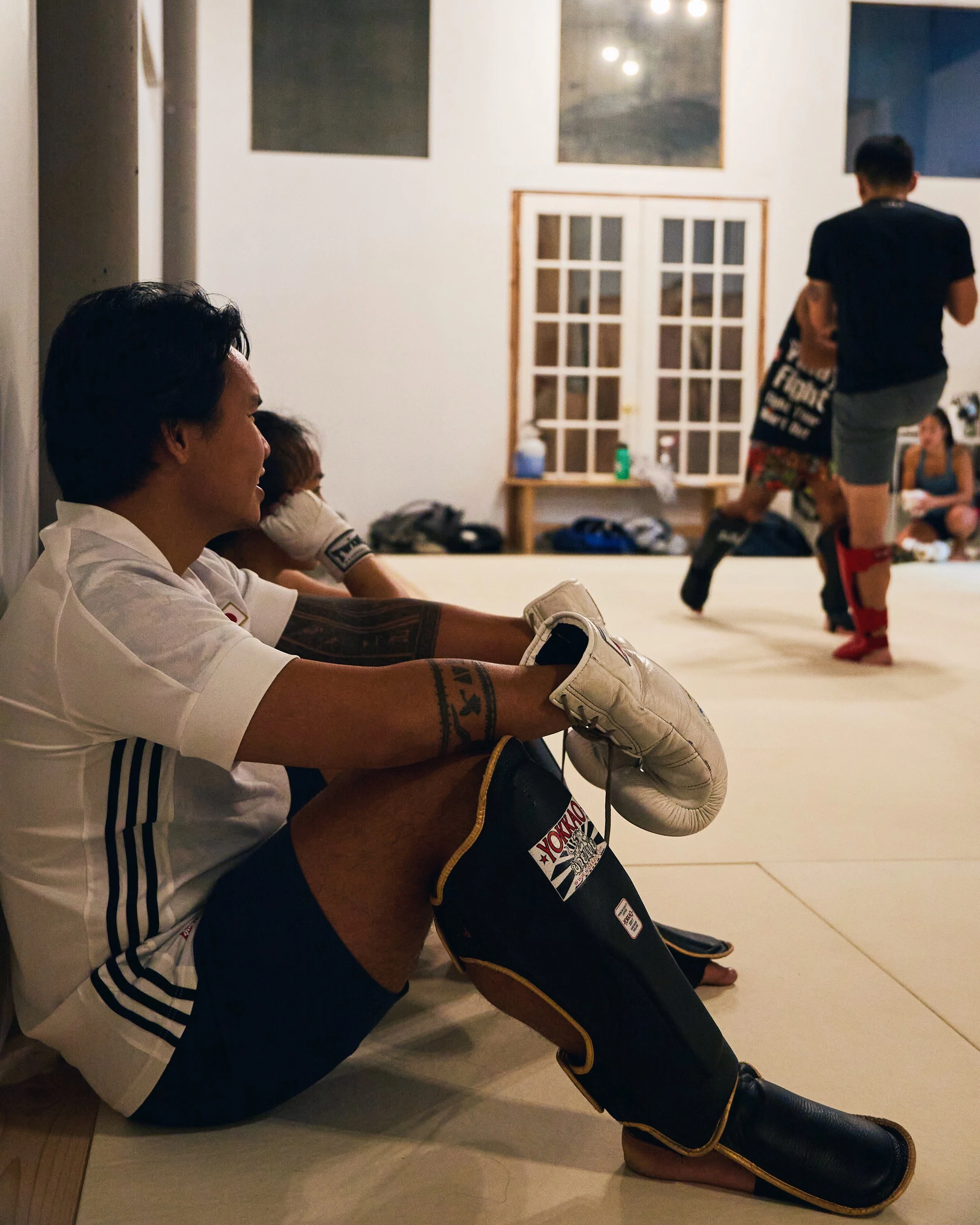
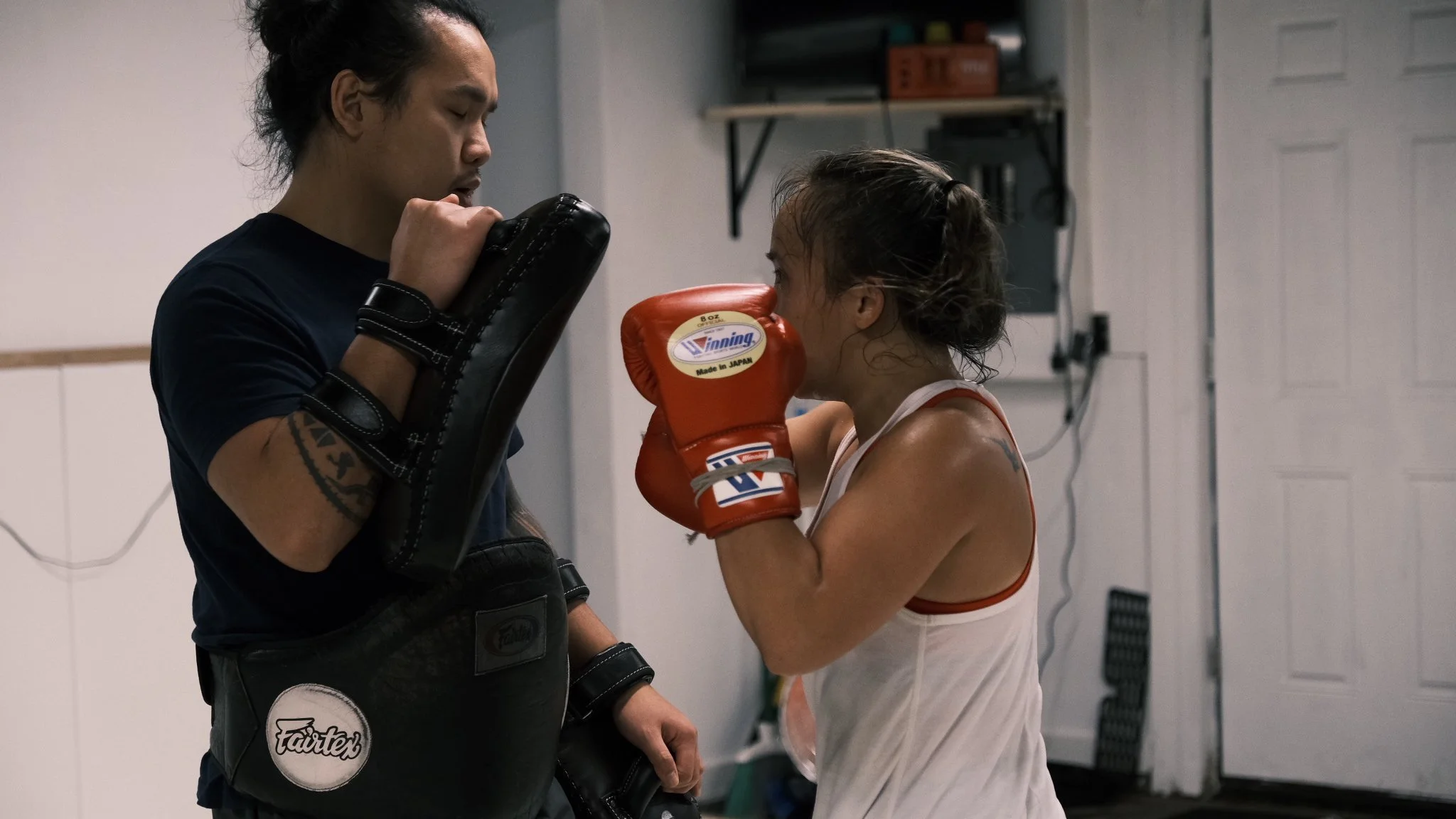
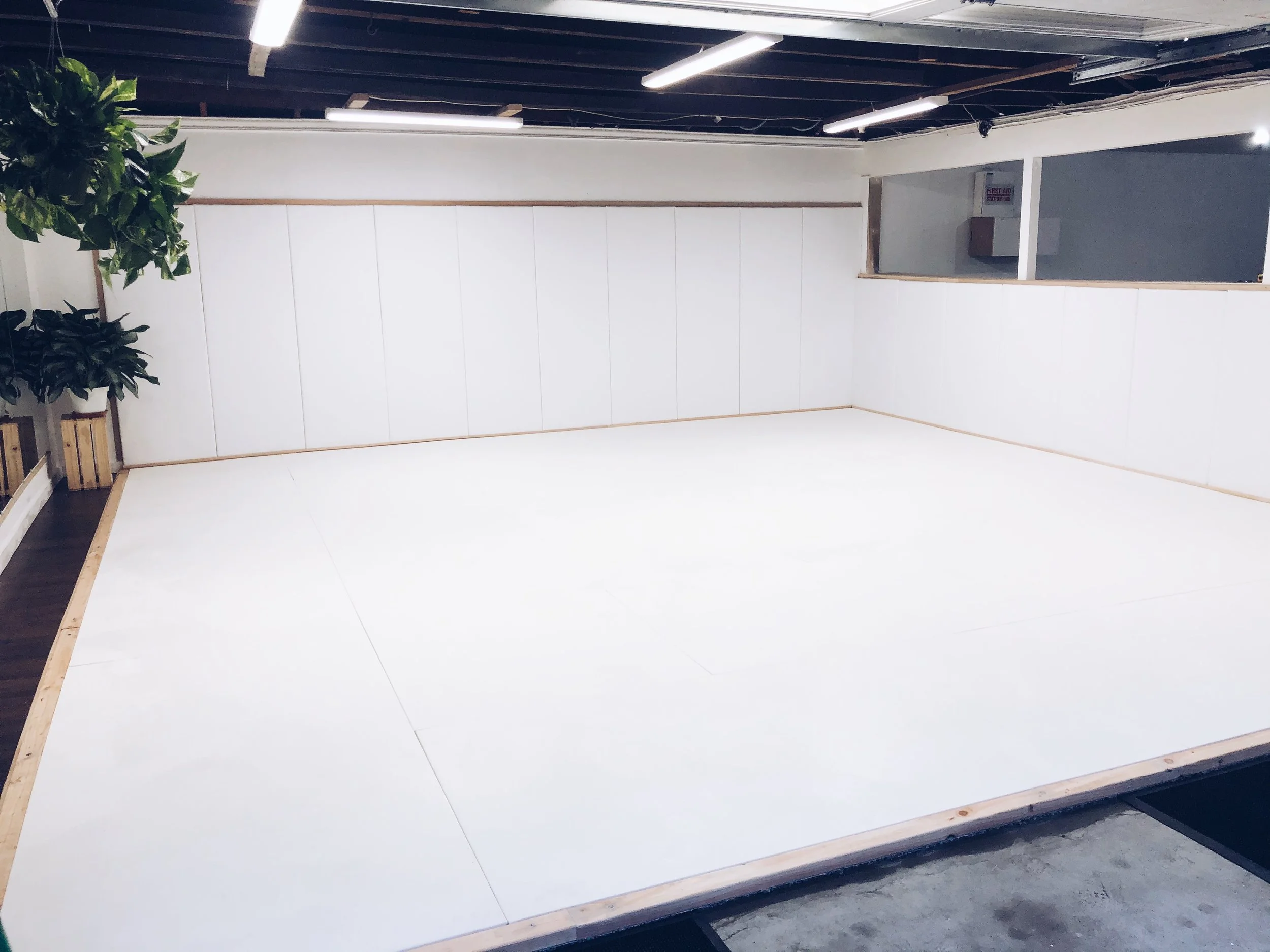

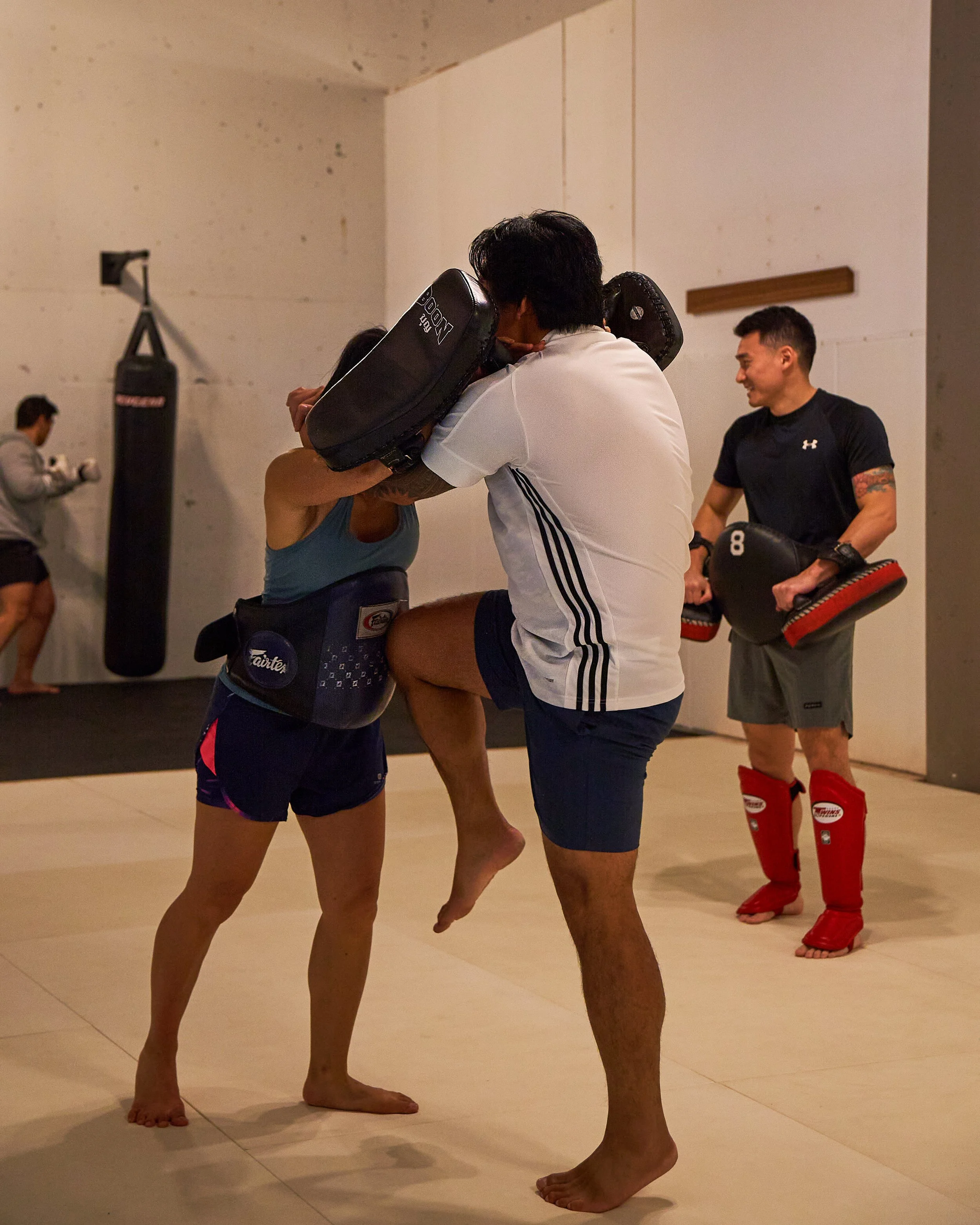
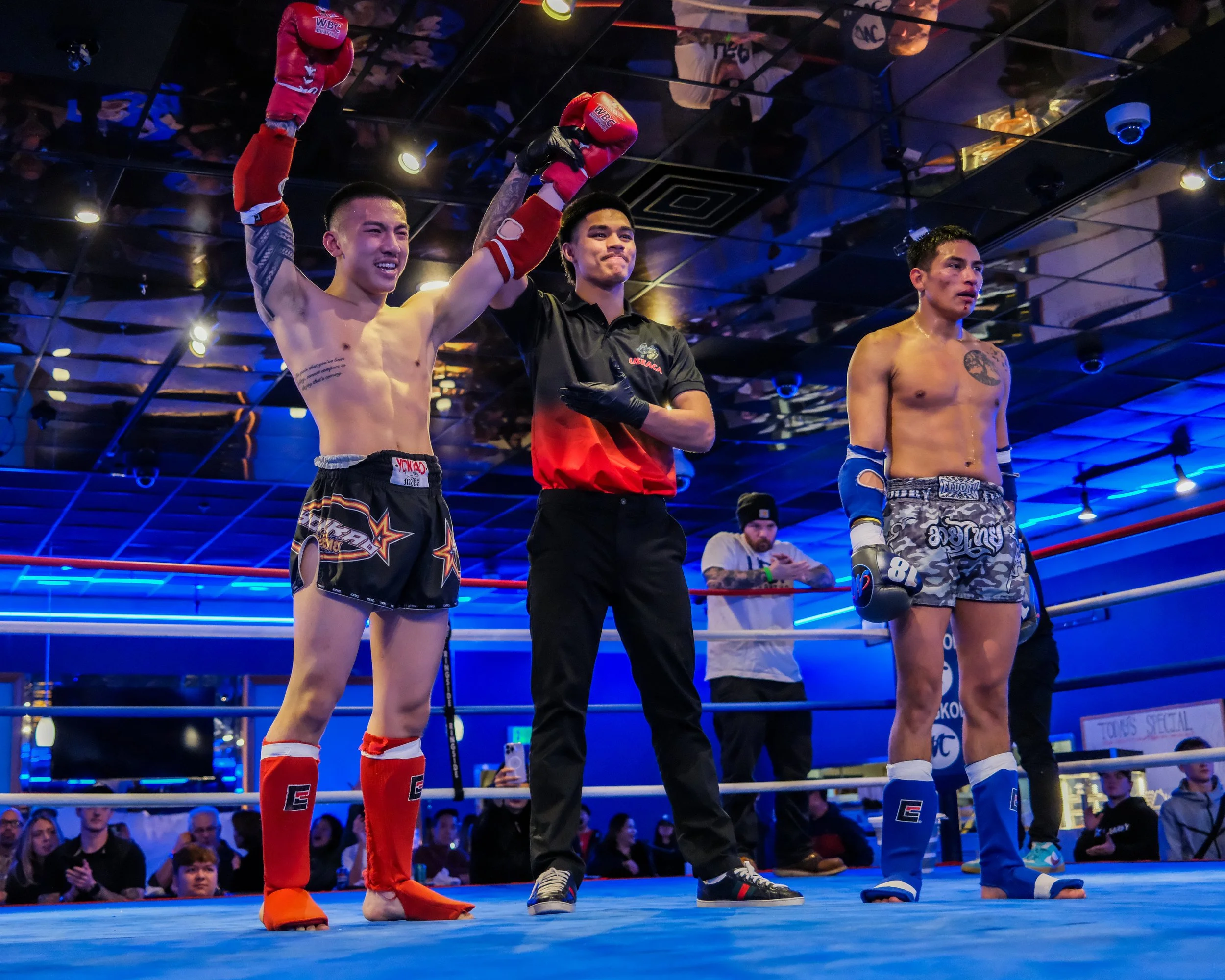
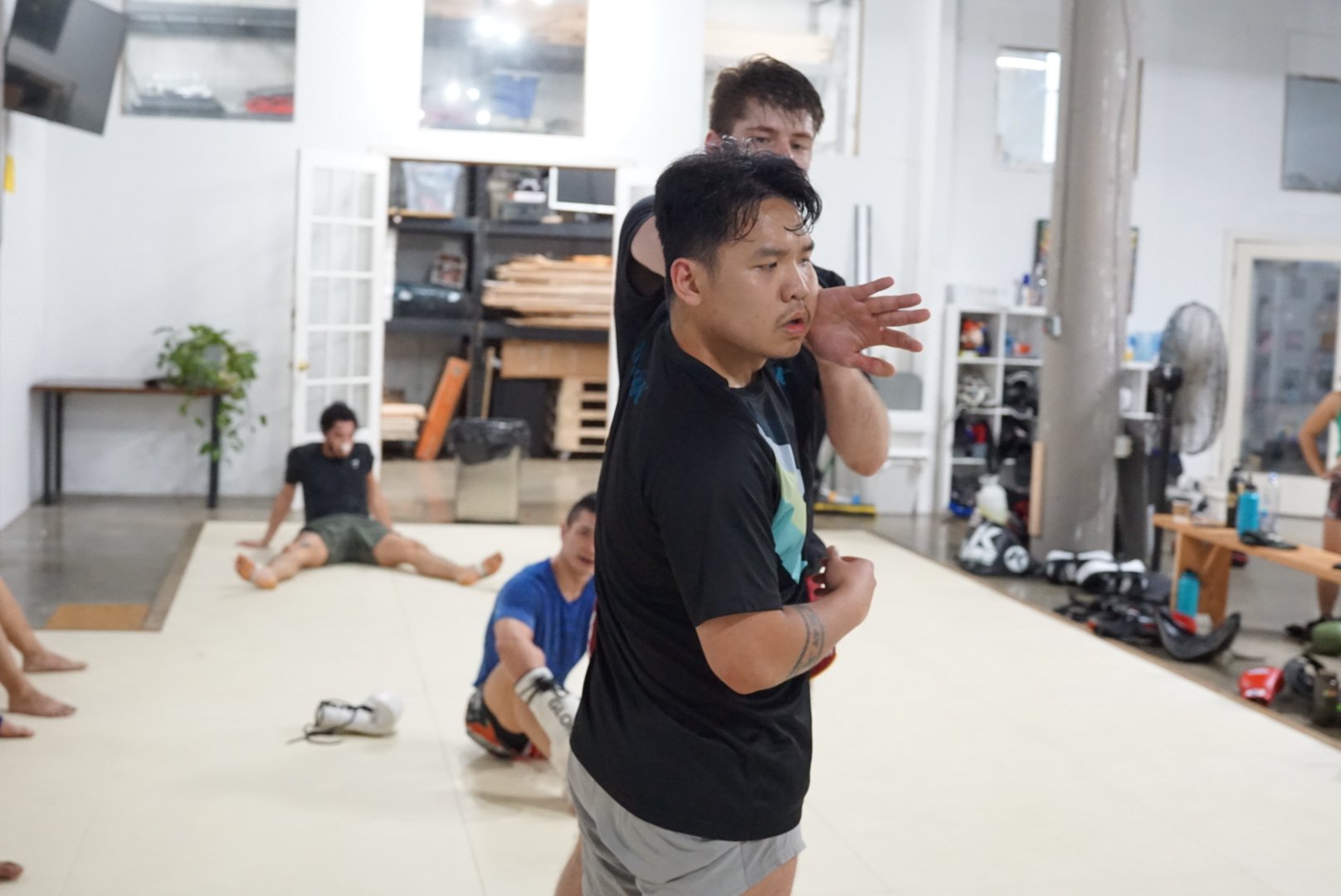
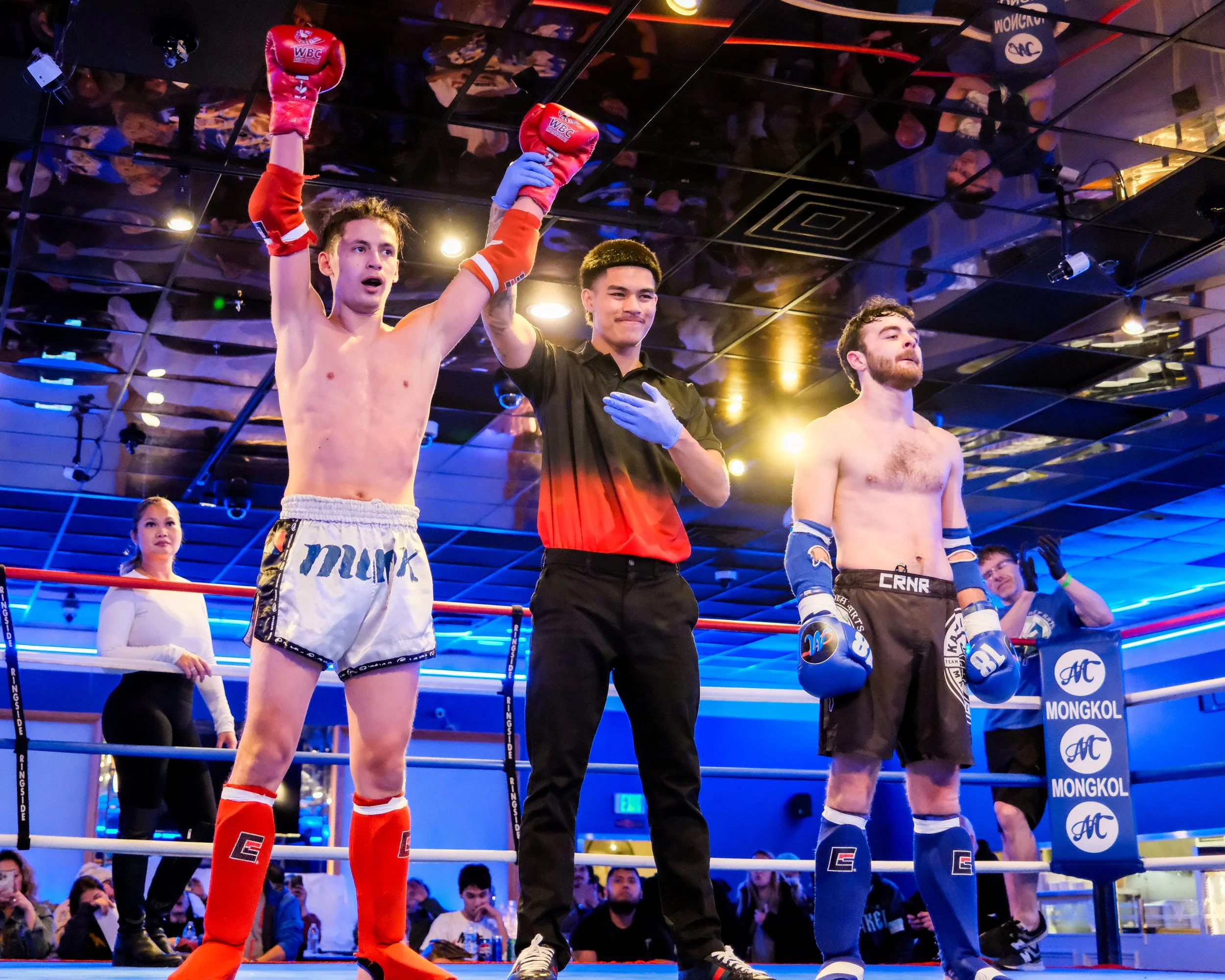
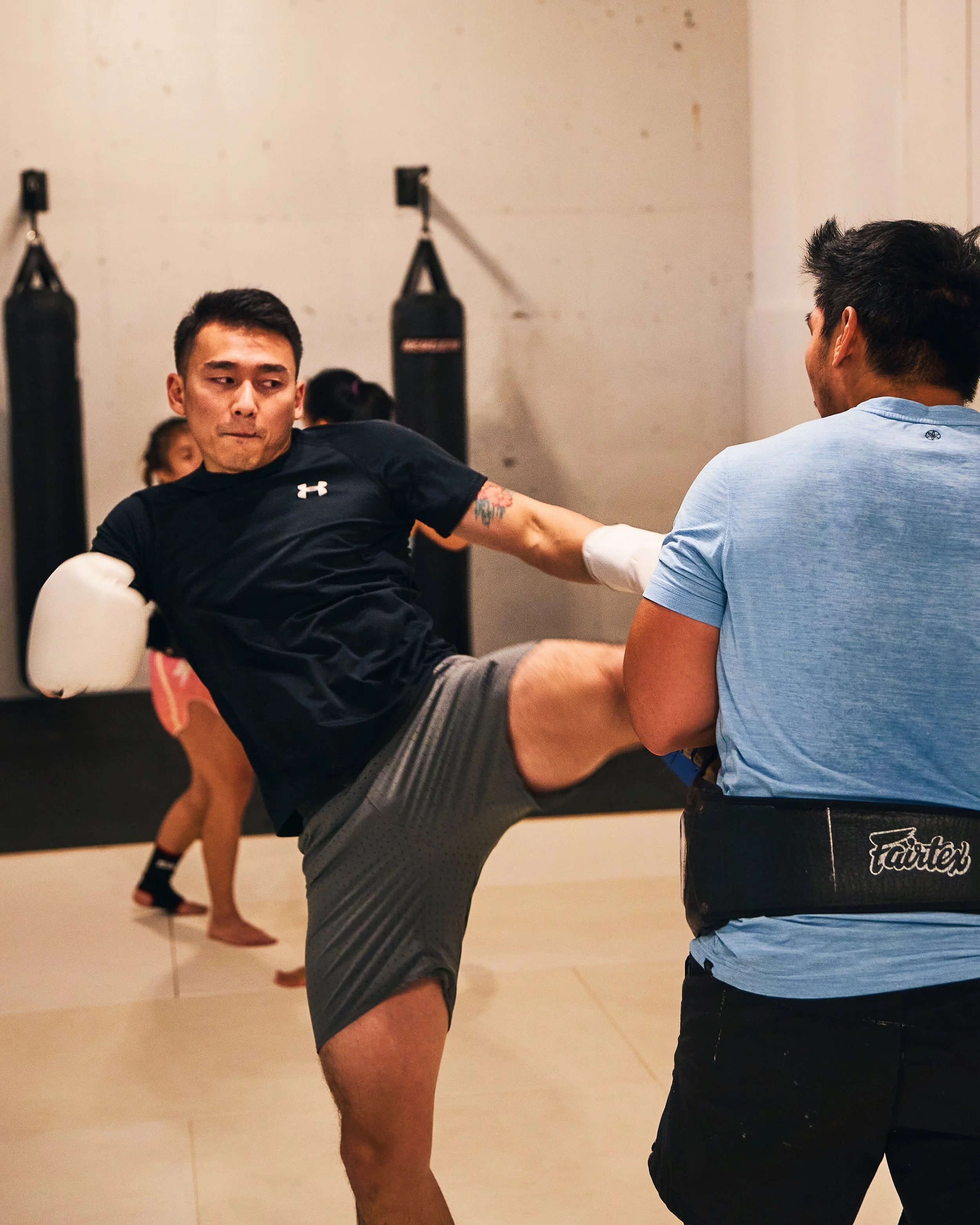
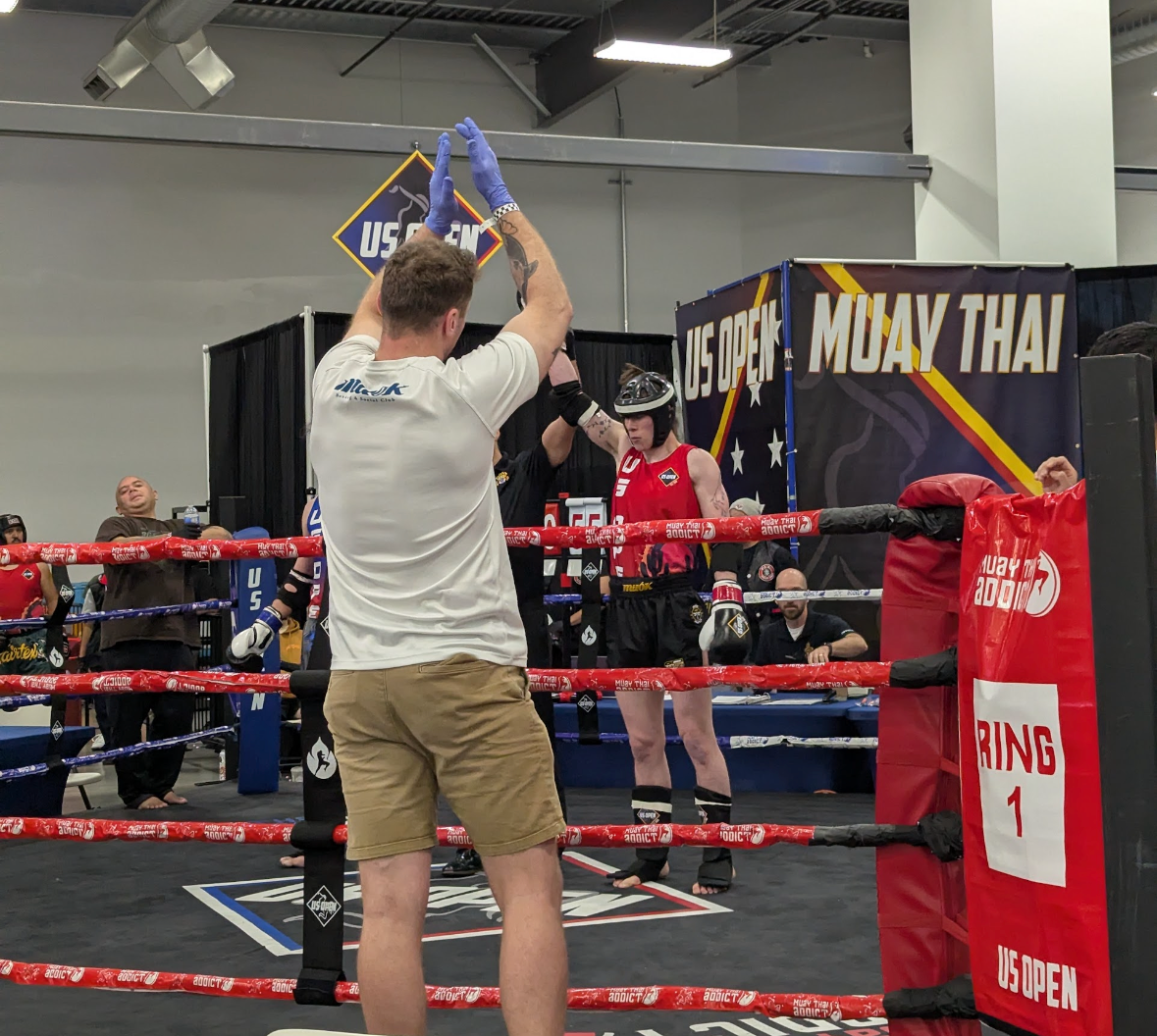
Muok Boxing didn’t start with a big facility, shiny equipment, or a long-term plan. It started during a time of uncertainty—when gyms were closed, routines were disrupted, and community felt more important than ever.
In April 2020, when training spaces shut down, we adapted the only way we could. We built a 168-square-foot garage gym—small, simple, and functional—so a close-knit group could continue training safely. There were no mirrors, no luxuries, just commitment and consistency. That garage became the foundation of Muok Boxing.
Outgrowing the Garage
It didn’t take long to realize the garage wasn’t enough. By September 2020, we converted an unused workshop in Andy’s backyard into a training space.
At 450 square feet, it wasn’t huge—but it felt like progress. The space came with real challenges: no heating, no cooling, and COVID restrictions meant training with masks on and the garage door wide open year-round. Winters were cold—fuzzy socks, beanies, and layers became standard. Summers were hot, humid, and relentless.
Still, people showed up. That workshop wasn’t just a place to train; it’s where Muok Boxing truly became a community.
Finding a Home at The Castle
By November 2022, we stepped into a space that felt bigger than just square footage: The Castle.
With its soaring ceilings and raw, industrial character, the building carries deep roots in Seattle’s underground culture. Long before it housed heavy bags and training rounds, The Castle was a hub for the city’s early underground rave scene—a place where creativity, music, and community collided.
Legends of the past still echo here. Soundgarden once performed on the rooftop, and there are photos of Kurt Cobain sitting in the street-level parking lot—moments frozen in time that helped shape Seattle’s cultural identity.
Training here reminds us that community-driven culture doesn’t come from polish or perfection. It comes from people showing up, pushing boundaries, and creating something real together.
What We’re Most Proud Of
We’re proud of how far Muok Boxing has come. From a tiny garage to bigger spaces, from bare essentials to thoughtful amenities—it’s been an amazing journey.
But what we’re most proud of isn’t the size of the gym or the amenities.
What matters most is how many people are still here with us from the very beginning. The folks who trained in the garage are still showing up. Still putting in the work. Still helping set the tone for what Muok Boxing feels like. They are the ember that started this fire.
And the cool part is that ember hasn’t faded. It’s grown. New members came in, learned the culture, and eventually became the next generation of senior members themselves. The values didn’t change—they got passed along, strengthened, and carried forward.
That’s how this community keeps moving forward. Not by outgrowing its roots—but by staying connected to them.
Looking Ahead: Our Next Chapter
Now, we’re preparing for our next chapter: a move to a larger, purpose-built facility in Georgetown. This new space reflects everything we’ve learned since the garage days—more room to train, recover, build strength, and continue creating a gym centered on long-term health, performance, and community.
The garage may be behind us, but its spirit remains at the core of Muok Boxing: resilient, resourceful, and people-first.
Before we turn the page, we want to say thank you.
Thank you to everyone who was there from the very beginning—when space was tight, conditions weren’t ideal, and nothing was guaranteed. And an extra thank you to those who are still here, still showing up, still carrying the heart of this place forward. You are the reason Muok Boxing feels the way it does.
At the end of the day, beneath all the training, the structure, and the progress, we’re still just a bunch of kids who love to move, to play, and to have fun together. That joy—that sense of showing up because you want to be here—is what started this whole thing and what keeps it going.
As we head into the new year and into our next chapter, we’re carrying that same spirit with us. Same heart. Same fire. Just a little more room to play.
Thank you for being part of the journey.