Muay Femur — The King's Style.

Muók Boxing · Georgetown, Seattle
The Styles — No. 04
The Styles Series · Part Four

Muay Femur —
The King's Style.

Part Four of our field guide to the classic fighting styles. The technician doesn't overpower anyone. They read you, deny you, counter you — and make the whole thing look like it was never in doubt.
11 min read6 fight tapes included2026
The Styles of Muay Thai
// A Muók Series
i
Muay Mat — the puncher
Part One →
ii
Muay Khao — the knee fighter
Part Two →
iii
Muay Tae — the kicker
Part Three →
iv
Muay Femur — the technician
You are here
v
Muay Sok — the elbow specialist
Coming

Three issues into this series, you may have noticed a pattern. Every style's ledger — the panel where we tally what beats it — keeps mentioning the same fighter. The one who catches the kicker's kick. The one who teeps the puncher's entries. The one who denies the knee fighter's clinch and turns the pressure around.

Meet them. Muay Femur (มวยฝีมือ — fimeu, "skillful") is the technician: the counter-fighter who wins with reading, timing, balance, and an almost insulting economy of effort. In Thailand it's called the King's style — the noble discipline, the purists' choice, the archetype at the top of the sport's unspoken hierarchy. Ask Thai fans to name the greatest fighters who ever lived, and the list is nearly all femurs.

The other three styles impose. The femur solves. And in a sport scored the way the stadium scores it, solving is the most valuable skill there is.

01
The Temperament
Brains over brawn — and the longest careers in the sport

Every archetype has a body it seems built for. The femur, tellingly, doesn't. Samart had famously small lungs and unremarkable cardio. Saenchai has spent a career shorter than nearly everyone he fights. Karuhat stood 5'3". The femur's advantage isn't physical at all — it's the willingness to treat a fight as a problem to be understood before it's a contest to be won.

Watch any great femur's first round and you'll see what looks like inactivity: circling, feinting, an occasional teep. It isn't inactivity. It's data collection — which shots the opponent leads with, how they shift weight before kicking, what they do after they miss. By round three, the femur isn't reacting anymore. They're arriving early to places the opponent hasn't decided to go yet.

There's a career-length dividend, too. Fighters who don't get hit don't accumulate damage — which is why femurs routinely fight into their forties, log the longest records in the sport, and retire with their faculties intact. In a series about what each style costs, note the anomaly: the femur is the only archetype whose defining trait extends careers rather than spending them.

The other styles ask: what can I do to you? The femur asks: what were you about to do?

02
The Blueprint — Read, Deny, Counter, Convince
The technician's four-part loop
The Muay Femur Loop
// Infographic 01
1
Read the opponent
Early rounds are reconnaissance. Feints ask questions; the opponent's reactions answer them. The femur builds a model of the person in front of them — then fights the model.
2
Deny the game
Teeps interrupt the puncher's march. Angles and frames refuse the clinch. Range control starves the kicker. The femur's defense isn't a shell — it's a subscription cancellation. Whatever you came to do, you can't.
3
Counter into the gap
Every attack the opponent throws opens a window as it misses. The femur lives in those windows — the sweep as the kick sails past, the knee up the middle, the cross into a lunge. Defense and offense are the same motion.
4
Convince the room
The subtlest phase. Stadium judging rewards the fighter who looks in control — balanced, composed, undamaged. The femur curates that impression deliberately: posture after every exchange, a smile after a near miss. Winning the round includes performing it.
Phase 4 sounds like vanity until you remember how stadium rounds are scored: in an even round, the fighter who appears fresher and less affected takes it. The femur doesn't just play the game — they perform the scoreboard.
03
The Judge's Favorite
The style stadium scoring was written for — and the era that stopped paying it

Run down the stadium's judging criteria from The Two Muay Thais — effect, balance, composure, control, appearing dominant — and you'll notice it reads like a femur's job description. That's not coincidence. A century of effect-based scoring is precisely why Thailand's hierarchy puts the technician on top: the ruleset is a machine for rewarding exactly what the femur does. It's also the gamblers' style — the stadium's betting economy prizes fighters who control outcomes, and nobody controls outcomes like a femur. For the purest demonstration on film, watch Oley Kiatoneway — you'll meet him below — protecting a points lead against Chamuakpet: five minutes of a man making an all-time great knee fighter miss, on purpose, as a scoring strategy.

◆ The honest modern caveat

Now the inversion this series keeps finding: evasion is priceless to a stadium judge and nearly worthless on a damage scorecard. Making a man miss for three rounds reads as brilliance at Lumpinee and as inactivity on a broadcast. That's why the pure femur, like the pure khao, has thinned in the entertainment era — and why the modern greats who carry the label (ONE's own bio calls Superlek, Part Three's Kicking Machine, a femur stylist) survive by hybridizing: femur brain, damage-dealing hands and shins. The reading and the timing never stopped working. Only the scoreboard changed.

Every ruleset pays for something. The stadium pays for the one thing that can't be faked: knowing what happens next.

04
The Lineage — Six Tapes
And the moment painted on our wall

The deepest bench of any style in this series — because when a sport's scoring rewards mastery, mastery is what the sport produces. Six technicians, in rough order.
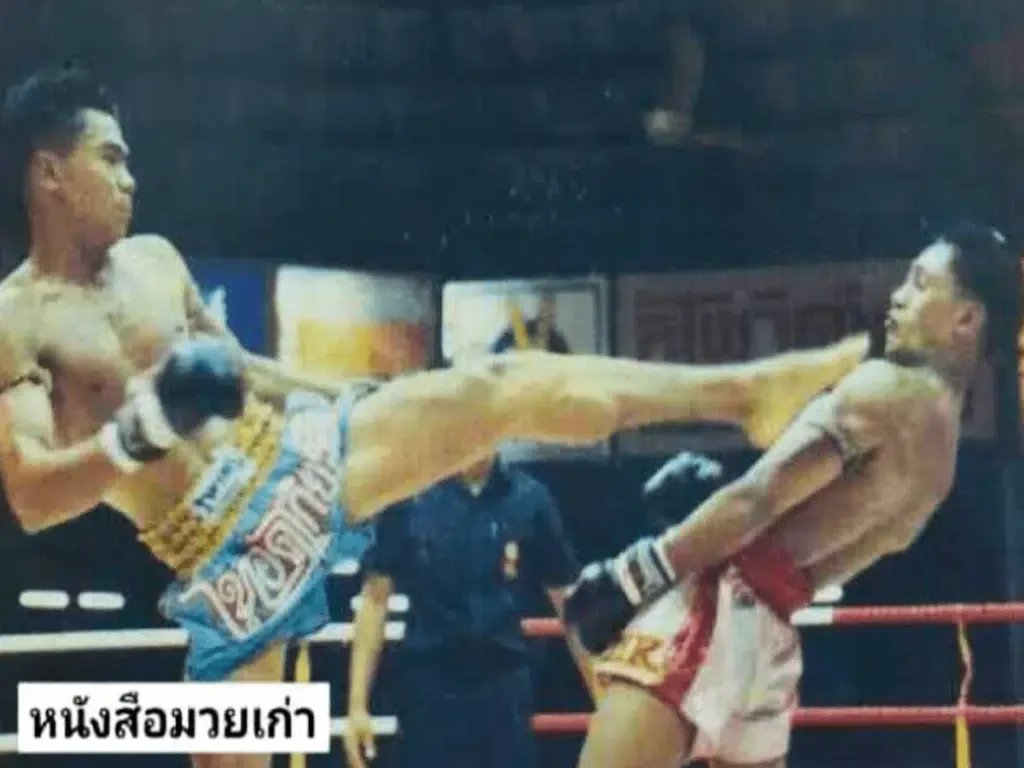
Samart Payakaroon · "The Jade-Faced Tiger"
// Tape 01
Era 1980s
Titles 4 Lumpinee divisions · WBC boxing champion
Honor 3× Fighter of the Year
Ask a Thai fighter of any generation to name the greatest ever, and this is the answer you'll hear most. Samart won Lumpinee titles in four divisions with a game built on the teep, the counter, and a calm that read as prophecy — then crossed to Western boxing and won a WBC world title for good measure. Series readers already know his most famous defeat: Dieselnoi, Part Two's anchor, ground him down in 1982 — the knee fighter's one irrefutable argument against the technician. Everything else, Samart solved.
Karuhat Sor Supawan · "Master Above Masters"
// Tape 02
Era 1981–1995
Titles 2× Lumpinee champion
Record 165 wins in 198
The purists' purist. Five-foot-three, switch-hitting mid-exchange, off-balancing opponents with touches you'll miss the first time you watch — Karuhat is the fighter other Golden Age legends name when asked who was actually the best. His toughest opponent, by his own account? Langsuan, Part Two's Tape 02 — the merciless knee against the master technician, the series' central rivalry in one matchup. Much of what survives of his teaching exists in Sylvie von Duuglas-Ittu's Muay Thai Library, which Part Two readers already know.
Oley Kiatoneway · "The Black Pearl of the Andaman"
// Tape 03
Era 1985–1995
Record 80 wins in 105
Signature The lean-back — on our wall
The Matrix, thirty years early. Oley's signature was a lean-back so deep his torso went parallel to the floor, letting kicks pass over him like weather — and in a single year-long streak he beat Wangchannoi, Chamuakpet, Boonlai, Namkabuan, and knocked out Therdkiat, "The King of Lumpinee." He also holds a win over Langsuan (Part Two) and the original Superlek — Sorn E-Sarn, not Part Three's. Then, in the October 1993 title rematch with Therdkiat, he lost the belt by split decision — in the very fight that produced the most famous photograph of him. The femur's paradox, immortalized: he lost the decision and owns the image. Which brings us to our wall.
The Lean-Back — From Lumpinee to Georgetown
// Plate 01
Lumpinee Stadium OCT 1993
Oley Kiatoneway performing his iconic lean-back against Therdkiat in their Lumpinee Stadium title fight, 1993
The original. Oley vs Therdkiat, Lumpinee title fight — the lean-back at full extension, a kick passing over a man who has already finished reading it.
Muók Boxing 2026
The mural at Muok Boxing in Georgetown, Seattle, inspired by Oley Kiatoneway's iconic lean-back
The homage. The mural at our Georgetown gym — painted from that exact moment, watching over every class we run.
When we moved into our Georgetown home, this is the image we chose to paint on the wall: elite timing, supreme confidence, mastery at the highest level of the sport. Every student who trains at Muók trains under the King's style. Now you know the man in the picture.
Somrak Khamsing · "The Genius of the Ring"
// Tape 04
Era 1980s–2000s
Honor Olympic boxing gold, 1996 — Thailand's first
Status Ranked #1 in every stadium at 126
The uncrowned king. Somrak never held a Lumpinee or Rajadamnern belt — top fighters simply stopped agreeing to face him — yet he was ranked #1 in every stadium at his weight, beat Chamuakpet (Part Two readers know the name), and remains many purists' pick as the best femur of the nineties. Then he took the style to a different sport entirely and won Thailand's first Olympic gold medal in boxing at Atlanta '96, becoming a national hero. The femur thesis, proven in two rulebooks: reading and timing transfer. Everything else is equipment.
Saenchai · the global ambassador
// Tape 05
Era 1990s–now
Titles Lumpinee champion · 4 divisions
Status Most famous nak muay alive
The femur style, turned into worldwide entertainment. Saenchai spent two decades giving away size and weight to the best fighters in Thailand and beating them anyway — then took the show global, cartwheel kick and all, becoming the sport's most recognizable face. The honest note this series owes you: his most instructive fight might be a loss. Yodwicha dragging him into the clinch — Part Two, Tape 04 — is the technician's kryptonite on film: you can't out-read someone who's attached to your torso. Even kings have a rival house.
Panpayak Jitmuangnon · "The Angel Warrior"
// Tape 06
Era 2009–now
Titles 4× Lumpinee · 2× Rajadamnern
Honor Only 3-peat Fighter of the Year ever
The modern proof. Panpayak won Fighter of the Year three consecutive times — 2013, 2014, 2015 — the only fighter in the award's history to do it — with a southpaw femur game of surgical timing and counters, collecting six stadium belts across four divisions along the way. The closing image this series has earned: he shares a gym with Rodtang, Part One's closer. The loudest puncher and the purest technician of their generation, training under the same roof — which is, quietly, the whole argument of this series. The styles aren't tribes. They're one art, answering itself.
05
The Bill Comes Due
What the style costs — and what beats it

Even the King's style pays rent. Three lines on the invoice.

The Technician's Ledger
// Infographic 02
Time
The read takes rounds to build. Short fights and fast starts tax the reconnaissance phase — a femur behind on data is just a smaller fighter.
Pressure
An opponent willing to eat three counters to land one — the khao's grind, the mat's march — turns elegance into a survival exercise. Yodwicha vs Saenchai is the case study.
Rules
Damage scorecards don't pay for evasion. Under entertainment judging, the style's crown jewel — making you miss — earns nothing at all.
Note the symmetry with every previous ledger: the femur taxes the other three styles, and the other three tax the femur right back. Four issues in, the shape of the art is visible: a closed circle, with no style standing outside it.
06
What You Can Steal
Muay Femur lessons for every student on our mats

Here's the good news: of the four styles so far, the femur's is the most learnable — because it's made of habits, not attributes. Four to start with.

Make them miss, then make them pay. Defense that ends in a retreat is half a technique. Every evasion — a lean, a step, a parry — should deposit you somewhere your counter is already loaded. Drill the pair, never the dodge alone.

Feint on purpose, watch on purpose. A feint isn't a fake-out; it's a question. Throw one and actually read the answer — which hand twitched, which foot adjusted. Three questions in, you know things about your partner they don't know they've told you.

Learn the sweep as a statement. Nothing in Muay Thai says I understand this fight better than you like putting someone on the canvas with their own momentum. It's also the safest highlight in the art — all timing, no trading.

Curate your composure. Posture after every exchange. Reset your face. Walk, don't stumble, back to range. It sounds cosmetic; it's not — it's scoring literacy, it's judge-craft, and in sparring it's the habit that keeps you thinking when things get loud. The fighter who looks calm becomes calm. The stadium has always known this.

// From the Muók coaching team

There's a reason the lean-back is on our wall and not a knockout. Power fades, engines age — but reading, timing, and balance compound for as long as you train. The femur is the style you can grow old with: the sixty-year-old kru who touches you at will learned that game, not the trading game. When we drill footwork, teeps, and sweeps until they're boring, this is what we're building in you. The mural is the curriculum.

Keep This Somewhere
  • Muay Femur = the technician: reading, timing, denial, and counters — the King's style, top of Thailand's hierarchy.
  • The loop: read the opponent, deny their game, counter into the gaps, and convince the room you were never in trouble.
  • Stadium scoring was practically written for it — effect, balance, and composure are the femur's home currencies. Damage scorecards pay evasion nothing.
  • The lineage: Samart → Karuhat → Oley → Somrak → Saenchai → Panpayak. The deepest bench of any style.
  • Our mural is Tape 03: Oley's lean-back against Therdkiat, Lumpinee 1993 — painted on our Georgetown wall.
  • The costs: the read needs time, relentless pressure taxes elegance, and modern rules don't pay for making people miss.
  • Steal these: defense that ends in a counter, feints as questions, the sweep as a statement, and composure as trained scoring literacy.

The art of
not being there.

Traditional Muay Thai in Georgetown, Seattle — where technique is the curriculum and the mural on the wall is the argument. Come try a free class.

Book a Free Class →
Sources
  1. Muay Thai Citizen. Muay Femur: The Muay Thai Technical Supreme. 2020.
  2. Evolve MMA. 5 of the Best Muay Femur in Muay Thai History. 2026.
  3. MuayThai.com. Samart Payakaroon: The Greatest Muay Thai Fighter of All Time? 2025.
  4. Wikipedia. Samart Payakaroon — record, Lumpinee titles, and WBC boxing title.
  5. Wikipedia. Karuhat Sor.Supawan — record, titles, and career.
  6. Wikipedia. Oley Kiatoneway — record, style, and notable wins.
  7. MuayThai.com. Oley Kiatoneway: Unveiling the Enigma of "The Black Pearl." 2026.
  8. MuayThai.com. Who Was the Best Muay Femur of the 1990s? 2025.
  9. Wikipedia / Muay Thai Citizen. Somrak (Somluck) Khamsing — Olympic gold and Muay Thai career.
  10. Wikipedia. Panpayak Jitmuangnon — titles and the 2013–2015 Fighter of the Year three-peat.
  11. Siam Fight Mag. Oley Kiatoneway — career interview and record.

Previous
Previous

Muay Sok — The Shortest Blade.

Next
Next

Muay Tae — The Golden Leg.